
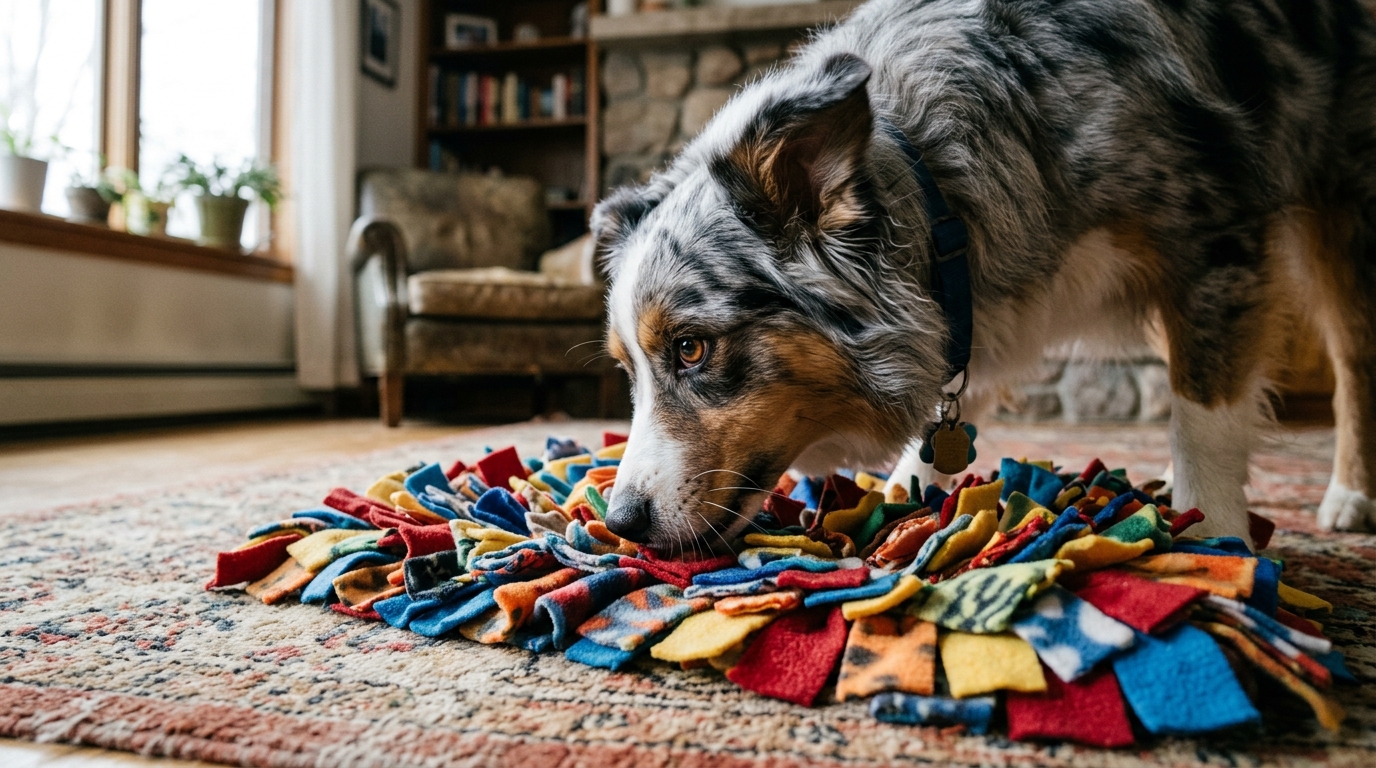
To understand the canine mind, one must understand how dogs map reality. While humans experience the world primarily through a visual lens, dogs experience existence in high-definition scent. A dog possesses between 220 million and 300 million olfactory receptors—compared to a meager 5 million in humans—and allocates approximately one-third of its total neurological processing volume directly to deciphering scent molecules. Yet the vast majority of modern domestic dogs live in sensory-deprived environments, hurried along sidewalks on tight leashes and fed from static ceramic bowls in under 30 seconds.
- The Neurological Energy Drain: 15 minutes of structured olfactory scent tracking expends more mental and metabolic energy than a brisk 45-minute physical walk, making it the supreme tool for high-energy or injured canines.
- The Dementia Shield: The olfactory bulb connects directly to the canine limbic system and hippocampus. Olfactory foraging activates neurogenesis and stimulates brain-derived neurotrophic factor (BDNF), actively delaying Canine Cognitive Dysfunction Syndrome (CCDS).
- Pulse & Cortisol Reduction: Rhythmic sniffing and foraging activates the parasympathetic nervous system, lowering heart rate and slashing serum cortisol in reactive, hyperactive, or shelter dogs.
- Cross-Referenced Brain Health: Deepen your understanding with our investigation into Canine Cognitive Dysfunction Syndrome and C8 MCT protocols and our foundation on canine enrichment and puzzle feeders.
Does Mental Enrichment Tire Out a Dog Faster Than Physical Exercise?
Yes. Engaging a dog’s olfactory system consumes massive quantities of glucose and neurological bandwidth. Because roughly 30% of a dog’s brain is dedicated to processing scent, 15 minutes of complex scent work or snuffle mat foraging induces deeper, more restorative mental fatigue than an hour of continuous repetitive running.
Many pet parents find themselves trapped in an escalating aerobic spiral: they hike their young Border Collie or Labrador for two hours every day, only to create an elite canine endurance athlete who remains anxious, restless, and hyper-vigilant inside the home. Physical exercise builds cardiovascular stamina; it does not satisfy the canine brain’s innate predatory foraging drive.
When a dog engages in scent tracking, their respiratory rate shifts into rapid sniffing bursts (up to 300 inhalations per minute). This rapid airflow directs scent molecules into the ethmoid turbinates—a bony labyrinth in the rear of the nasal cavity that humans completely lack. Analyzing overlapping scent trails, determining scent aging, and navigating micro-drafts requires continuous, intense problem-solving that triggers physiological relaxation through the release of dopamine and endorphins.
| Enrichment Activity | Neurological Processing Level | Cortisol Impact | Joint / Physical Strain | Ideal Dog Profile |
|---|---|---|---|---|
| Structured Scent Work (Nosework) | Maximum (High Cognitive Load) | -42% (Promotes Deep Sleep) | Zero Impact (Safe for Arthritis) | All dogs, post-surgery rehab, senior dogs |
| Multi-Layer Snuffle Mat | Moderate to High | -35% (Soothes Mealtime Frenzy) | Zero Impact | Fast eaters, puppies, crate-confined dogs |
| Mechanical Fetch (Ball Thrower) | Low (Automated Adrenaline Rush) | +25% to +50% (Spikes Cortisol) | Severe (Micro-trauma to CCL/Hips) | Healthy young dogs (in short moderation only) |
| Standard Leashed Pavement Walk | Low (Unless allowed to sniff freely) | Neutral | Low to Moderate | Daily elimination and social baseline |
Can Scent Games Delay Canine Cognitive Dysfunction (Dementia)?
Yes. Longitudinal veterinary cognitive studies confirm that routine scent work stimulates adult canine neurogenesis and builds synaptic cognitive reserve. Regularly challenging senior dogs with olfactory puzzles slows the accumulation of beta-amyloid plaques in the brain, preserving mental acuity.
Canine Cognitive Dysfunction Syndrome (CCDS) is the veterinary equivalent of Alzheimer’s disease. As dogs cross the geriatric threshold (age 7 in large breeds, age 10 in small breeds), micro-vascular changes and oxidative stress lead to cortical atrophy, disorientation, nocturnal pacing, and loss of house training.
Unlike vision and hearing—which deteriorate rapidly in aging canines due to cataracts, nuclear sclerosis, and sensorineural hair cell loss—the olfactory pathway remains remarkably resilient into extreme old age. Even when an 14-year-old dog can no longer see the living room coffee table or hear their owner’s voice, their sense of smell remains a fully functional portal to cognitive engagement. Scent puzzles bypass sensory deficits, igniting neural pathways that keep geriatric dogs alert, confident, and emotionally connected.
Step-by-Step Home Scent Work Protocol for Beginners
You do not need professional competition scent kits (such as birch or anise essential oils) to give your dog world-class olfactory enrichment. Follow this 3-tier protocol using healthy single-ingredient treats (e.g., freeze-dried beef liver or organic blueberries):
- Level 1: The Snuffle Mat Meal: Abandon traditional metal food bowls. Scatter your dog’s daily single-protein kibble or dehydrated nuggets into the dense fleece folds of a snuffle mat. Let them forage for 10 to 15 minutes, activating natural rooting behaviors.
- Level 2: The “Cardboard Box Bonanza”: Collect 4 to 6 clean shipping boxes of varying sizes. Place a high-value treat inside two of the boxes, leave the others empty, and give the command “Find It!” Praise enthusiastically the moment your dog uses their nose to point to the correct box.
- Level 3: The Three-Dimensional Living Room Track: Place your dog in a stay in another room. Hide 5 fragrant treats in challenging vertical and horizontal locations (under a sofa cushion, behind an armchair leg, on a low bookshelf shelf). Release your dog to hunt. As they master the game, elevate the difficulty by hiding treats in different rooms.
A walk without sniffing is like taking a human to an art museum and forcing them to sprint through the exhibits with their eyes closed. Our domestic dogs are suffering an invisible epidemic of sensory deprivation that manifests as behavioral anxiety, destructive chewing, and premature cognitive decline. By embracing olfactory enrichment—transforming daily meals into foraging expeditions and dedicating 15 minutes each evening to scent games—we honor our dogs’ deepest evolutionary biology while safeguarding their neurological healthspan.
People Also Ask
Can puppies use a snuffle mat?
Yes! Puppies love snuffle mats. However, because teething puppies love to chew fabric, always supervise snuffle mat sessions closely to ensure the puppy does not ingest fleece strips or rubber backings.
What is the best scent for teaching dogs nosework?
For casual home enrichment, strong natural food scents like freeze-dried lamb lung, dehydrated liver, or small bits of aged parmesan cheese work best. In formal AKC or CKC scent work trials, dogs are trained on specific essential oils: Birch, Anise, and Clove.
Should I let my dog sniff everything on a walk?
Yes! Veterinary behaviorists strongly recommend “decompression walks” or “sniffaris,” where the dog is on a long line (10 to 15 feet) and allowed to choose their path and sniff at their own pace without interruption.
Does scent work help dogs with reactivity or aggression?
Yes. Scent work is a core therapeutic tool used by veterinary behaviorists for reactive dogs. Sniffing engages the parasympathetic nervous system, lowering arousal levels and redirecting hyper-fixation away from environmental triggers like unfamiliar dogs or traffic.
Related Investigations: Explore Canine Rapamycin (Sirolimus) Dosing Protocols and our diagnostic guide on Canine Cancer Early Detection & Liquid Biopsies.