
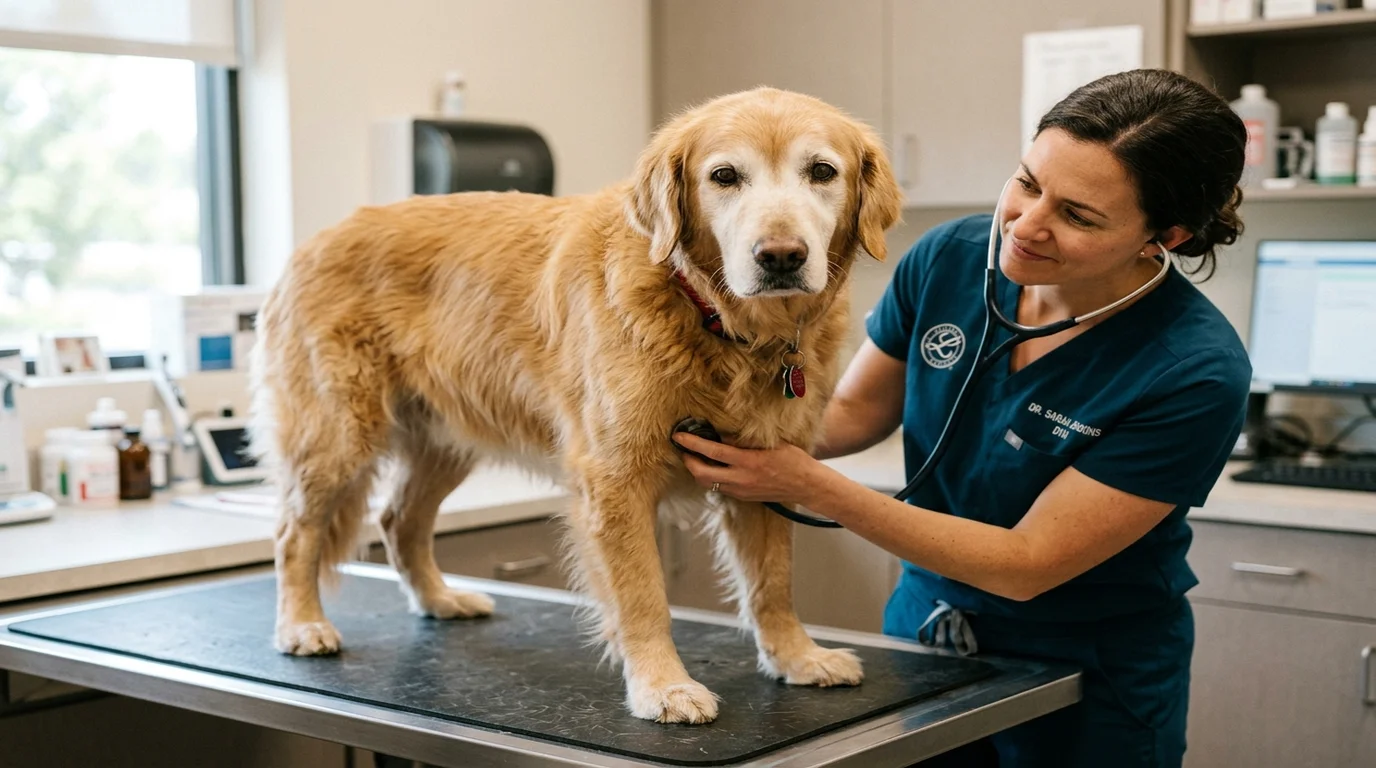
Why Does Every Senior Dog Need Bi-Annual Blood Panels?
Canines are evolutionary masters of masking discomfort and early systemic illness. By the time a senior dog exhibits clinical lethargy, weight loss, or increased thirst (polydipsia), critical organ systems are often already severely compromised. For example, traditional serum creatinine does not elevate above laboratory reference ranges until nearly 75% of functional nephrons in the kidneys have suffered irreversible destruction.
Implementing preventative blood screens every six months allows veterinary clinicians to monitor subtle intra-individual velocity changes. Even if an enzyme remains technically within the broad “normal” laboratory population reference interval, a doubling of Alanine Aminotransferase (ALT) over six months signals an active inflammatory cascade requiring immediate nutritional or therapeutic intervention, as detailed in our guide to elevated liver enzymes in dogs.
Interpreting the Complete Blood Count (CBC) and Chemistry Panel
A comprehensive senior geriatric screening panel consists of three interrelated diagnostic components: the CBC, the broad serum biochemistry panel, and a complete urinalysis with specific gravity (USG).
| Biomarker / Panel Test | Primary Organ / Biological System | Clinical Significance of Elevation | Clinical Significance of Low Value |
|---|---|---|---|
| Hematocrit / RBC (CBC) | Bone marrow & oxygen transport | Dehydration, polycythemia | Non-regenerative anemia, internal loss |
| White Blood Cells (WBC) | Immune defense & inflammation | Systemic infection, leukocytosis | Bone marrow suppression, viral load |
| SDMA Biomarker | Glomerular filtration rate (Kidneys) | Early nephron loss (25–40% loss) | Normal physiological filtration |
| BUN & Creatinine | Renal waste clearance | Azotemia (75% functional loss) | Muscle wasting (sarcopenia) |
| ALT & ALP Enzymes | Hepatocellular integrity & Biliary | Liver trauma, mucocele, Cushing’s | Normal resting state |
| Albumin / Total Protein | Liver synthesis & vascular oncotic | Dehydration, chronic inflammation | Protein-losing nephropathy, liver failure |
Why Urinalysis is Mandatory Alongside Senior Bloodwork
Additionally, a complete urinalysis identifies silent microalbuminuria, proteinuria (excess protein loss), occult urinary tract infections, and microscopic crystalluria that could precipitate bladder stone formation. When preparing your senior canine for medical procedures like senior dog dental anesthesia, paired blood and urine panels provide crucial anesthetic safety clearance.
People Also Ask
Should a senior dog fast before routine bloodwork?
Yes. Fasting your dog for 8 to 12 hours prior to a routine chemistry blood draw prevents postprandial lipemia (fat droplets in the blood), which can falsely distort liver enzymes, blood glucose, and electrolyte readings.
What does elevated ALP mean in an older dog?
Alkaline Phosphatase (ALP) is a biliary enzyme that rises with liver inflammation, gallbladder disease, benign nodular hyperplasia, or hyperadrenocorticism (Cushing’s disease). An abdominal ultrasound is recommended if ALP elevates progressively.
How much does comprehensive senior dog bloodwork typically cost?
A full senior veterinary panel—including CBC, Comprehensive Chemistry, SDMA, and complete Urinalysis—ranges between $180 and $350 depending on geographic region and reference laboratory tier.