
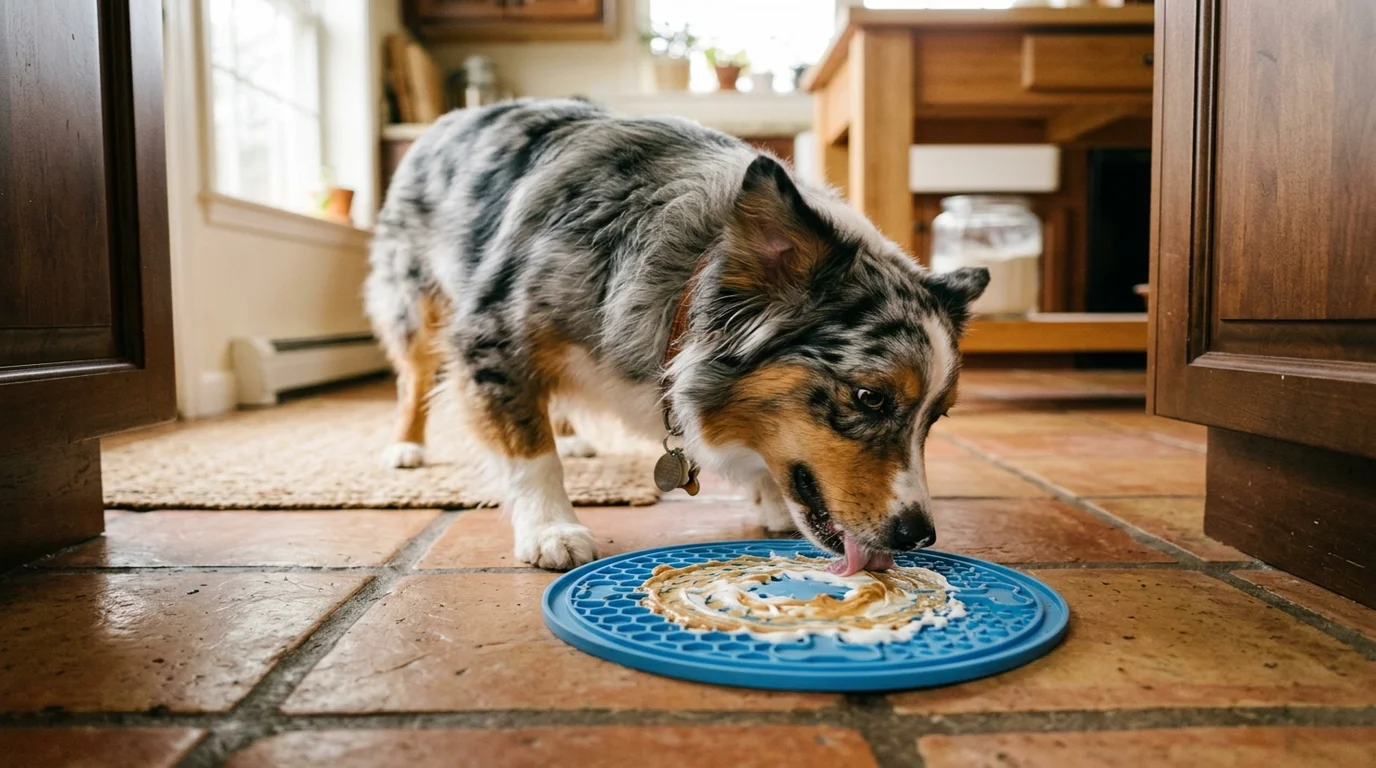
- The Neurochemical Divergence: Lick mats activate the parasympathetic nervous system through repetitive tongue stimulation, releasing calming endorphins and serotonin to soothe acute stress. Snuffle mats engage the olfactory cortex and vomeronasal organ, triggering dopamine-driven problem-solving satisfaction.
- The Mental Energy Equation: 15 minutes of scent foraging on a dense snuffle mat expends as much cognitive energy in a senior dog as a 45-minute physical walk, providing vital mental enrichment without stressing arthritic joints.
- Targeted Behavioral Prescriptions: Deploy lick mats for situational stressors (thunderstorms, fireworks, post-surgical crate rest, grooming). Deploy snuffle mats for meal deceleration, cognitive stimulation in aging dogs, and morning mental activation.
Modern canine behavioral medicine has fundamentally transformed how owners address anxiety, hyperactivity, and senior cognitive decline. Where pet parents once defaulted to physical exhaustion—throwing tennis balls until a dog collapsed—veterinary behaviorists now emphasize cognitive enrichment. Physical exercise builds cardiovascular endurance; mental enrichment builds emotional regulation.
Two simple silicone and fabric tools dominate the enrichment landscape: the textured Lick Mat and the dense fleece Snuffle Mat. While both provide low-impact engagement, they target completely distinct neurological pathways in the canine brain. Understanding the neurological science behind licking versus scent foraging enables owners to prescribe the right tool for specific behavioral challenges.
What Is the Difference Between a Lick Mat and a Snuffle Mat?
When a dog engages with a textured silicone lick mat smeared with wet food, plain kefir, or pumpkin puree, the action stimulates the vagus nerve. Rhythmic, repetitive tongue sweeps across textured ridges trigger the release of endorphins—the body’s natural opiate-like calming chemicals. This shifts the dog out of a sympathetic “fight-or-flight” state into a parasympathetic “rest-and-digest” state, lowering salivary cortisol within minutes.
A snuffle mat operates on an entirely different cognitive circuit: olfactory seeking. A dog’s sense of smell is 10,000 to 100,000 times more acute than a human’s, with over 300 million olfactory receptors. Snuffling through dense fabric folds to locate hidden kibble activates the brain’s seeking system, producing dopamine—the neurotransmitter of curiosity, motivation, and accomplishment.
Neurochemical & Behavioral Comparison: Licking vs. Foraging
The matrix below highlights the behavioral applications, neurochemistry, and optimal recipes for each enrichment tool:
| Feature / Dimension | Textured Lick Mat | Fleece Snuffle Mat |
|---|---|---|
| Primary Neurological Driver | Vagus nerve stimulation & endorphin release | Olfactory cortex activation & dopamine seeking |
| Behavioral Outcome | Sedation, calmness, anxiety reduction | Mental fatigue, cognitive stimulation, focus |
| Optimal Fillers / Substrates | Wet dog food, Greek yogurt, canned pumpkin, bone broth | Dry air-dried kibble, dehydrated liver, single-ingredient treats |
| Ideal Situational Triggers | Thunderstorms, nail trims, veterinary exams, bath time | Rainy days, meal fast-eating, senior dementia enrichment |
| Duration Multiplier Hack | Freeze for 2 hours before serving (extends time to 30m) | Deepen folds or roll mat tightly into a cylinder |
Safety Protocols: Supervised Enrichment vs. Ingestion Hazards
While both tools provide exceptional mental health benefits, neither should be treated as an unmonitored toy:
- The Snuffle Mat Fabric Hazard: Eager dogs (especially terriers and young working breeds) may attempt to chew or swallow the fleece strips once treats are gone. Always supervise snuffle sessions and remove the mat as soon as foraging is complete.
- Silicone Lick Mat Chewing: Heavy chewers can bite corners off standard silicone mats. For determined chewers, choose rigid lick mats with raised hard plastic borders or insert the mat into an anti-chew tray.
- Hygiene and Mold Prevention: Lick mats must be washed with hot soapy water or placed on the top rack of the dishwasher after every use to prevent bacterial biofilm buildup. Snuffle mats should be machine-washed bi-weekly.
For more on brain stimulation and senior canine mental health, read our guide on Canine Enrichment & Brain Health.
People Also Ask
Can you freeze a lick mat to make it last longer?
Yes. Freezing a prepared lick mat for 2 to 3 hours extends engagement from 8 minutes to over 25 minutes, providing prolonged calming relief and soothing inflamed gums in teething or senior dogs.
Is a snuffle mat good for dogs that eat their food too fast?
Yes. Scattering your dog’s standard dry meal across a dense snuffle mat slows feeding from 30 seconds down to 10–15 minutes, drastically lowering the risk of post-meal regurgitation and gastric dilatation-volvulus (bloat).
Can lick mats help with separation anxiety?
Lick mats are highly effective for mild separation distress when offered 5 minutes before leaving, anchoring your departure to a positive endorphin-releasing routine. For severe panic separation anxiety, combine with professional desensitization protocols.
To master the olfactory enrichment and dopamine-regulating puzzle tools that combat cognitive stagnation in aging dogs, read our guide on Canine Cognitive Dysfunction: Senior Dog Dementia Guide.