
Pull up a chair. If you have spent any time watching your senior dog push up slowly from the hardwood floor, or if you are managing a rescue with a fragile, hyper-reactive gut, you know that helpless feeling. We want to offer real relief, not just another synthetic chew or heavily marketed supplement powder. That search for an authentic, time-tested restorative usually leads to one place: bone broth.
Yet, when you look online, the advice is a chaotic mix of shortcuts and dangerous oversights. You will find recipes recommending a quick three-hour boil, commercial human stocks loaded with hidden onion powder, or well-meaning advice that forgets to mention how a thick cap of cooked fat can trigger a emergency visit for acute pancreatitis. True bone broth is not just soup. When prepared correctly, it is a targeted biological extract packed with structural proteins, liver-supporting amino acids, and cartilage-repair compounds.
Medicinal canine bone broth is a nutrient-dense liquid extract created by simmering raw marrow and joint bones in an acidic medium for 24 to 48 hours. This process yields bioavailable hydrolyzed collagen, glycine, and glycosaminoglycans that support joint cartilage, seal the gut lining, and enhance liver detoxification when properly skimmed of saturated fat.
What Makes Long-Simmered Bone Broth a Therapeutic Powerhouse for Dogs?
To understand why bone broth works, we have to look at what happens inside the pot over a prolonged extraction cycle. A quick store-bought stock or two-hour chicken soup extracts surface flavors, but it leaves the real therapeutic treasure locked inside the dense matrix of bone and cartilage. True medicinal broth requires two critical variables: prolonged time (24 to 48 hours) and an acid catalyst, typically raw, unfiltered apple cider vinegar.
Bones are dense storage units composed of inorganic minerals (mostly hydroxyapatite crystals made of calcium and phosphorus) embedded within a fibrous organic collagen matrix. Simmering alone breaks down soft tissue, but adding an acid drops the pH of the water to around 3.0 to 3.5. Acidic conditions break down the mineral bonds through a process called demineralization. As the mineral lattice dissolves, it releases calcium, magnesium, potassium, and trace elements directly into the liquid in an ionized, highly bioavailable form that your dog’s body can absorb without heavy digestive effort.
Simultaneously, heat and acidity disrupt the tough triple-helix structure of native collagen. Collagen is the principal structural protein found in animal bones, tendons, skin, and cartilage. Under low, steady heat over 24 to 48 hours, those rigid triple-helix chains unwind and break down—a process known as hydrolysis. The resulting liquid becomes loaded with gelatin and short-chain collagen peptides (predominantly Types I and II).
Type I collagen primarily rebuilds structural tissues like tendons, ligaments, bone matrices, and skin. Type II collagen specifically targets articular cartilage. Beyond collagen peptides, this long extraction draws out high concentrations of glycosaminoglycans (GAGs). GAGs are complex carbohydrates that form the structural foundation of joint fluid and cartilage. They include three key compounds:
- Chondroitin Sulfate: Helps maintain cartilage elasticity and inhibits destructive enzymes that break down joint tissue.
- Glucosamine: Acts as a primary building block for the synthesis of new cartilage matrix and synovial fluid.
- Hyaluronic Acid: Provides viscosity and shock-absorbing properties to the synovial fluid lubricating your dog’s joints.
When you feed your dog a properly prepared broth, you are not giving them isolated synthetic chemicals. You are delivering a natural matrix of collagen peptides and GAGs that work together to protect joints and soothe tissues throughout the body.
How Do Glycine and Proline Target Your Dog’s Gut and Liver Health?
While joint support gets most of the attention, bone broth’s impact on gut permeability and hepatic (liver) function is even more impressive. These therapeutic benefits come directly from its unique amino acid profile, led by high concentrations of glycine and proline.
Glycine makes up roughly one-third of the amino acid content in collagen. In the canine digestive tract, glycine serves as a critical repair agent for enterocytes—the single layer of epithelial cells lining the intestinal walls. Factors such as chronic stress, processed diets, antibiotics, or environmental toxins can disrupt the tight junction proteins (like occludin and claudins) holding these cells together. When these junctions fail, microscopic food particles, bacteria, and lipopolysaccharides leak directly into the bloodstream, triggering systemic inflammation, food sensitivities, and autoimmune flare-ups. This condition is commonly called hyperpermeability, or “leaky gut.”
Glycine acts as a targeted signal for mucosal repair. It stimulates cell proliferation and reinforces the tight junctions, effectively sealing the microscopic gaps in the gut barrier. A restored mucosal barrier reduces systemic inflammation, quiets food allergies, and helps normalize stool consistency in dogs prone to chronic diarrhea or inflammatory bowel disease (IBD).
Your dog’s liver encounters daily chemical stress from medications, flea and tick preventatives, pesticides, and metabolic waste. The liver processes these compounds using Phase II detoxification. Glycine is the primary substrate required for Phase II glucuronidation and amino acid conjugation routes. Without sufficient glycine, toxic intermediates created during Phase I can accumulate, causing oxidative stress and cell damage. Broth provides a direct supply of ready-to-use glycine, helping the liver convert fat-soluble toxins into harmless, water-soluble compounds that can be safely flushed out through the kidneys.
Proline works alongside glycine to repair connective tissue throughout the body. Once absorbed, proline converts to hydroxyproline—a step that requires Vitamin C. This conversion fuels extracellular matrix repair in the gut mucosa, skin layer, and joint capsules. Together, glycine and proline build a defensive shield that calms the gut, supports liver clearance, and protects structural tissues from daily wear and tear.
Why Are Commercial Human Broths and Quick Stocks Dangerous for Canines?
When well-meaning dog owners decide to introduce bone broth, they often grab a carton of human stock from the grocery store shelf or boil chicken bones for an hour on the stove. This mistake can trigger acute medical emergencies. Human broths and improper preparation carry three major hazards: allium toxicity, excessive sodium, and pancreatitis triggered by un-skimmed fats.
The first danger is allium poisoning. Virtually all commercial human bone broths, vegetable stocks, and bouillons contain onions, garlic, leeks, or shallots. Members of the Allium family contain organosulfoxides. When digested by dogs, these compounds convert into highly reactive sulfur radicals that cause oxidative damage to red blood cells. This damage causes hemoglobin to clump into structures called Heinz bodies. Because the spleen identifies Heinz bodies as damaged cells, it removes them from circulation. This process causes extravascular hemolytic anemia, which can lead to lethargy, pale gums, elevated heart rate, dark red urine, and kidney damage. Even small doses of onion powder used as a flavoring agent in commercial soups can build up over time and harm your dog.
The second danger is hidden sodium. Store-bought human broths are heavily salted to make them palatable, often containing over 500 milligrams of sodium per cup. Dogs require balanced sodium levels, but a sudden spike can strain their kidneys, increase blood pressure, and lead to salt toxicosis, especially in smaller dogs or pets with underlying heart or kidney disease.
The third danger—and the most common kitchen mistake—is failing to cool the broth and remove the top fat layer before serving. As marrow bones simmer, they release large amounts of rendered animal fat (tallow or lard). While raw fat in balanced proportions is fine for healthy dogs, feeding concentrated liquid fat or heavy tallow caps creates a real risk for acute pancreatitis.
When a dog consumes a high-fat liquid meal, it can cause an immediate release of digestive enzymes from the pancreas. In sensitive dogs, this overload causes early activation of zymogens (inactive enzymes like trypsinogen) while they are still inside pancreatic tissue. Instead of digesting food in the small intestine, the active trypsin begins digesting the pancreas itself. This causes intense abdominal pain, persistent vomiting, dehydration, and potentially life-threatening systemic inflammation. Skimming off the solidified fat cap after cooling removes this risk entirely, leaving behind pure, beneficial gelatin peptide liquid.
| Preparation Profile | Simmer Duration & Acid | Gelatin & GAG Yield | Allium & Sodium Risk | Pancreatitis Safety |
|---|---|---|---|---|
| Commercial Human Stock | 1–4 Hours (No acid matrix focus) | Extremely Low (Liquid consistency) | Severe (Onion/Garlic powder & High Salt) | Moderate to High Risk |
| Quick Home Stock | 2–6 Hours (Water only) | Low (Fails to denature deep matrix) | Zero (If cooked plain) | High Risk (If fat is not skimmed) |
| Pressure-Cooked Broth | 2–4 Hours (High pressure + ACV) | Moderate to High | Zero (Owner controlled) | Safe ONLY after full chilling & defatting |
| Medicinal Canine Broth | 24–48 Hours (Low simmer + Raw ACV) | Maximum (Firm, gelatinous rubber consistency) | Zero (Pure bones, water, acid) | Optimal (100% defatted gelatin phase) |
How Do You Prepare Safe, Gelatin-Rich Bone Broth at Home?
Making therapeutic-grade bone broth at home is straightforward, but it requires patience and specific techniques. Follow this step-by-step protocol to create a clean, gelatin-rich broth for your dog.
Step 1: Select Your Bones and Acid Medium
Choose a mix of raw, grass-fed marrow bones (beef or bison) and joints with plenty of connective tissue (chicken feet, turkey neck, pig feet, or beef knuckle bones). Joint tissues add Type II collagen and GAGs, while marrow bones supply mineral-rich structural proteins. Place your bones in a large slow cooker or stainless-steel stockpot. Fill with filtered cold water until the bones are submerged by at least two inches. Add 2 to 3 tablespoons of raw, unfiltered apple cider vinegar (with “the mother”). Let the mixture sit at room temperature for 30 minutes before turning on the heat. This quiet soak lets the acid start breaking down the hard outer bone matrix right away.
Step 2: The Low-and-Slow Extraction Simmer
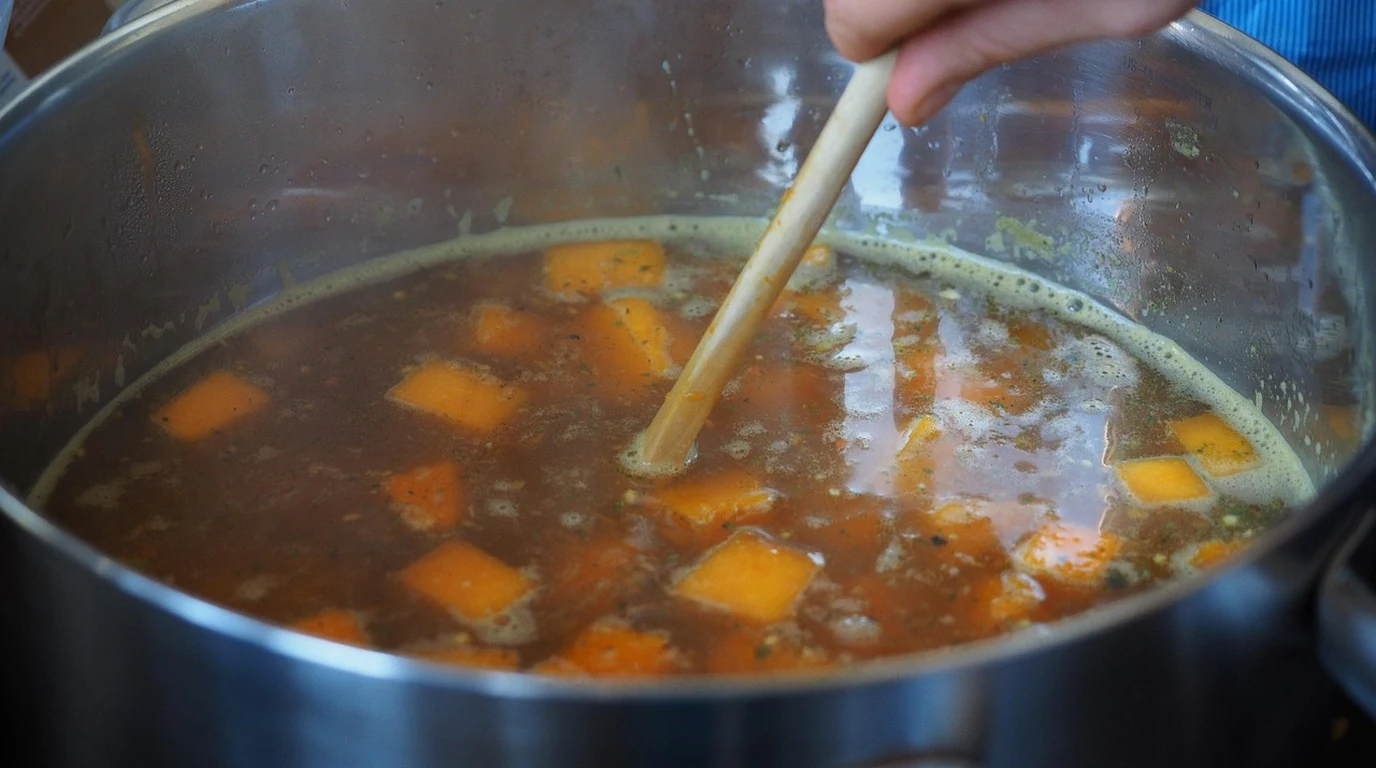
Bring the pot to a soft boil over medium heat, then lower the temperature to its minimum setting. Cover with a tight-fitting lid. You want a very gentle simmer—just a few tiny bubbles rising to the surface every couple of seconds. Maintain this low heat for 24 hours for poultry bones, or 36 to 48 hours for dense beef or bison bones. Check water levels occasionally, adding a cup of warm filtered water if the bones become exposed. Never add onions, garlic, salt, pre-made seasonings, or toxic vegetables.
Step 3: Rapid Straining and Temperature Shock
Once your simmer time is complete, turn off the heat source. Use a slotted spoon to lift out the large bone fragments, then pour the hot liquid through a fine stainless-steel mesh strainer into a large glass bowl or heat-safe container.
Never offer cooked bones from the broth pot to your dog. Long simmering removes the organic collagen matrix that keeps bones flexible, making them brittle and dry. Cooked bones easily splinter into sharp fragments when chewed, which can puncture the esophagus, tear the stomach lining, or cause intestinal blockages that require emergency surgery. Strain all liquid thoroughly and toss spent bones directly into a secure outdoor trash bin.
Step 4: The Lipid De-Fatting Protocol
Place the strained container into an ice bath to cool it quickly, then transfer it directly into your refrigerator for 12 to 24 hours. As the liquid chills, it will separate into two distinct layers. On top, rendered fat will harden into a firm, opaque white cap (tallow or lard). Beneath this cap, the nutrient-dense broth will set into a thick, jiggling gelatin.
Take a firm metal spoon and scrape off the hard white fat cap entirely. Discard the fat. What remains underneath is pure, concentrated, defatted collagen jelly. This clean gelatin matrix is now safe and ready to serve to your dog without risking digestive upset.
How Much Bone Broth Should You Feed Your Dog Daily?
Because de-fatting removes the heavy fat content, clean bone broth is low in calories while remaining dense in nutrients. Start by introducing small amounts over three to four days to let your dog’s gut flora adapt. Once tolerated, follow these daily serving guidelines based on your dog’s body weight:
| Canine Weight Class | Weight Range | Daily Maintenance Dose | Serving Methods |
|---|---|---|---|
| Toy Breeds | Under 15 lbs (< 6.8 kg) | 1 Tablespoon (0.5 fl oz / 15 ml) | Melted gently over dry kibble or raw food |
| Small Breeds | 15 to 30 lbs (6.8–13.6 kg) | 2 Tablespoons (1.0 fl oz / 30 ml) | Served cold as a gelatin chew or warm topper |
| Medium Breeds | 30 to 60 lbs (13.6–27.2 kg) | 1/4 Cup (2.0 fl oz / 60 ml) | Mixed
Canine Nutritional Biochemistry & Whole Food Bioactives
Essential fatty acids play a profound structural role in cellular membranes and inflammation control. For collagen peptides and systemic gut integrity, explore our deep dive on Omega-3 EPA and DHA for Dogs: Dosing & Rancidity. |