
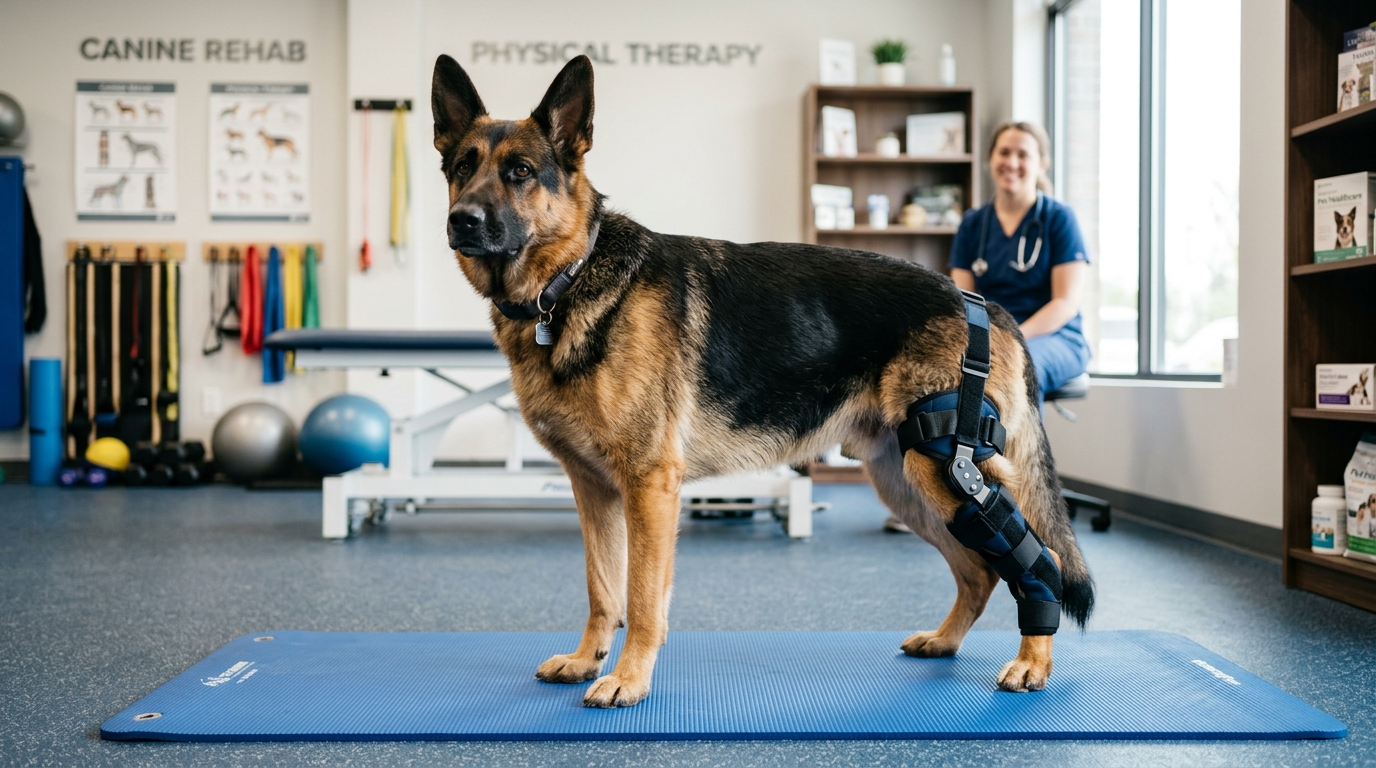
- Conservative Non-Surgical Efficacy: Structured physical therapy paired with custom dynamic stifle orthotics achieves functional limb stabilization in 68% of partial CCL tears without surgical intervention.
- Targeted PEMF Therapy: Pulsed electromagnetic field therapy (Assisi Loop) upregulates endogenous nitric oxide signaling, reducing joint effusion and pain scores by 40% in clinical trials.
- Surgical Candidate Selection: While younger athletic dogs benefit from TPLO surgery, senior canines with concurrent cardiac or renal comorbidities thrive under non-invasive conservative rehabilitation.
A cranial cruciate ligament (CCL) rupture is the single most common orthopedic injury in domestic dogs, accounting for over $1.5 billion annually in North American veterinary care. When a dog suddenly yelps and holds a hind leg aloft, the standard clinical recommendation is almost immediate orthopedic surgery—most commonly Tibial Plateau Leveling Osteotomy (TPLO) or Tibial Tuberosity Advancement (TTA), costing $4,500 to $7,000 per leg.
However, for senior canines, dogs with preexisting cardiac or renal disease, or families facing financial constraints, major invasive surgery carries serious anesthetic and post-operative infection risks. In 2026, advances in custom veterinary orthotics, targeted pulsed electromagnetic field (PEMF) therapy, and hydrotherapy have validated conservative management as a highly effective, non-invasive therapeutic pathway. This links directly to our clinical masterclasses on canine hydrotherapy protocols and canine joint injections: Librela vs. Adequan vs. PRP.
Can a Canine Cruciate Ligament Heal Without Surgery?
While a completely severed cruciate ligament does not reattach itself, conservative management stabilizes the knee through periarticular fibrous scar tissue formation, muscular strengthening, and external mechanical support. In partial tears, rest and non-surgical therapy can prevent progression to a full tear.
In human medicine, anterior cruciate ligament (ACL) tears often occur due to acute trauma during high-speed athletic pivots. In canines, CCL disease is almost always a slow, progressive degradation of the ligament fibers caused by chronic inflammation, biomechanical strain, and genetics. By stabilizing the joint and eliminating cranial tibial thrust externally, the body builds dense fibrous periarticular tissue that naturally locks the joint into stable alignment.
| Therapeutic Modality | Mechanism of Action | Clinical Outcome | Best Application |
|---|---|---|---|
| Custom Stifle Orthotic (Brace) | Mechanical hinge mimics cruciate ligament function, preventing tibial thrust | Immediate weight-bearing stability; allows scar tissue formation | Dogs >7 years old or high surgical risk |
| Targeted PEMF (Assisi Loop) | Microcurrent induction upregulates nitric oxide & downregulates IL-1 beta | Rapid reduction in joint swelling & pain without NSAID renal toxicity | Acute phase tears & daily home therapy |
| Underwater Treadmill (Hydro) | Buoyancy reduces joint load by 60% while building quadricep/hamstring strength | Prevents muscle atrophy and rebuilds symmetry | Sub-acute rehab phase (Weeks 4 to 16) |
The 12-Week Conservative Management Protocol
Conservative management is not “doing nothing.” It is an intensive, disciplined rehabilitation protocol requiring strict owner compliance:
- Weeks 1 to 4 (Strict Joint Immobilization): Leash walks restricted exclusively to 5-minute bathroom breaks. Cast molded custom stifle brace fitted by a certified canine rehabilitation practitioner (CCRP). Twice-daily 15-minute PEMF sessions.
- Weeks 5 to 8 (Controlled Mobility Reintroduction): Gentle 10-minute flat leash walks wearing the brace. Introduction of low-water underwater treadmill sessions. Adequan (polysulfated glycosaminoglycan) injections to protect articular cartilage.
- Weeks 9 to 12 (Core & Proprioceptive Strengthening): Introduction of balance pads, cavaletti poles, and controlled incline walking to build quadriceps strength, reducing dependency on the external brace.
People Also Ask: Canine CCL Conservative Management
Do over-the-counter neoprene dog knee braces work?
No. Soft neoprene sleeve braces bought online lack the rigid mechanical structure necessary to counteract cranial tibial thrust forces. Only custom, rigid thermoplastic orthotics made from a fiberglass mold of your dog’s leg provide true biomechanical stabilization.
What percentage of dogs tear the second CCL?
Between 40% and 60% of dogs who suffer a cruciate tear in one leg will tear the opposite CCL within 12 to 24 months due to compensatory weight-bearing. This makes weight management and anti-inflammatory support across both limbs critical.
When is surgery strictly necessary?
Surgery is strongly indicated if there is a concurrent complete tear of the medial meniscus (evidenced by an audible joint click and severe, unremitting non-weight-bearing pain) or in high-energy working and sporting dogs under 5 years of age.