
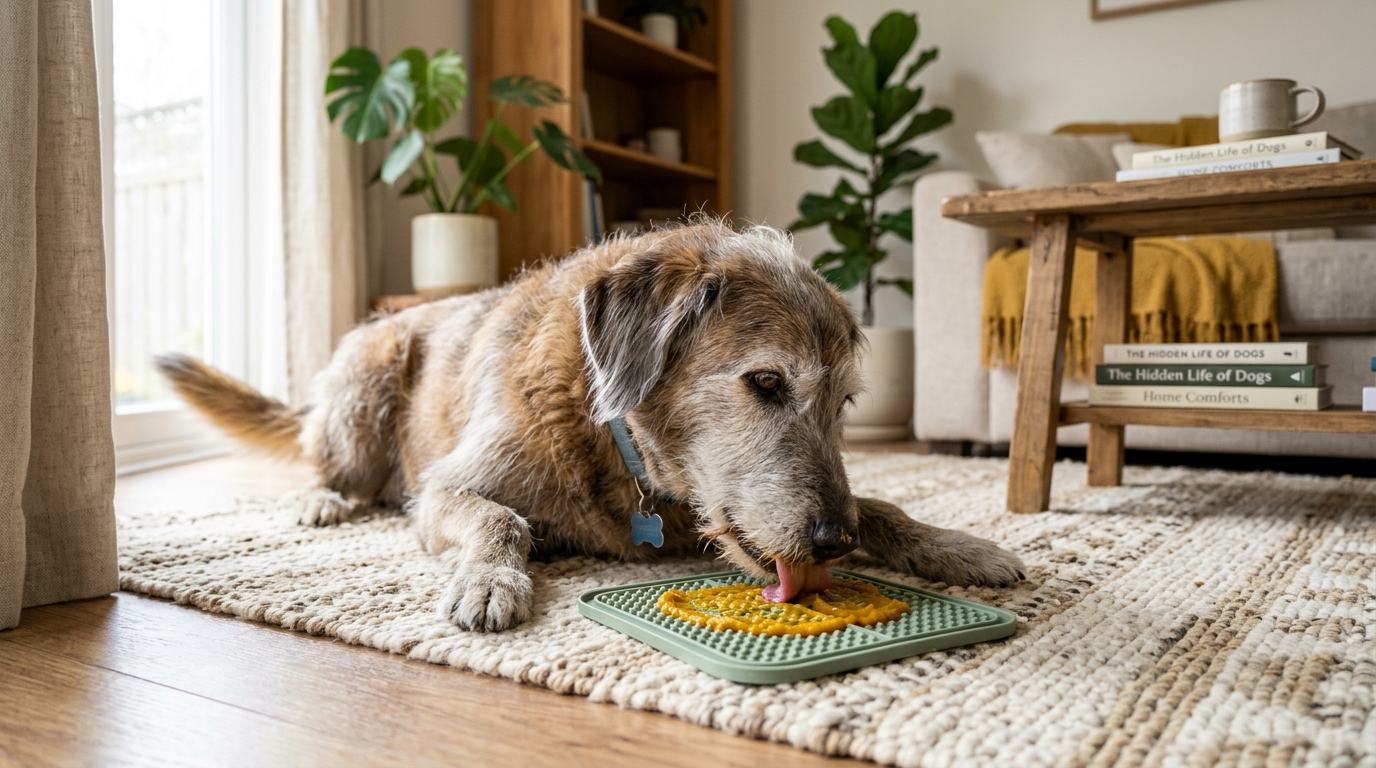
What Are the Clinical Benefits of Lick Mats for Dogs?
Lick mats provide powerful neurological benefits for dogs by stimulating the repetitive licking reflex, which triggers the pituitary release of endorphins and dopamine while significantly lowering serum salivary cortisol levels. This calming physiological response relieves separation anxiety, slows rapid eating, stimulates digestive enzyme production, and provides essential cognitive enrichment for senior dogs with limited physical mobility.
For decades, pet owners assumed that physical exercise—long walks, fetch, and dog park sprints—was the primary outlet for canine energy. However, physical exertion primarily trains cardiovascular endurance without satisfying the canine brain’s instinctual drive to forage, problem-solve, and explore.
For senior dogs suffering from osteoarthritis, hip dysplasia, or vestibular disease, extensive physical exercise is often clinically contraindicated. As established in our research on Canine Brain Health and Olfactory Enrichment, 15 minutes of structured mental enrichment provides equivalent mental satisfaction to a 45-minute physical walk without placing mechanical shear stress on aging joints.
The Neurobiology of Licking: Endorphins & Parasympathetic Tone
Why does repetitive licking exert such a profound calming effect on the canine brain? The mechanism operates along evolutionary neural wiring:
| Physiological Marker | Baseline / Anxious State | During Active Licking (15-20 Min) | Clinical Outcome |
|---|---|---|---|
| Salivary Cortisol | Elevated (Sympathetic activation) | Suppressed by 22% – 35% | Reduced fear, panting, and hypervigilance. |
| Heart Rate Variability (HRV) | Low HRV / Tachycardia | Elevated Parasympathetic Tone | Rest-and-digest mode activated. |
| Endogenous Endorphins | Restricted | Gradual Pituitary Cascade | Natural soothing, analgesia, and emotional comfort. |
| Salivary Amylase & Lysozyme | Minimal | Continuous Secretion | Cleanses tongue, protects teeth, and enhances digestion. |
When the tongue repeatedly traverses the textured grooves of a food-grade silicone lick mat, sensory afferent nerves send continuous rhythmic feedback to the brainstem. This dampens the “fight-or-flight” amygdala response, making lick mats an exceptional non-pharmacological tool during thunderstorms, fireworks, veterinary nail trims, or post-operative cage rest.
Defending Against Canine Cognitive Dysfunction (CCDS)
As dogs advance into their senior years, they face elevated risk of Canine Cognitive Dysfunction Syndrome—the canine biological equivalent of Alzheimer’s disease. As detailed in our clinical protocol on Managing CCDS with Medium-Chain Triglycerides, brain longevity requires continuous synaptic recruitment.
Interactive puzzle feeders—which require sliding, lifting, or nosing compartments to access food—challenge canine spatial working memory and problem-solving circuits. Combining puzzle games with Olfactory Snuffle Mat Scent Work preserves dendritic arborization in the hippocampus and prevents the sensory atrophy that often heralds cognitive decline.
Senior-Safe Formulation & Freezing Guide
To maximize engagement time without causing gastrointestinal upset or caloric overload, select nutrient-dense, functional spreads:
- Pure Canned Pumpkin (100% Cucurbita): Rich in soluble fiber, soothing to the mucosal lining, and extremely low in calories (ideal for weight-conscious seniors).
- Gelatinized Bone Broth: Rich in collagen and glycine to heal gut permeability and rebuild joint matrixes.
- Plain Organic Greek Yogurt / Kefir: Delivers live probiotics to support the gut-brain microbiome axis.
- Mashed Sardines: Provides bioavailable EPA/DHA to combat brain inflammation.
- The Deep-Freeze Technique: Spread your functional purees across the silicone mat and place it in the freezer for 2 to 4 hours before serving. Freezing extends licking time from 5 minutes to 25–35 minutes, providing prolonged parasympathetic relaxation.
Ergonomic Positioning for Arthritic Seniors
A critical veterinary pitfall is placing lick mats flat on slippery tile or hardwood floors. Senior dogs with spinal spondylosis or cervical osteoarthritis experience neck strain when craning downward for prolonged periods, while arthritic paws slip on slick surfaces.
Always place lick mats on a non-slip textured runner rug, or utilize suction-cup silicone mats mounted at chest height on glass sliding doors or refrigerators, allowing senior dogs to lick in a neutral, weight-bearing posture.