
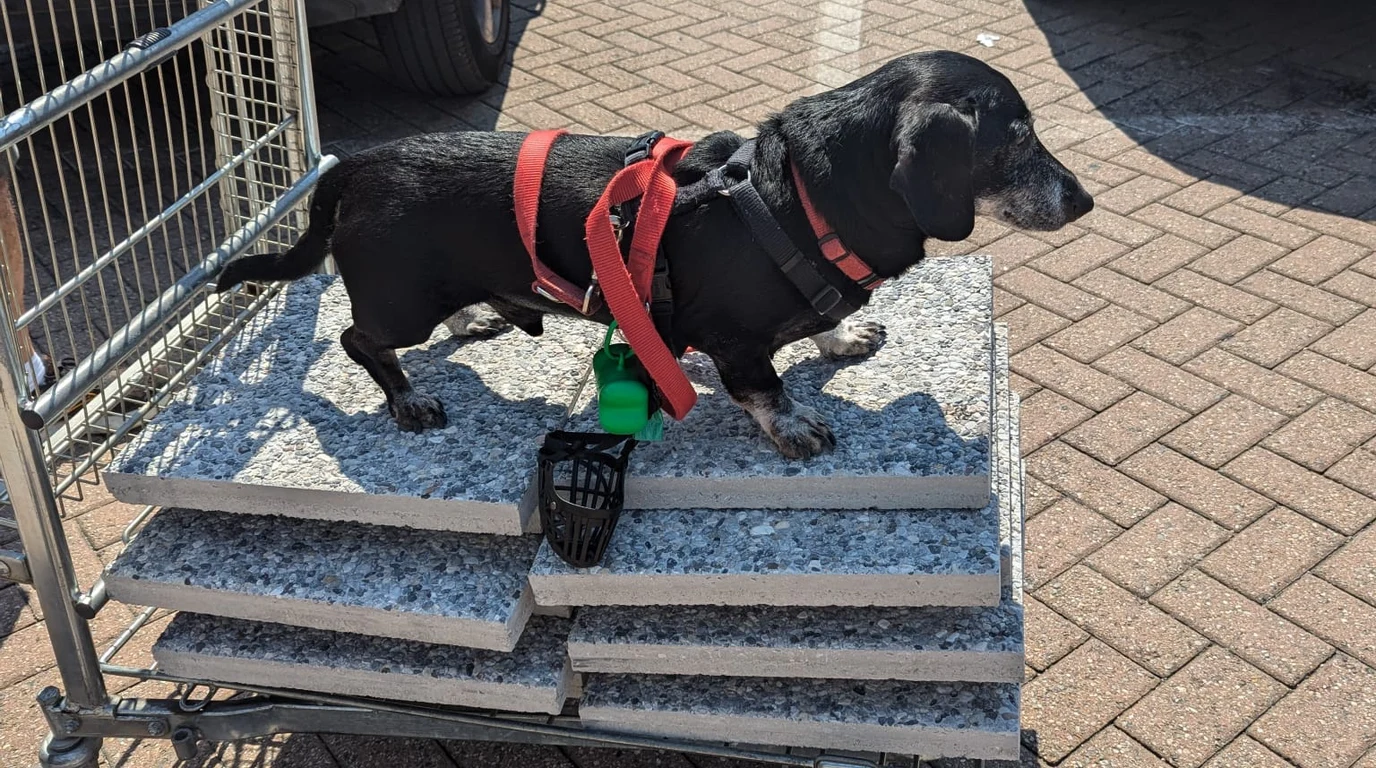
The Genetic Architecture of Chondrodystrophy: The FGF4 Mutation
The beloved silhouette of the Dachshund—with their elongated vertebral column and disproportionately short, muscular legs—is the direct phenotypic manifestation of genetic chondrodystrophy. While historical selective breeding refined this conformation to allow Dachshunds to flush badgers from narrow underground burrows, modern veterinary genetics has unraveled the underlying biological vulnerability: an inserted FGF4 retrogene on canine chromosome 12.
This genetic mutation alters normal endochondral ossification, causing abnormal cartilage development throughout the skeletal system. In non-chondrodystrophic breeds, the jelly-like intervertebral disc center (nucleus pulposus) remains rich in water and proteoglycans well into senior age. However, in Dachshunds carrying the FGF4 mutation, disc chondroid metaplasia begins as early as 6 to 12 months of age. The disc nucleus loses its hydration, calcifies into brittle, chalky material, and places tremendous tensile strain on the fibrous outer ring (annulus fibrosus). When an uncalcified disc experiences sudden torsion or vertical compression, the outer ring tears, allowing calcified disc material to erupt directly into the spinal canal—an acute Hansen Type I disc herniation.
The 5 Clinical Stages of IVDD: Standardized Neurological Grading
Recognizing the onset of IVDD requires immediate, objective neurological grading. The progression of spinal cord compression follows a strict physiological sequence based on the diameter and myelination of spinal cord nerve tracts: large proprioceptive fibers fail first, followed by motor fibers, superficial sensory pathways, and finally the deepest nociceptive pain fibers. Veterinary neurologists classify IVDD across a 5-tier scale:
- Stage 1 (Spinal Hyperesthesia / Pain Only): The spinal cord is inflamed but not severely compressed. The dog exhibits a hunched posture (kyphosis), head carriage held low, shivering, panting, reluctant mobility, and yelping when picked up. Proprioception and motor function are 100% normal.
- Stage 2 (Proprioceptive Ataxia & Ambulation Weakness): Mild spinal compression impairs sensory signaling. The dog can still walk, but their hind legs appear wobbly, drunk, or uncoordinated (knuckling the paws under). Proprioceptive placement tests show delayed paw righting.
- Stage 3 (Non-Ambulatory Paresis): Severe compression. The dog cannot support its own weight or walk independently in the hind limbs, but can still voluntarily move its legs or wag its tail when supported. Bladder control remains intact.
- Stage 4 (Complete Paraplegia with Intact Deep Pain): Complete loss of motor function in the pelvic limbs. The dog cannot move its hind legs and frequently loses urinary continence (overflow bladder incontinence). Crucially, the dog still reacts (turning the head, whining, or attempting to bite) when a veterinarian firmly pinches the toe bones with hemostats—indicating intact deep nociceptive nerve signaling.
- Stage 5 (Complete Paraplegia with Loss of Deep Pain Perception – DPP Negative): The ultimate neurosurgical emergency. Total motor paralysis coupled with zero conscious perception of painful sensory stimuli in the toes. The micro-capillary blood supply to the central spinal cord is severely compromised. Hemilaminectomy must be performed within 24 to 48 hours; beyond 48 hours without deep pain, the prognosis for ever walking again drops from 60% down to under 5%.
| IVDD Stage | Clinical Neurological Presentation | Recommended Treatment Pathway | Surgical Urgency & Prognosis |
|---|---|---|---|
| Stage 1 | Hunched back, shivering, vocalizing, no weakness | Conservative: 6–8 weeks strict crate rest + NSAIDs/Gabapentin | Non-surgical; 80%–90% full recovery with strict rest |
| Stage 2 | Wobbly hind gait (ataxia), paw knuckling, ambulatory | Conservative strict crate rest or elective surgical decompression | 75%–85% success conservative; >95% surgical success |
| Stage 3 | Cannot stand or walk, voluntary leg movement present | Surgical candidate (Hemilaminectomy) or strict conservative | Urgent surgery within 3–5 days; 90% surgical recovery |
| Stage 4 | Complete hind limb paralysis, deep pain intact | Neurosurgical emergency: Hemilaminectomy decompression | Emergency within 24–48 hours; 85%–90% full recovery |
| Stage 5 | Complete paralysis, ZERO deep pain perception (DPP-) | Critical emergency: Hemilaminectomy within 24 hours | 50%–60% recovery if operated <24h; <5% recovery if >48h |
Conservative Management vs. Neurosurgical Hemilaminectomy
When an IVDD diagnosis is confirmed via MRI or CT imaging, guardians must decide between conservative medical management and surgical decompression:
The Conservative Protocol (The 8-Week Rule): Conservative management does not mean “taking it easy around the living room.” It demands 100% strict confinement inside a crate or playpen for 6 to 8 consecutive weeks. The dog is removed exclusively on a 2-foot leash for 3-minute bathroom breaks. Strict confinement allows the ruptured fibrous disc ring to form dense scar tissue. If crate rest is broken prematurely after 2 weeks because the dog “feels better” on painkillers, the partially healed disc will catastrophically re-rupture, transforming a Stage 1 injury into Stage 4 paralysis.
Neurosurgical Hemilaminectomy: For Stage 3, 4, and 5 patients, a board-certified veterinary surgeon opens the vertebral arch, gently retracts the spinal cord, and physically suctions and removes the extruded calcified disc material compressing the nervous tissue. Post-operative care involves laser therapy, hyperbaric oxygen, and underwater treadmill hydrotherapy to retrain motor pathways.
Home Environmental Modifications: Ramps, Runner Rugs & Proper Handling
Preventative engineering in the home reduces mechanical peak spinal loads by up to 70%. Adhere to these core lifestyle rules for every Dachshund:
- Eliminate Furniture Jumping (The Ramp Mandate): A Dachshund landing from a 24-inch couch exerts massive vertical shock waves along the thoracolumbar junction (T11–L2). Install gradual carpeted pet ramps leading to couches and beds, and train your dog to use them consistently with positive reinforcement.
- Block Stairways with Baby Gates: Navigating steep human stairs places repetitive torque on long spinal columns. Install baby gates at the top and bottom of staircases; carry your Dachshund up and down stairs whenever possible.
- The Football Carry Technique: Never lift a Dachshund by their front armpits like a human toddler—this stretches and arches the spine violently. Always lift them using the two-handed “football hold”: one hand fully supporting the chest between the front legs, the other hand cradling the rump and hindquarters, keeping the spinal column 100% horizontal.
- Harness-Only Leash Walking: Never attach a leash to a collar for daily walks. Neck pulling induces severe cervical disc herniations (C2–C5). Use a well-padded, Y-shaped chest harness that distributes tensile pressure across the ribcage.
- Strict Body Condition Score (BCS 4/9): Obesity is an accelerant for IVDD. Every excess pound of visceral adipose tissue increases spinal sagging and disc pressure. Maintain your Dachshund in lean, athletic condition with easily palpable ribs and a visible abdominal tuck.
Advanced Neuro-Rehabilitation: Laser Therapy, Hydrotherapy & Acupuncture
Recovering from an IVDD episode—whether managed conservatively through strict confinement or post-operatively following a hemilaminectomy—demands a structured multi-modal rehabilitation protocol to retrain damaged peripheral motor nerves and rebuild stabilizing spinal musculature:
- Class IV Cold Laser Therapy (Photobiomodulation): Applying near-infrared light wavelengths (810nm to 980nm) directly along the injured vertebral segment stimulates mitochondrial cytochrome c oxidase, accelerating cellular ATP production, reducing inflammatory edema, and promoting axonal regeneration along bruised nerve tracts.
- Underwater Treadmill Hydrotherapy: Buoyancy provided by warm water unloads up to 70% of the dog’s body weight, allowing paretic dogs to initiate stepping motions without bearing heavy musculoskeletal loads. Water resistance strengthens core paraspinal muscles and reactivates sensory proprioception pathways safely.
- Targeted Electroacupuncture (e-stim): Inserting fine acupuncture needles into localized bladder meridian acupoints (such as BL-23 and BL-60) and applying low-frequency electrical micro-currents stimulates endogenous endorphin release and reactivates dormant neuro-pathways in non-ambulatory dogs.
Core Strengthening & Cavaletti Exercises for Long-Term Spinal Stability
Once a Dachshund has successfully passed the mandatory 8-week confinement phase and regained pain-free mobility, physical maintenance shifts toward lifelong spinal stability. Building dense, supportive muscular tone in the abdominal core and paraspinal epaxial muscles forms an internal muscular corset that shields calcified discs from shear forces:
Engage your Dachshund in structured, low-impact conditioning: walking across low cavaletti poles (spaced evenly at leg length to encourage conscious paw lifting), practicing controlled wobble board balance exercises, and executing gentle weight-shifting maneuvers on balance cushions. Avoid sudden ballistic activities—such as high-speed fetch, frisbee jumping, or tug-of-war games that jerk the cervical neck—to safeguard your dog’s spine for a vibrant, mobile lifetime.
Comparative Case Studies: Dachshund vs French Bulldog vs Basset Hound IVDD
While Dachshunds account for the majority of clinical chondrodystrophic disc herniations, comparing disc pathology across other vulnerable breeds illuminates breed-specific biomechanics:
- French Bulldogs (Cervical & Thoracic Complex): Frenchies inherit both chondrodystrophy (FGF4 on chromosome 12) and severe vertebral malformations (hemivertebrae, butterfly vertebrae, and screw-tail deformities). Unlike Dachshunds, who herniate predominantly along the thoracolumbar spine (T12–L2), French Bulldogs exhibit a dramatically higher proportion of high cervical disc herniations (C2–C4), causing acute quadriplegia and respiratory compromise.
- Basset Hounds (Heavy Frame & Excessive Spinal Sag): Basset Hounds possess extreme bone density combined with an extraordinarily long dorsum. Their immense adult mass (45 to 65 pounds) exerts tremendous baseline downward torque on spinal discs. While their thick epaxial musculature provides some stabilization, sudden twists or falls from pickup truck tailgates frequently trigger multi-disc extruded ruptures that require extensive multi-window hemilaminectomies.
- Cavalier King Charles Spaniels (Syringomyelia vs IVDD): In Cavaliers, spinal neck pain must be carefully differentiated from Chiari-like malformation and syringomyelia (fluid cavitation in the spinal cord). An MRI is strictly mandatory before assuming pain is caused by disc herniation.
Long-Term Cartilage & Anti-Inflammatory Nutritional Protocols
Nourishing intervertebral discs through targeted bioactive nutrition supports cellular health across non-herniated spinal segments:
Supplementing with cold-extracted New Zealand Green-Lipped Mussel (rich in eicosatetraenoic acid ETA and glycosaminoglycans) inhibits the 5-lipoxygenase (5-LOX) inflammatory pathway, providing natural spinal comfort. Furthermore, incorporating bioactive type II undenatured collagen (UC-II) modulates immune tolerance in joint chondrocytes, while high-potency marine omega-3 fatty acids (EPA and DHA at 100mg/kg daily) reduce matrix metalloproteinase enzymes that degrade disc collagen.
The Emotional Toll & Caregiver Fatigue: Navigating the 8-Week Confinement
While the physical mechanics of IVDD treatment are heavily documented in veterinary literature, the psychological burden on dog guardians is profound. Nursing an active, intelligent Dachshund through two consecutive months of strict crate confinement demands unwavering mental discipline and structured emotional support.
Guardians frequently struggle with immense guilt when their companion whines, barks, or paws at the crate door. It is vital to recognize that breaking crate rest out of sympathy is the leading cause of permanent paralysis. To alleviate stress for both dog and owner, transform the confinement area into a comfortable, enriched healing sanctuary:
- Reposition the Recovery Suite: Place the crate or playpen in the central family living space—such as the living room or home office—elevated slightly on a low table or sofa-adjacent platform so your dog remains at eye level with family members rather than isolated on the floor.
- Mental Enrichment Without Spinal Movement: Replace physical exercise with gentle, static olfactory enrichment: long-lasting frozen lick mats coated with pureed pumpkin and bone broth, soft snuffle mats placed directly under their chin, or calming classical music formulated for dogs.
- Assisted Incontinence Care: For dogs recovering from Stage 3 or Stage 4 paresis with compromised bladder tone, learn manual bladder expression from your veterinary technician to prevent severe urinary tract infections (UTIs) or urine scalding on the hind legs.
- Maintain a Structured Recovery Log: Document daily neurological milestones: note the return of deep pain, the first voluntary tail wag, flickers of hind paw withdrawal reflexes, and gradual reductions in pain medication. Tracking objective improvements reinforces caregiver resolve and provides invaluable diagnostic data for your neurology re-check visits.
Frequently Asked Questions About Dachshund IVDD
What are the earliest signs of IVDD in a Dachshund?
Earliest Stage 1 signs include a hunched back (kyphosis), head held low, shivering, panting, reluctance to jump or look up, and yelping when picked up. The dog can still walk normally, but vocalizes pain when their spine is touched.
Can a paralyzed dog recover from IVDD without surgery?
Dogs in Stage 1 and Stage 2 have high conservative recovery rates (75%–85%) with 6 to 8 weeks of strict crate rest. Stage 3 dogs can occasionally recover conservatively, but Stage 4 and 5 paralysis cases have dramatically higher success rates with emergency hemilaminectomy surgery.
What does 'loss of deep pain' mean in IVDD?
Deep pain perception (DPP) is tested by firmly pinching the dog's toe bones with hemostats. If the dog shows a conscious reaction (looking, whining), deep pain is intact. If there is zero conscious response (DPP negative), the deepest spinal nerve tracts are compressed, requiring emergency surgery within 24 hours to prevent permanent paralysis.