
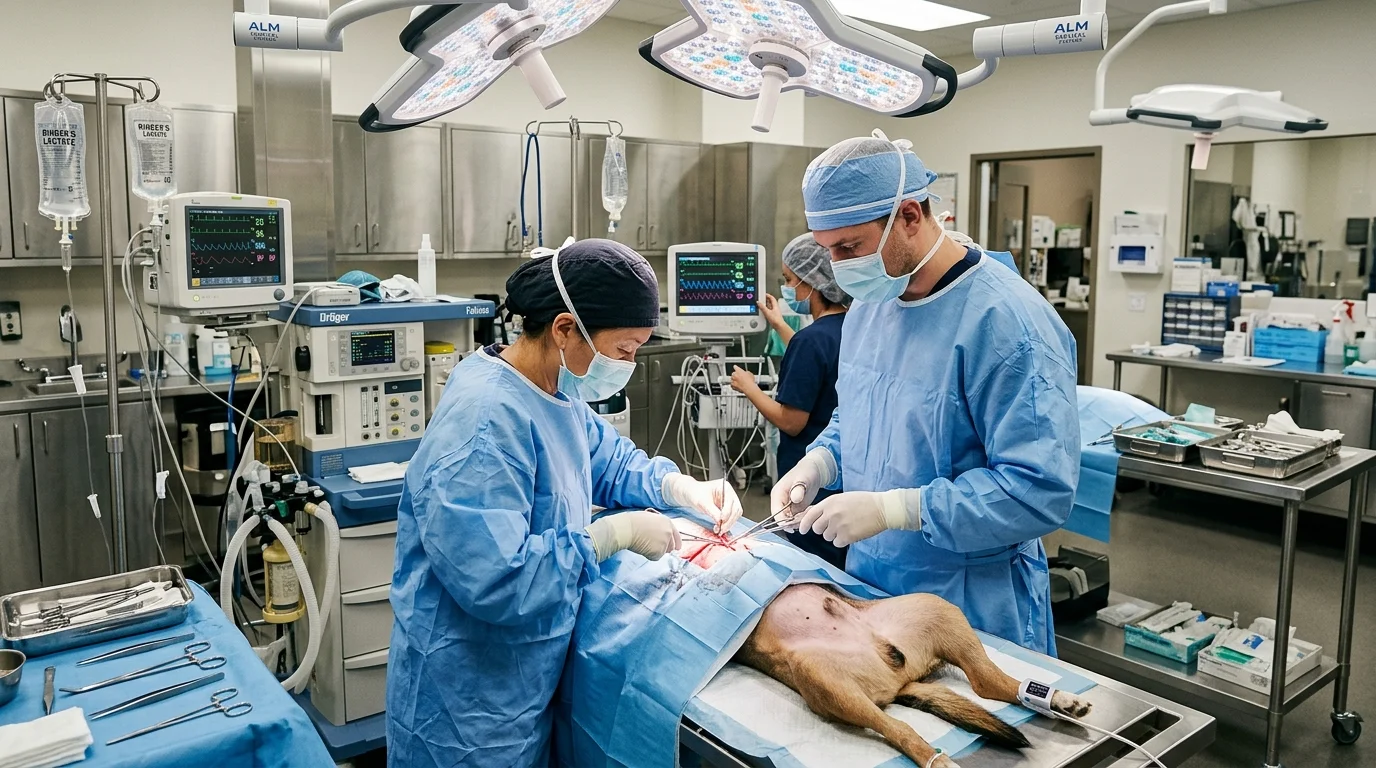
- Vascular Malignancy: Hemangiosarcoma (HSA) is a highly aggressive, malignant neoplasm arising from vascular endothelial cells. The spleen is the primary site in 50–65% of cases, followed by the right atrium of the heart, liver, and subcutaneous tissues.
- The “Bleed-and-Recover” Cycle: Early symptoms frequently mimic transient fatigue. Micro-bleeds from fragile vascular chambers create episodic anemia, pale gums, and sudden collapse; as the dog’s body reabsorbs peritoneal blood, energy returns within 24–48 hours, creating a false sense of recovery.
- Integrative Survival Strategies: While surgery (splenectomy) plus doxorubicin chemotherapy yields median survival times of 6–8 months, emerging integrative protocols utilizing Yunnan Baiyao, I’m-Yunity (PSP Coriolus versicolor extract), and metronomic chemotherapy are extending disease-free intervals.
Canine hemangiosarcoma is often called the “silent killer” of middle-aged and older dogs, with breeds like Golden Retrievers, German Shepherds, and Boxers carrying heightened genetic susceptibility. Because early tumor growth inside the vascular network of the spleen produces no external pain, the disease frequently remains entirely undetected until a catastrophic acute rupture occurs.
Recognizing the subtle precursor signs of internal hemorrhaging and understanding the immediate diagnostic and surgical pathways can mean the difference between peaceful emergency resuscitation and fatal hemorrhagic shock.
What Are the Early Warning Signs of Dog Hemangiosarcoma?
Learn about breed-specific genetic vulnerabilities in our analysis of Golden Retriever Cancer & Cardiac Longevity Screening, and explore liquid biopsy options in Canine Cancer Early Detection: Liquid Biopsy Guide.
Clinical Diagnostic & Staging Protocol
When hemangiosarcoma is suspected, immediate multi-modality staging determines whether surgical intervention is viable:
| Staging Procedure | Clinical Diagnostic Objective | Prognostic Threshold |
|---|---|---|
| Abdominocentesis & PCV | Needle tap of free abdominal fluid; comparing fluid PCV to peripheral blood PCV | Fluid PCV matching or exceeding peripheral PCV confirms active hemoabdomen |
| Echocardiography | Ultrasound examination of the right atrium and auricle for concurrent lesions | Concurrent cardiac HSA occurs in up to 25% of splenic cases, altering surgical viability |
| 3-View Thoracic Radiographs | Screening for pulmonary metastatic “cannonball” nodules | Visible pulmonary metastasis indicates Stage III disease with poor surgical prognosis |
| Histopathology (Post-Splenectomy) | Tissue biopsy differentiating malignant HSA from benign hematoma/hemangioma | The “Two-Thirds Rule”: ~66% of splenic masses are malignant, and ~66% of those are HSA |
Surgical Splenectomy and Integrative Longevity Interventions
Emergency splenectomy resolves the immediate life-threatening hemorrhage. However, splenectomy alone yields a median survival time of only 60 to 90 days due to microscopic micrometastases already present at diagnosis. Combining splenectomy with adjuvant intravenous doxorubicin chemotherapy extends median survival to approximately 180 days (6 months).
Exciting oncology research from the University of Pennsylvania showed that dogs treated with Polysaccharopeptide (PSP)—a compound extracted from Coriolus versicolor (Turkey Tail mushroom, known commercially as I’m-Yunity)—exhibited the longest median survival times recorded in veterinary literature without chemotherapy (199 days), driven by anti-angiogenic and immunomodulatory effects.
A hemangiosarcoma diagnosis is emotionally daunting, but immediate hemodynamic stabilization followed by splenectomy provides precious quality time. Implementing an integrative regimen—pairing doxorubicin or metronomic protocols with high-purity Turkey Tail PSP extracts and Yunnan Baiyao—maximizes longevity while safeguarding daily comfort and vitality.