
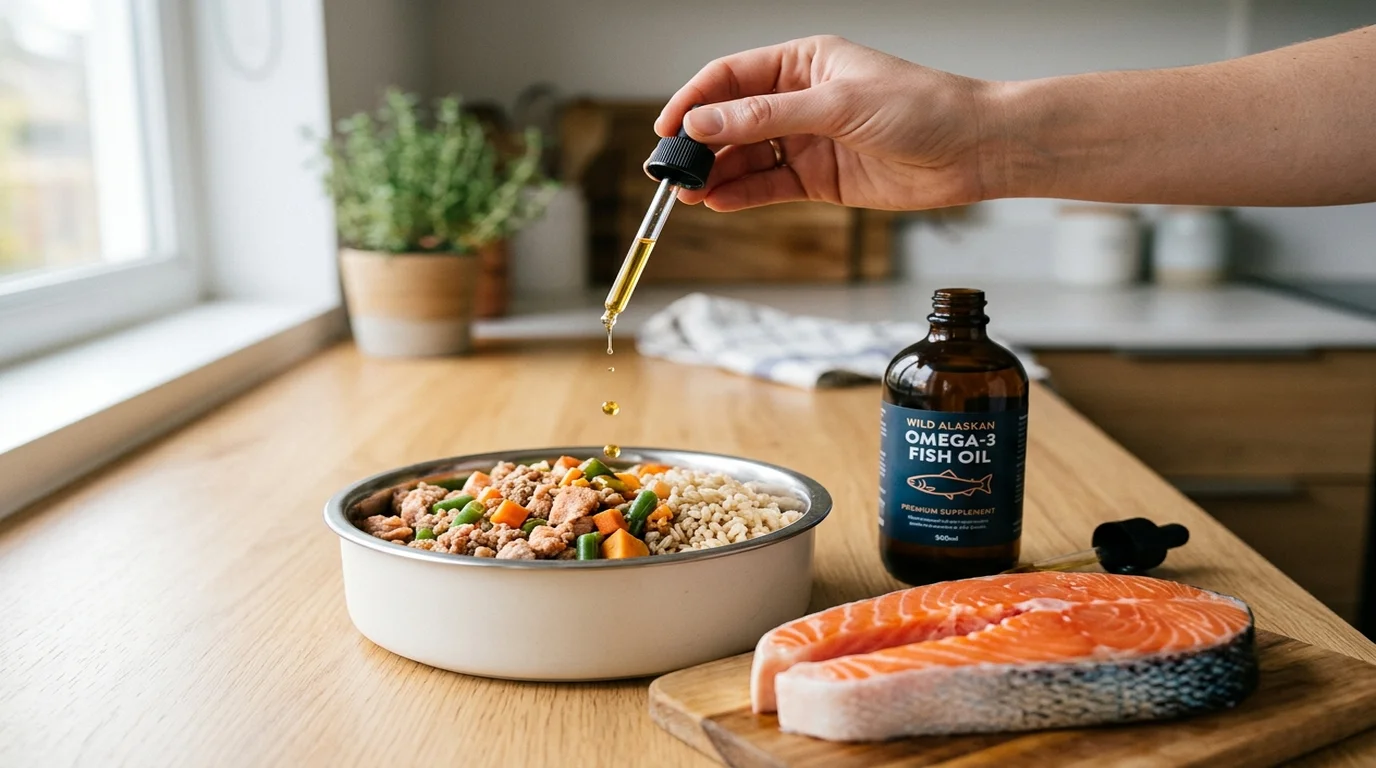
Omega-3 fatty acids are among the most researched nutritional supplements in veterinary medicine. However, the commercial pet food market is flooded with deceptive labeling: dry kibble bags advertising ‘rich in omega-3s’ from flaxseed, or low-potency salmon oil treats oxidized during warehouse storage. Understanding the molecular distinction between terrestrial and marine fatty acids is crucial to reducing chronic canine inflammation.
Why Can’t Dogs Efficiently Convert Plant-Based Flaxseed ALA?
Our veterinary biogerontology team analyzed lipid peroxidation levels, erythrocyte membrane fatty acid profiles, and inflammatory eicosanoids across dogs supplementing marine versus terrestrial lipids.
The Critical Importance of Vitamin E Co-Supplementation
As polyunsaturated fatty acids (PUFAs) integrate into cellular phospholipid bilayers, they increase the cell’s susceptibility to free radical oxidation. When supplementing high therapeutic doses of EPA and DHA, veterinarians recommend adding 1 to 2 IU of natural d-alpha tocopherol (vitamin E) per pound of body weight to prevent oxidative stress.
Explore our broader whole-food nutritional masterclasses in Raw Dog Food vs Kibble: The Microbiome Science and our foundational guide to Superfoods for Dogs: Canine Health.
| Clinical Condition | Recommended EPA+DHA Dose | Primary Active Fatty Acid | Veterinary Physiological Mechanism |
|---|---|---|---|
| Canine Osteoarthritis | 100 mg / kg body weight | EPA (Eicosapentaenoic Acid) | Suppresses cartilage aggrecanase & COX-2 |
| Chronic Kidney Disease (CKD) | 75 mg / kg body weight | EPA + DHA combined | Lowers glomerular hypertension & proteinuria |
| Canine Cognitive Health | 50 mg / kg body weight | DHA (Docosahexaenoic Acid) | Maintains neuronal membrane fluidity & synapses |
| Atopic Dermatitis & Allergies | 125 mg / kg body weight | EPA (Competes with AA) | Displaces arachidonic acid in epidermal cells |
| Plant-Based Flaxseed Oil | Ineffective (< 1% conversion) | ALA (Alpha-Linolenic Acid) | Dogs lack delta-6 desaturase enzyme efficiency |
The Bioavailability Spectrum: Triglyceride vs. Ethyl Ester Forms
When selecting marine omega-3 supplements for canine longevity, the molecular form of the fatty acids dictates cellular absorption rates. In commercial pet food supplements, manufacturers frequently utilize cheap, synthetic ethyl ester (EE) fish oils produced by replacing the glycerol backbone with ethanol during industrial distillation. In contrast, premium clinical-grade oils preserve the natural triglyceride (TG) or re-esterified triglyceride (rTG) molecular structure.
Pharmacokinetic canine research published in veterinary biochemical journals confirms that natural triglyceride fish oils exhibit up to 70% higher bioavailability and cellular membrane incorporation in dogs compared to synthetic ethyl ester variants. In canine enterocytes, pancreatic lipases hydrolyze triglyceride fatty acids efficiently, whereas ethyl esters require additional hepatic processing, generating free ethanol byproducts that can stress canine liver metabolism over chronic administration.
Clinical Dosing Formulas: Sizing EPA/DHA for Canine Osteoarthritis
To achieve verifiable anti-inflammatory therapeutic effects in canine patients suffering from chronic osteoarthritis, degenerative myelopathy, or cardiac cachexia, veterinarians do not rely on generic bottle weight ranges. Dosing must follow precise clinical mathematical formulas based on metabolic body weight:
- Target Clinical Osteoarthritis Dosing: 100 mg to 125 mg of combined EPA + DHA per kilogram of body weight (equivalent to approximately 45 mg to 55 mg per pound).
- Example Calculation for a 65 lb (29.5 kg) Golden Retriever:
29.5 kg x 110 mg = 3,245 mg total combined EPA + DHA daily. - Cardiovascular and Renal Support Range: Conservative daily baseline protocols recommend 30 mg to 40 mg of EPA/DHA per pound for early preventative healthspan extension.
Sourcing omega-3 from small, wild-caught pelagic forage fish (such as sardines, anchovies, and mackerel) minimizes heavy metal bioaccumulation (mercury, lead, arsenic) and PCB contamination compared to apex predatory fish oils like salmon or cod.
Oxidation Forensics: Peroxide Values and Proper Refrigeration
A critical hazard when supplementing marine omega-3 fatty acids is rancidity and lipid peroxidation. Polyunsaturated fatty acids containing multiple double bonds (such as EPA and DHA) are exceptionally sensitive to ambient light, oxygen, and room temperature heat. Once exposed to oxygen, fatty acid molecules oxidize into toxic lipid peroxides, aldehydes, and secondary oxidation byproducts.
Administering oxidized fish oil to dogs actively induces systemic oxidative stress, depleting cellular vitamin E stores and exacerbating systemic inflammation—the exact opposite of the intended therapeutic goal. Canine longevity practitioners mandate evaluating products for third-party purity certifications (such as IFOS – International Fish Oil Standards) verifying Peroxide Values (PV) under 5 meq/kg and Total Oxidation (TOTOX) scores under 15. Liquid fish oils must be stored in nitrogen-flushed dark glass bottles, kept continuously refrigerated upon opening, and consumed within 30 to 45 days.
Interactions with Blood Clotting and Pre-Surgical Protocols
Because high-dose marine omega-3 fatty acids exert mild antithrombotic effects by competing with arachidonic acid in platelet cell membranes, they slightly prolong bleeding times. While beneficial for cardiovascular health and microvascular perfusion, veterinarians recommend discontinuing high-dose fish oil supplementation 7 to 10 days prior to elective surgeries (such as dental extractions or orthopedic procedures) to prevent intraoperative bleeding complications, resuming administration 48 hours post-operatively.
Metabolic Synergies: Vitamin E and CoQ10 Co-Administration
Because high-dose marine polyunsaturated fatty acids naturally deplete endogenous cellular antioxidant reserves during lipid membrane incorporation, canine longevity medicine mandates pairing high-potency omega-3 supplementation with fat-soluble antioxidants—specifically natural d-alpha-tocopherol (Vitamin E) and ubiquinol (Coenzyme Q10).
Co-administering 1 to 2 IU of natural Vitamin E per milligram of supplemental EPA/DHA neutralizes free radical cascade reactions before lipid peroxidation can occur in cell membranes. For senior dogs with concurrent subclinical cardiovascular strain, adding 30 mg to 50 mg of ubiquinol enhances myocardial mitochondrial energy production, working synergistically with EPA to reduce systemic vascular resistance and optimize cardiac output.
Never rely on plant-based omega-3s for canine health. Supplement with purified, molecularly distilled wild small-fish oil (sardine, anchovy) or calamari oil in triglyceride form, fortified with natural vitamin E to prevent cellular peroxidation.