
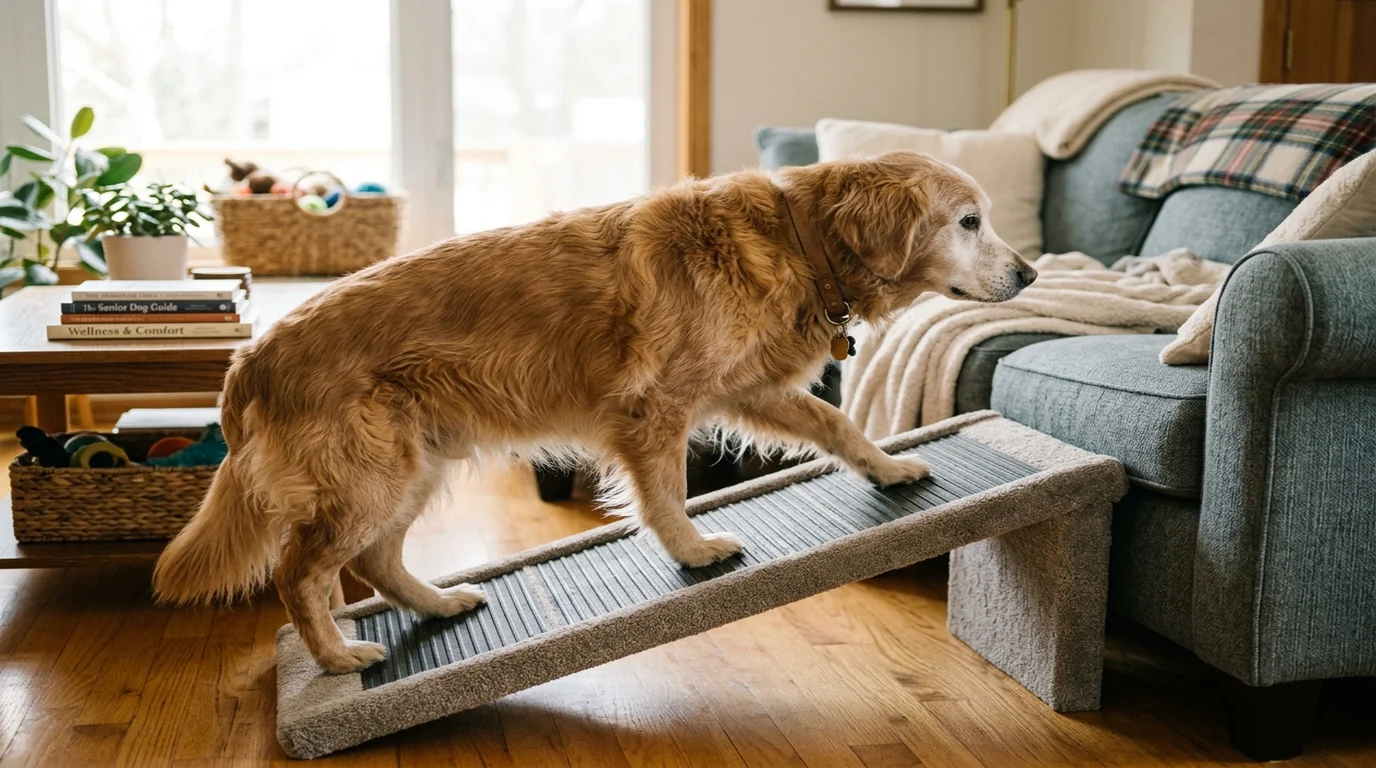
- The Slipping Cascade: In senior dogs with osteoarthritis, hip dysplasia, or sarcopenia, a single slip on polished hardwood can trigger catastrophic soft tissue tears, acute iliopsoas strains, or complete cranial cruciate ligament (CCL) ruptures.
- The Flooring Friction Deficit: Dogs grip floors using their claws and metacarpal pads. Polished hardwood, laminate, and glazed tile have a static coefficient of friction below 0.4, transforming domestic living rooms into high-risk ice rinks for dogs with compromised proprioception.
- Non-Negotiable Environmental Upgrades: Rubber-backed runner rugs creating continuous walking “highways,” biomechanical dog ramps (angle under 25 degrees), and silicone nail toe grips restore canine confidence and eliminate floor phobias.
One of the most heartbreaking hallmarks of canine aging is watching a once-athletic companion hesitate at the threshold of a kitchen or hallway. They stand on the carpet, staring anxiously at the slick hardwood or tile floor, muscles trembling as they calculate the risk of slipping. When they do attempt the crossing, their paws splay outwards, their claws skitter frantically, and their center of gravity drops in panic.
This is not merely an inconvenience; in veterinary orthopedics and physical rehabilitation, domestic falls are the leading cause of sudden mobility loss in senior dogs. A dog that slips and tears an arthritic joint experiences severe pain, enters a downward spiral of muscle atrophy from fear of movement, and faces accelerated cognitive decline. Fortunately, modifying your home environment requires simple, evidence-backed architectural changes.
How Do You Stop a Senior Dog from Slipping on Hardwood Floors?
Canines walk digitigrade—meaning they carry their weight on their toes rather than their heels. When accelerating or braking, a dog relies on the biomechanical engagement of their non-retractable claws digging into terrain. On hard, unyielding residential flooring (hardwood, engineered vinyl plank, laminate, polished stone), claws cannot penetrate the surface; instead, they act like skate blades, reducing friction to near zero.
Furthermore, aging reduces muscle tone in the adductor muscles of the inner thighs. When young dogs experience a minor slip, their neuromuscular reflex immediately fires to pull the limbs back under the pelvis. In geriatric dogs, neurological transmission (proprioception) is slowed, causing the legs to splay completely—often resulting in severe hip subluxation or pelvic trauma.
Biomechanical Solutions Matrix: Comparing Traction Interventions
The comparative matrix below evaluates the efficacy, maintenance burden, and clinical safety of common home traction modifications:
| Intervention Method | Traction Rating | Biomechanics & Dog Tolerance | Maintenance Requirement |
|---|---|---|---|
| Rubber-Backed Runner Rugs | Gold Standard (10/10) | 100% natural gait; zero sensory foreign object resistance | Low (Machine washable runners) |
| Silicone Nail Grips (Dr. Buzby’s) | High (8.5/10) | Grips floor directly where claws meet ground; highly tolerated | Moderate (Reapply every 4–8 weeks) |
| Canine Grip Socks / Booties | Moderate (6/10) | Can cause altered gait (“marching”); interferes with sweat glands | High (Must remove daily to air out paws) |
| Paw Wax / Pad Moisturizers | Low (3.5/10) | Helps dry cracked pads, but wears off in minutes on hardwood | Daily application required |
| Interlocking Foam Exercise Mats | Very High (9/10) | Excellent for food bowl stations and bed surroundings | Wipe clean; chew hazard for puppies |
The “Canine Highway”: Structuring Continuous Home Transit Routes
Veterinary physical therapists recommend building continuous Canine Highways throughout the house. A common homeowner error is placing isolated rugs with 3-foot gaps of bare hardwood in between. Arthritic dogs will jump or panic across these gaps, frequently slipping upon landing.
- Connect Sleeping to Eating Zones: Lay continuous washable runner rugs from your dog’s orthopedic bed straight to their water and food bowls.
- The Outdoor Threshold Highway: Ensure the final transition through exterior sliding glass or back doors is covered with heavy-duty coir or rubber mats, as sudden temperature changes stiffen joints right before steps.
- Ramps vs. Pet Stairs: If your senior dog climbs onto a sofa or bed, discard pet stairs. Ascending and descending stairs forces severe compressive loads onto the lumbosacral spine and elbows. Install a carpeted ramp with an incline of under 25 degrees with safety side rails.
For more strategies on home adaptations and senior joint vitality, read our foundational guide on Senior Dog Mobility & Joint Comfort.
People Also Ask
Should I trim the fur between my dog’s paw pads to stop slipping?
Yes. In long-haired breeds (such as Golden Retrievers, Shepherds, and Spaniels), hair growing between the digital pads acts like silk slippers on slick floors. Keep interdigital fur trimmed flush with the pads using a rounded safety trimmer.
Are dog boots good for indoor traction?
Boots are generally discouraged for prolonged indoor use. Dogs sweat through their paw pads, and wearing boots for extended periods traps moisture, leading to fungal yeast dermatitis. Use runner rugs or nail toe grips instead.
What is the maximum safe ramp slope for a senior dog with arthritis?
The ideal slope for an arthritic canine ramp is between 18 and 22 degrees, and should never exceed 25 degrees. Steep ramps cause dogs to hesitate or slip backwards, defeating their purpose.
To discover how physical environmental adaptations, rug runners, and non-slip traction prevent debilitating falls in senior dogs, read our guide on Canine Chronic Kidney Disease: IRIS Stages & Diet Guide.