
The Evolutionary Mismatch: Beyond Ultra-Processed Kibble
For more than seven decades, pet parents have been conditioned to believe that dogs must consume exclusively dry, brown, extruded pellets from a sealed bag for every single meal of their lives. From an evolutionary, biological, and metabolic perspective, no species on earth thrives when fed an exclusively ultra-processed, dehydrated, shelf-stable diet for an entire lifetime.
In canine longevity research, a transformative concept has emerged: Functional Food Matrix Synergy. Nutrients do not act in isolation. The biological activity of an antioxidant polyphenol inside a fresh wild blueberry or the specialized omega-3 profile of a cold-water sardine operates synergistically with cellular receptors, downregulating nuclear factor kappa B (NF-$\kappa$B), activating mitochondrial biogenesis, and protecting delicate telomeric caps. This masterclass audits the premier canine superfoods backed by clinical veterinary literature, detailing their exact bioactive compounds, physiological mechanisms, and precise, size-tailored feeding dosages.
Top 7 Canine Superfoods: Bioactive Mechanisms & Dosage Matrix
The comparative matrix below details the therapeutic mechanisms, target canine biological pathways, and recommended daily feeding protocols across toy, medium, and large dog breeds.
| Superfood Asset | Primary Bioactive Compounds | Target Biological Mechanism | Daily Dosage Guidelines (by Bodyweight) |
|---|---|---|---|
| Wild Blueberries | Anthocyanins, quercetin, pterostilbene | Crosses blood-brain barrier; enhances spatial memory; reduces neural oxidative stress | Toy (5kg): 4–6 berries Med (15kg): 1 tbsp Large (30kg+): 2–3 tbsp fresh or frozen |
| Steamed Broccoli Sprouts | Glucoraphanin & active Sulforaphane | Potent Nrf2 pathway activator; stimulates Phase II hepatic detox enzymes | Toy: 1/4 tsp finely chopped Med: 1/2 tsp Large: 1 tsp lightly steamed (never raw giant chunks) |
| Wild Sardines (in Water) | Preformed EPA/DHA, CoQ10, Vitamin D3 | Synthesizes resolvins & protectins; blocks arachidonic acid inflammatory cascade | Toy: 1/2 sardine 2x/week Med: 1 whole sardine 3x/week Large: 2 sardines 3x/week |
| Green-Lipped Mussel | Eicosatetraenoic Acid (ETA), GAGs, chondroitin | Inhibits 5-LOX and COX pathways; repairs articular cartilage; improves synovial viscosity | Freeze-dried powder: Toy: 150 mg Med: 350 mg Large: 750–1000 mg daily |
| Pure Canned Pumpkin | Soluble pectin fiber, beta-carotene, potassium | Nourishes colonocytes; ferments into beneficial butyrate; normalizes stool transit | Toy: 1 tsp daily Med: 1 tbsp daily Large: 2–3 tbsp daily (100% pure pumpkin, no pie spices) |
| Grass-Fed Bone Broth | Type II Collagen peptides, Glycine, Proline | Heals hyperpermeable intestinal gut mucosa; provides joint connective tissue matrix | Toy: 1–2 tbsp daily Med: 1/4 cup daily Large: 1/2 cup daily (plain simmered bones, zero onions) |
| Fermented Goat Milk / Kefir | Live probiotics (Lactobacillus), Caprylic acid | Suppresses intestinal fungal dysbiosis; restores mucosal immune barrier | Toy: 1 tsp daily Med: 1 tbsp daily Large: 2–3 tbsp daily |
1. Wild Blueberries: The Neurological Longevity Shield
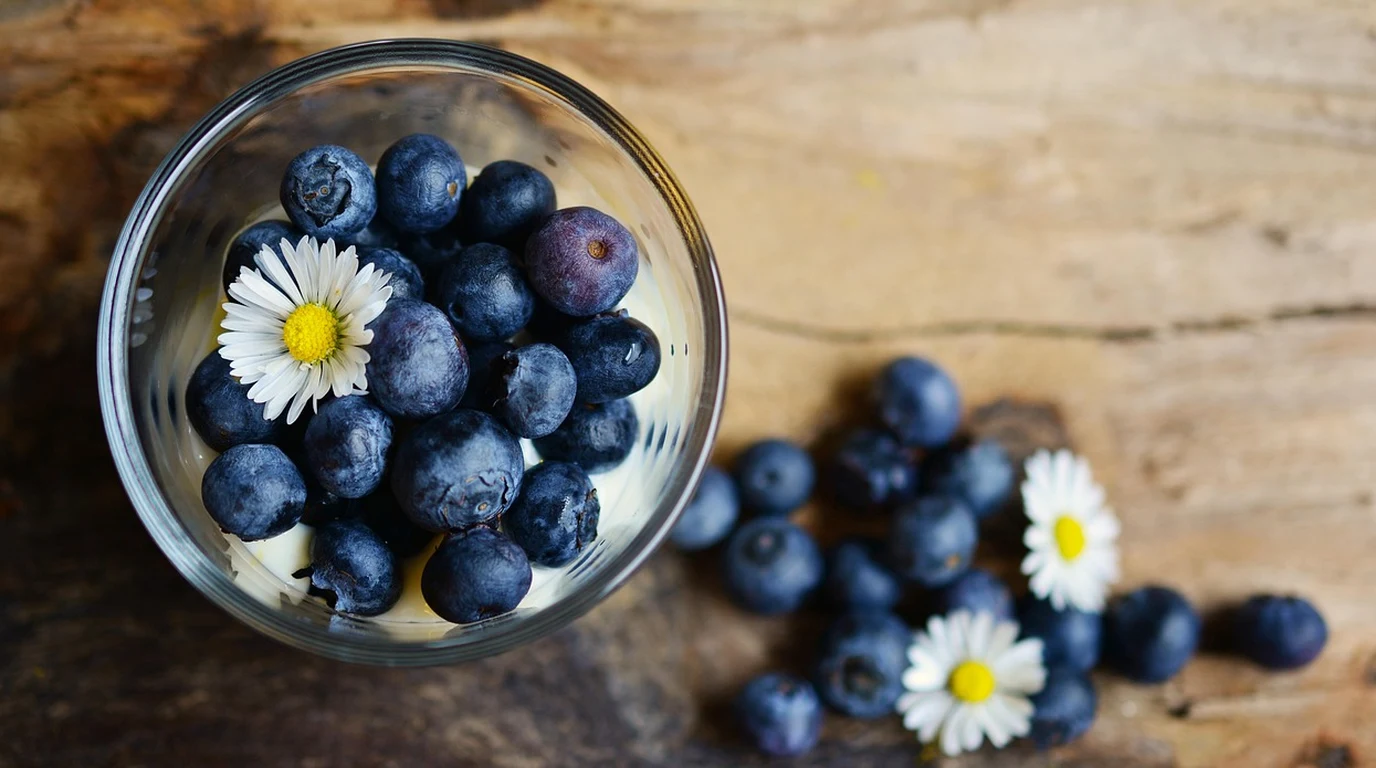
Unlike commercial cultivated blueberries (high-bush), **wild low-bush blueberries (Vaccinium angustifolium)** thrive under severe sub-arctic climates, driving them to produce significantly higher concentrations of defensive phytochemicals. Chief among these are **anthocyanins**—water-soluble flavonoid pigments that impart deep blue-violet hues.
In canine neuro-aging studies, anthocyanins have demonstrated the rare biological capability to traverse the blood-brain barrier, lodging directly in the hippocampus and cerebral cortex. Here, they exert dual therapeutic actions:
- Neutralizing Reactive Oxygen Species (ROS): Canine brains consume roughly 20% of resting oxygen despite representing under 2% of body weight, making neural tissue exceptionally vulnerable to lipid peroxidation. Wild blueberries quench hydroxyl radicals and superoxides before they degrade neuronal membranes.
- Reversing Cognitive Dysfunction Syndrome (CDS): Landmark trials in working sled dogs and aging laboratory canines demonstrated that dietary blueberry supplementation significantly enhanced working memory, obstacle navigation speed, and spatial learning during cognitive acuity trials.
2. Steamed Broccoli Sprouts: Sulforaphane & Cellular Detoxification
Cruciferous vegetables—particularly 3-to-4-day-old broccoli sprouts—represent nature’s most concentrated source of **glucoraphanin**, the biological precursor to **sulforaphane**. When broccoli plant cells are ruptured through light steaming and fine pureeing, the plant enzyme *myrosinase* converts glucoraphanin into bioactive sulforaphane.
Sulforaphane is the most potent natural activator of the **Keap1-Nrf2-ARE cellular pathway**. When Nrf2 (Nuclear factor erythroid 2-related factor 2) translocates into the cell nucleus, it switches on hundreds of protective cytoprotective genes. These encode endogenous Phase II detoxification enzymes—including glutathione S-transferase, heme oxygenase-1 (HO-1), and quinone reductase. These enzymes neutralize environmental carcinogens (such as lawn pesticides, flame retardants, and industrial exhaust) before they bind to canine DNA.
Clinical Preparation Note: Dogs lack the specialized dentition to grind raw fibrous broccoli florets into a cellular paste. Feeding raw, whole chunks of broccoli often results in whole floret pieces passing through the stool untouched while causing excess intestinal gas due to isothiocyanates. To unlock bioavailability, gently steam broccoli sprouts for 3 minutes, then puree or blend them before spooning over food.
3. Whole Wild Sardines: Preformed Marine Omega-3s & Resolvins
Inflammation is the underlying common denominator in almost all chronic canine degenerative diseases, from osteoarthritis and atopic dermatitis to chronic kidney disease. While many pet food manufacturers claim their kibble contains ‘omega-3 fatty acids,’ they almost universally utilize plant-based sources like flaxseed oil.
Canines possess virtually zero delta-6 desaturase enzyme activity. They cannot efficiently convert plant-based Alpha-Linolenic Acid (ALA) into biologically active **Eicosapentaenoic Acid (EPA)** and **Docosahexaenoic Acid (DHA)**. The conversion rate in dogs is estimated at less than 1%. Canines require preformed marine EPA and DHA sourced directly from cold-water forage fish.
Whole wild-caught sardines (canned in pure spring water with zero added salt) provide an unadulterated, low-trophic-level source of EPA and DHA. Unlike apex predator oils (such as salmon or cod), small forage fish live short lives and do not accumulate heavy metals like mercury and polychlorinated biphenyls (PCBs). Furthermore, EPA and DHA serve as the cellular precursors to **Specialized Pro-Resolving Mediators (SPMs)**—specifically resolvins, protectins, and maresins. SPMs do not simply block inflammation like pharmaceutical NSAIDs; they actively instruct immune cells to clear cellular debris and initiate articular tissue repair.
4. New Zealand Green-Lipped Mussel (GLM): Joint Synovium Matrix
Native exclusively to the pristine coastal waters of New Zealand, **Green-Lipped Mussels (Perna canaliculus)** are a structural powerhouse for canine orthopedic longevity. Unlike standard purified glucosamine and chondroitin sulfate supplements extracted from bovine trachea or crustacean shells, GLM provides an intact, whole-food matrix:
- Eicosatetraenoic Acid (ETA): A rare omega-3 polyunsaturated fatty acid that acts as a dual inhibitor of both the cyclooxygenase (COX) and lipoxygenase (5-LOX) inflammatory enzymatic pathways, dampening leukotriene production without causing gastric ulceration.
- High-Molecular-Weight Hyaluronic Acid: Replenishes the viscoelasticity of canine synovial fluid, cushioning arthritic joints and reducing bone-on-bone friction in dogs with hip dysplasia or cruciate ligament tears.
- Sulfated Glycosaminoglycans (GAGs): Provide the essential building blocks required by chondrocytes to synthesize new extracellular cartilage matrix.
5. Pure Pumpkin Puree: Colonic Microbiome Optimization
The canine gut microbiome is the master regulator of systemic immunity, with over 70% of canine immune cells residing in gut-associated lymphoid tissue (GALT). Chronic dysbiosis—triggered by repeated rounds of veterinary antibiotics, sterile kibble, and stress—depletes beneficial bacterial taxa like Faecalibacterium and Bifidobacterium.
100% pure canned pumpkin puree (ensuring no sugar, pie spices, or toxic xylitol) serves as an ideal therapeutic prebiotic. Its soluble pectin fibers dissolve in water to form a soothing mucilaginous gel that coats inflamed intestinal linings, slowing transit time during acute diarrhea. Simultaneously, these fermentable fibers are metabolized by beneficial colon bacteria into **Short-Chain Fatty Acids (SCFAs)**, primarily butyrate. Butyrate acts as the primary fuel source for colonocytes, tightening gut epithelial cell junctions and preventing the systemic leakage of endotoxins into the canine bloodstream.
6. Grass-Fed Bone Broth: Collagen Peptides & Gut Mucosal Healing
Slow-simmered bone broth prepared from beef marrow bones or poultry frames over a 24-hour period extracts rich reserves of **Type II collagen peptides**, **glycine**, and **proline**. In canines suffering from food intolerances or leaky gut syndrome, glycine acts as a rate-limiting amino acid for the synthesis of glutathione (the master hepatic antioxidant) while mechanically reinforcing the tight junctions of the gut enterocytes.
Furthermore, bone broth delivers moisture-rich hydration for dogs that chronically under-drink water—a primary risk factor for idiopathic feline and canine cystitis and urolithiasis. Ensure the broth is prepared purely from water, bones, and a dash of raw apple cider vinegar (to draw out bone minerals), completely omitting toxic allium vegetables (onions, leeks, garlic) and sodium.
7. Fermented Raw Goat Milk / Kefir: Probiotic Biodiversity
Unlike pasteurized bovine cow milk, which contains high levels of the allergenic A1 beta-casein protein and complex lactose that adult dogs cannot digest, raw goat milk contains predominantly A2 beta-casein and smaller fat globules that canines assimilate in less than 20 minutes without causing diarrhea. When fermented into kefir using live cultures, it introduces over 30 distinct strains of beneficial bacteria and yeasts, including Lactobacillus acidophilus, Lactobacillus kefir, and Saccharomyces cerevisiae.
Fermented goat milk is exceptionally rich in **caprylic acid** and **lactic acid**, natural antimicrobial compounds that suppress opportunistic fungal overgrowth (such as Malassezia pachydermatis causing chronic itchy ears and paws). Adding 1 to 2 tablespoons of goat milk kefir to your dog’s evening meal provides living probiotic enzymes that survive gastric hydrochloric acid to colonize the distal ileum and cecum.
Anti-Nutrient Guardrails: Toxic Ingredients to NEVER Feed
While fresh whole foods offer immense longevity advantages, several common human health foods contain compounds that are severely nephrotoxic or hemolytic in canines:
- Allium Vegetables (Onions, Garlic, Leeks, Chives): Contain thiosulfates and allyl propyl disulfide, which oxidize hemoglobin in canine red blood cells, causing irreversible Heinz body hemolytic anemia.
- Grapes & Raisins: Contain high concentrations of tartaric acid, which induces acute proximal renal tubular necrosis and sudden fatal oliguric kidney failure even at minimal doses.
- Macadamia Nuts: Ingestion triggers acute neurotoxic non-fatal paralysis, hyperthermia, and profound hind-limb tremors in dogs.
- Xylitol (Birch Bark Extract / Wood Sugar): Found in human peanut butter and baked goods, xylitol stimulates an instantaneous, catastrophic surge of insulin in canines, precipitating profound hypoglycemia, coma, and acute hepatic necrosis within 30 minutes.
When structuring whole-food canine diets, incorporating targeted superfoods delivers essential polyphenols and enzymes. Review our clinical superfoods guide: Raw Dog Food vs Gently Cooked: Safety & Nutrients.