
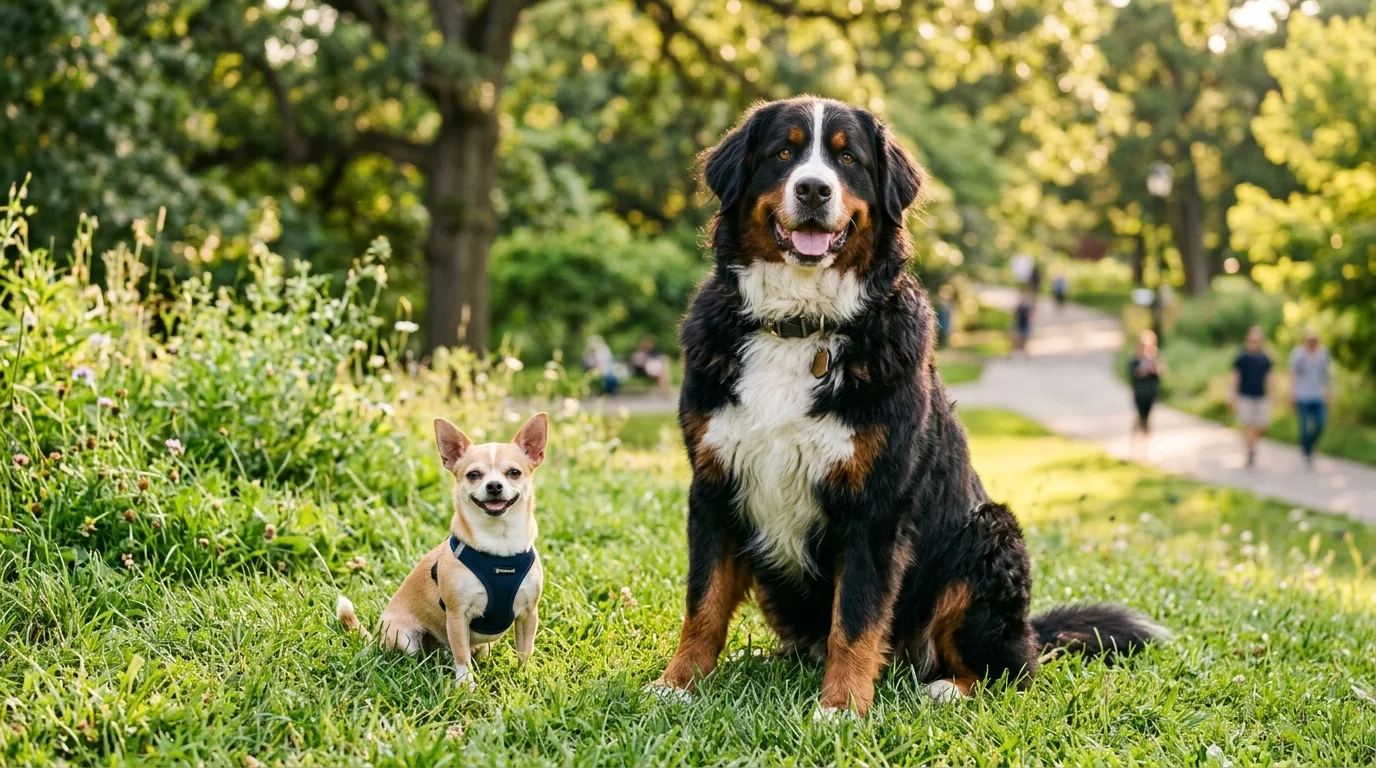
Across the animal kingdom, larger mammalian species generally outlive smaller ones: blue whales outlive mice, and elephants outlive rabbits. Domestic dogs (Canis lupus familiaris) represent a profound biological anomaly: a 6-pound Chihuahua routinely reaches 16 to 18 years of age, while an 140-pound Great Dane or English Mastiff frequently succumbs to organ failure or cancer by age 7 or 8.
What Biological Mechanism Drives Rapid Aging in Giant Breeds?
Our veterinary biogerontology desk synthesized data from the Dog Aging Project and evolutionary biology research to explain the molecular trade-offs between canine size and longevity.
The Cellular Cost of Rapid Growth Acceleration
A Great Dane puppy explodes from 1 pound at birth to over 100 pounds in its first 12 months—a 100-fold expansion. This breathtaking proliferation requires unprecedented DNA replication, driving mitochondrial oxidative stress and rapid telomere shortening. The biological machinery burns through its cellular reserves before reaching middle age.
| Biological Metric | Toy / Small Breeds (e.g. Chihuahua) | Giant Breeds (e.g. Great Dane) | Longevity Mechanism |
|---|---|---|---|
| Average Lifespan | 14 to 17 years | 7 to 9 years | Small dogs age at ~1/2 the cellular rate |
| Serum IGF-1 Concentrations | Low basal levels throughout life | Consistently elevated serum levels | High IGF-1 drives rapid cell division & cancer |
| Post-Natal Growth Velocity | Grows 20x from birth weight | Grows 100x+ from birth weight | Immense cellular strain during early development |
| Free Radical Generation | Moderate mitochondrial ROS output | Massive metabolic ROS generation | Accelerates cellular and organ degradation |
| Telomere Shortening Rate | Gradual telomere loss per year | Rapid telomere degradation curve | Giant breeds hit replicative senescence years earlier |
Understanding the IGF-1 trade-off allows owners of large and giant breeds to take proactive preventative measures: strictly avoid early over-nutrition that accelerates juvenile growth velocity, maintain lean body mass throughout adulthood, and integrate rapamycin or senolytic longevity protocols under veterinary supervision.