
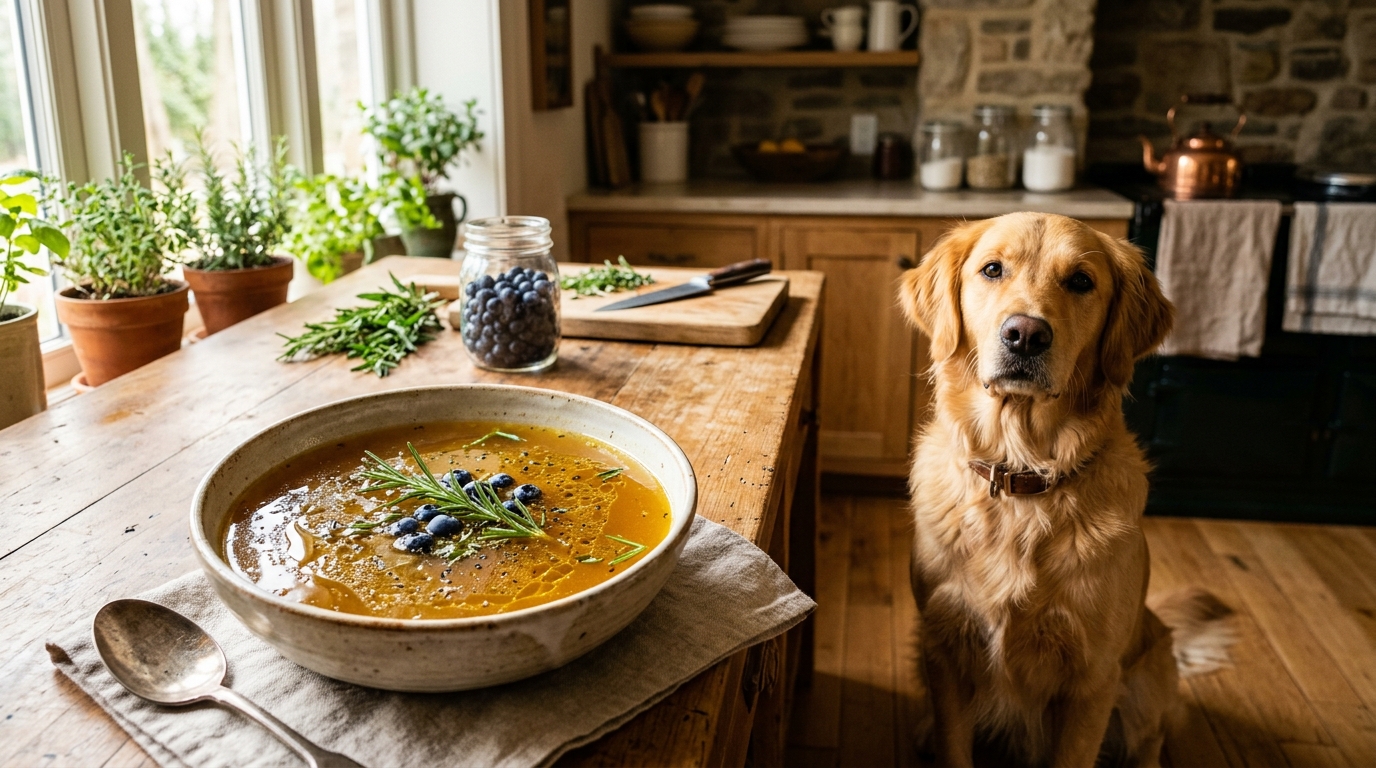
In the rapidly evolving science of canine longevity and functional nutrition, few whole-food interventions offer greater clinical versatility than slow-simmered, gelatin-rich bone broth. While pet food aisles are flooded with dehydrated powders and heavily preserved liquid toppers, authentic bone broth remains the gold standard for bioavailable joint support, intestinal mucosal repair, and senior hydration. Yet between commercial human broths laced with toxic alliums and misguided preparation methods, well-meaning pet parents often stumble into preventable health hazards.
- The Gelatin Factor: High-potency canine bone broth should cool into a firm, gelatinous jelly. This gel indicates high concentrations of Type II collagen, proline, and glycine indispensable for repairing arthritic joints and leaky gut tight junctions.
- The Allium & Sodium Trap: Human-grade commercial grocery broths are toxic to canines due to onion and garlic powder (which triggers oxidative Heinz body hemolytic anemia) and sodium concentrations exceeding 400–600mg per serving.
- The Acidification Lever: Adding raw apple cider vinegar (ACV) during a 20-to-24-hour slow simmer is chemically essential to demineralize marrow bones, drawing calcium, magnesium, and glucosaminoglycans into solution.
- Cross-Referenced Whole-Food Protocols: Connect these findings with our guide on nutrient-dense superfoods for canine digestion and our analysis of fresh food vs. kibble rotational feeding.
Can Dogs Eat Bone Broth Every Day? Clinical Benefits & Dosing
Yes, dogs can safely consume bone broth daily at a standard dosage of 1 tablespoon per 10 pounds of body weight. Daily feeding provides sustained glycine for Phase II hepatic detoxification, bioavailable Type II collagen and hyaluronic acid for arthritic joints, and amino acids that seal compromised gut linings.
Unlike synthetic joint supplements that rely on isolated glucosamine hydrochloride, slow-simmered bone broth delivers an intact extracellular matrix of glycosaminoglycans (GAGs), including chondroitin sulfate, keratin sulfate, and hyaluronic acid, bound in their natural biological co-factors. For geriatric canines suffering from canine osteoarthritis or bilateral hip dysplasia, these compounds stimulate chondrocyte proliferation and inhibit pro-inflammatory matrix metalloproteinases (MMPs) that degrade joint cartilage.
Furthermore, bone broth is extraordinarily rich in glycine—an amino acid that plays an indispensable role in maintaining the integrity of the canine intestinal epithelial barrier. In dogs suffering from chronic dysbiosis, inflammatory bowel disease (IBD), or food intolerances, glycine fuels the synthesis of mucosal tight junction proteins (claudin and occludin), physically preventing bacterial endotoxins (lipopolysaccharides) from leaking across the intestinal wall into systemic circulation.
| Canine Weight Category | Daily Maintenance Dosage | Therapeutic / Illness Dosage | Primary Clinical Target |
|---|---|---|---|
| Toy Breeds (<10 lbs) | 1 – 2 teaspoons daily | 1 tablespoon twice daily | Hypoglycemia prevention, renal hydration |
| Small Dogs (10 – 25 lbs) | 1 – 2 tablespoons daily | 3 – 4 tablespoons daily | Patellar luxation support, gut barrier repair |
| Medium Dogs (26 – 50 lbs) | 2 – 4 tablespoons (1/4 cup) | 1/2 cup daily | Cruciate ligament support, active agility recovery |
| Large Dogs (51 – 80 lbs) | 1/3 – 1/2 cup daily | 3/4 – 1 cup daily | Hip dysplasia mitigation, arthritis pain relief |
| Giant Breeds (>80 lbs) | 1/2 – 3/4 cup daily | 1.5 cups daily | Heavy joint load management, sarcopenia defense |
Why Commercial Human Bone Broths Are Dangerous for Dogs
Human grocery bone broths frequently contain onions, garlic, shallots, and high sodium levels. Alliums contain N-propyl disulfide, an organosulfur compound that causes oxidative hemolysis and Heinz body anemia in canines, while excess sodium places dangerous osmotic strain on senior canine kidneys.
Many pet owners grab cartons of organic beef or chicken bone broth from human grocery stores, assuming that “all-natural” ingredients are inherently canine-safe. This is a critical error. Culinary broths are formulated for human palates, utilizing mirepoix (onions, celery, carrots) and garlic for savory depth. Even in powdered or trace forms, alliums destroy canine erythrocytes (red blood cells), precipitating lethargy, dark urine, pale gums, and acute hemolytic crisis.
Furthermore, human bone broths frequently contain between 400mg and 750mg of sodium per 250ml serving. For a 30 lb dog whose recommended daily sodium intake is under 100mg, a single splash of grocery broth can trigger sodium ion poisoning, exacerbate hypertension, and accelerate the progression of chronic kidney disease.
Veterinary Low-Sodium Bone Broth Simmering Protocol
Combine 3 to 4 lbs of pasture-raised beef marrow bones, chicken feet (for extreme gelatin), and knuckle bones in a slow cooker. Cover with filtered water and add 2 tablespoons of raw apple cider vinegar. Simmer on low heat for 20 to 24 hours. Strain all bones thoroughly, chill until firm, and scrape off the hard white fat cap before serving.
To maximize gelatin density and ensure absolute biological safety, follow this clinical step-by-step protocol:
- Step 1: Bone Selection: Use a combination of dense marrow bones (for mineral depth) and joint-heavy cuts rich in connective tissue—such as chicken feet, beef knuckle, ox tail, or turkey necks. Chicken feet contain the highest concentration of natural collagen type II per gram.
- Step 2: The Acid Catalyst: Place the bones in a large stainless steel pot or slow cooker. Add 2 tablespoons of organic raw apple cider vinegar. Allow the bones to sit in the cold, acidified water for 30 minutes prior to heating to initiate mineral demineralization.
- Step 3: The 24-Hour Low Simmer: Bring the water to a gentle boil, then immediately reduce heat to the lowest setting (approximately 185°F to 200°F / 85°C to 93°C). Cover and simmer for 20 to 24 hours for poultry, or up to 36 hours for dense beef marrow bones.
- Step 4: The Absolute Bone Strain: Using a fine mesh colander, pour the broth into glass storage vessels. Discard all cooked bones immediately into a sealed outdoor bin. Never feed cooked bones to canines.
- Step 5: The Fat Cap Extraction: Transfer the broth to the refrigerator for 6 to 8 hours. As it cools, it will congeal into a thick, firm gelatin jiggly block, while saturated fats float to the top and harden into a dense white disc. Scrape off and discard this entire fat layer to prevent acute pancreatitis.
Bone broth is not an artisanal luxury; it is one of the most cost-effective, biologically dense longevity foods you can introduce into your dog’s daily bowl. When prepared properly—without toxic alliums, with raw apple cider vinegar extraction, and with the inflammatory fat cap meticulously removed—bone broth delivers unadulterated structural collagen, protects the fragile gut microbiome, and provides lifesaving hydration to senior dogs experiencing cognitive or renal decline. Incorporating a scoop of gelatinous bone broth daily is preventative veterinary medicine at its finest.
People Also Ask
How long does homemade bone broth last in the fridge?
Homemade bone broth can be safely stored in an airtight glass container in the refrigerator for 4 to 5 days. For long-term storage, pour the broth into silicone ice cube trays and freeze for up to 6 months, defrosting individual cubes as daily meal toppers.
Can puppies have bone broth?
Yes. Bone broth is exceptional for growing puppies during weaning and teething. It provides bioavailable calcium and phosphorus for bone mineralization, soothing inflamed gums when served as frozen broth cubes.
Can bone broth trigger pancreatitis in dogs?
Yes, if the top layer of hardened fat is not removed. Fat floating to the surface of warm broth is extremely rich and high in saturated lipids. Always chill the broth completely and discard the hard white fat cap before serving to prevent acute pancreatitis.
Does bone broth replace regular dog food?
No. Bone broth is an extraordinary nutritional supplement, meal topper, and hydration aid, but it is not a complete and balanced diet. It lacks essential canine vitamins, omega-3 fatty acids, and complete protein profiles necessary to serve as a standalone meal replacement.
Related Investigations: Explore our clinical breakdown on Canine Sarcopenia & Muscle Wasting in Senior Dogs and our comparative trial on Wild Salmon Oil vs. Green Lipped Mussel Omega-3s.