
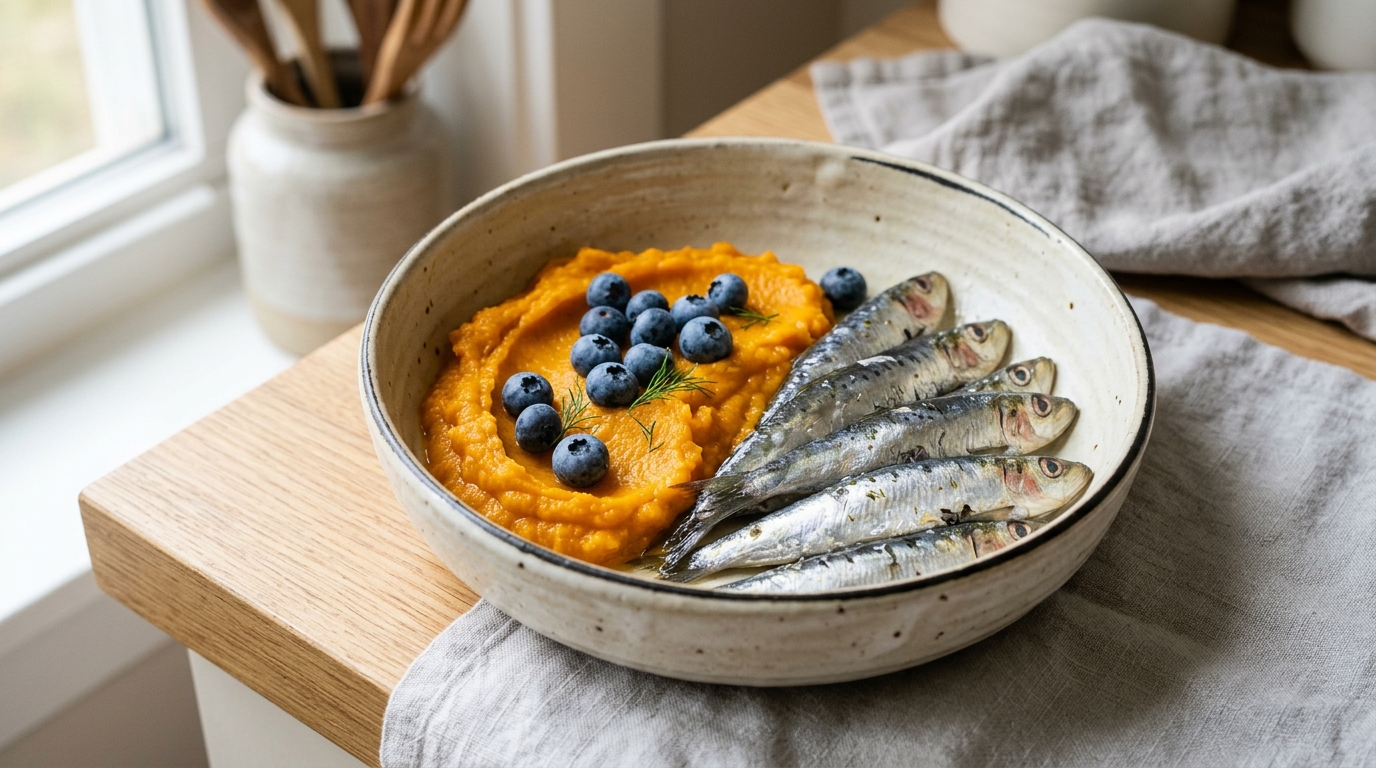
What Are the Benefits of Feeding Sardines to Dogs?
Feeding sardines to dogs provides an immediate, highly bioavailable source of preformed marine omega-3 fatty acids (EPA and DHA), bioavailable vitamin D3, vitamin B12, selenium, and coenzyme Q10. These nutrients clinically soothe allergic pruritus (itching), dampen systemic joint inflammation in osteoarthritic dogs, enhance cognitive function in seniors, and protect cardiovascular endothelium.
Most commercial kibbles rely on plant-based omega-3 sources like flaxseed, chia, or canola oil, touting high levels of Alpha-Linolenic Acid (ALA). However, canines possess virtually non-existent levels of the delta-6 desaturase enzyme required to convert plant-based ALA into active EPA and DHA (conversion rates in canines hover below 1% to 2%).
To combat the chronic low-grade systemic inflammation that underpins canine osteoarthritis, atopic dermatitis, and cognitive dysfunction syndrome (CCDS), dogs require preformed marine long-chain polyunsaturated fatty acids. As explored in our comprehensive Canine Omega-3 Comparative Audit, sardines provide these essential fats in their natural triglyceride form, eliminating the risk of lipid peroxidation commonly seen in cheap pump-bottle fish oils.
The Heavy Metal Advantage: Trophic Level Safety
Pet parents frequently express valid concerns regarding environmental toxins, microplastics, and heavy metal bioaccumulation in seafood. Why are sardines uniquely safe compared to wild salmon or albacore tuna?
The answer lies in marine ecology and the concept of biomagnification:
| Marine Source | Trophic Level | Average Lifespan | Mercury (Hg) Concentration | Canine Safety Profile |
|---|---|---|---|---|
| Wild Sardines | Level 2.5 (Planktivore) | 1 – 3 Years | 0.013 PPM (Near Zero) | Exceptional (Daily / Weekly) |
| Wild Anchovies | Level 2.8 (Planktivore) | 2 – 4 Years | 0.017 PPM | Exceptional |
| Wild Mackerel (Atlantic) | Level 3.6 (Piscivore) | 5 – 10 Years | 0.050 PPM | High (Atlantic only) |
| Wild Pacific Salmon | Level 4.0 (Predator) | 4 – 7 Years | 0.071 PPM | Moderate (Cooked only) |
| Albacore Tuna | Level 4.5 (Apex Predator) | 10 – 15 Years | 0.358 PPM (High Risk) | Avoid / Infrequent Only |
Because sardines feed exclusively on phytoplankton and zooplankton and live short lives, they lack the multi-year biological window necessary to accumulate toxic concentrations of methylmercury, polychlorinated biphenyls (PCBs), or dioxins. Furthermore, sardines contain high concentrations of selenium, a trace mineral that directly binds to methylmercury and renders it biologically inert within canine hepatic pathways.
Canned vs. Fresh: How to Select the Right Sardines
While fresh or flash-frozen raw sardines are outstanding, high-quality canned sardines offer unmatched accessibility and long shelf stability. When purchasing canned sardines for your dog, adhere strictly to these veterinary criteria:
- Packed in Water Only: Never buy sardines packed in soybean oil, sunflower oil, or olive oil. Vegetable oils introduce pro-inflammatory omega-6 linoleic acids that counteract the anti-inflammatory benefits of EPA/DHA.
- No Added Salt (Sodium): Look for labels explicitly stating “No Added Salt” or “In Spring Water with Zero Sodium Added.” Dogs have strict sodium tolerances; standard table salt brines can induce electrolyte imbalances and stress renal filtration.
- Never Flavored: Strictly avoid sardines packed in tomato sauce, mustard sauce, hot sauce, or containing garlic/onion powders, which are toxic to dogs.
- Bones and Skin Included: The soft, pressure-cooked bones found in canned sardines crumble effortlessly between your fingers, providing an easily assimilated, balanced source of whole-food dietary calcium and phosphorus.
Targeted Feeding Protocols by Body Weight
Integrating sardines as a functional rotational topper alongside Canine Bone Broth Formulations and Longevity Superfoods delivers measurable clinical benefits:
| Dog Size / Weight | Weekly Serving Size | Feeding Frequency | Estimated EPA + DHA Yield |
|---|---|---|---|
| Toy (Under 10 lbs / 4.5 kg) | 1/4 to 1/2 small sardine | 2 times per week | ~250 – 350 mg / week |
| Small (10 – 25 lbs / 4.5 – 11 kg) | 1 whole small sardine | 2 to 3 times per week | ~600 – 900 mg / week |
| Medium (26 – 55 lbs / 12 – 25 kg) | 1 to 2 whole sardines | 3 times per week | ~1,200 – 1,800 mg / week |
| Large (56 – 85 lbs / 26 – 38 kg) | 1 full standard can (3.75 oz) | Split across 2 meals / week | ~2,200 – 2,800 mg / week |
| Giant (86+ lbs / 39+ kg) | 1 to 1.5 full cans (in water) | Split across 3 meals / week | ~3,000 – 4,000 mg / week |