
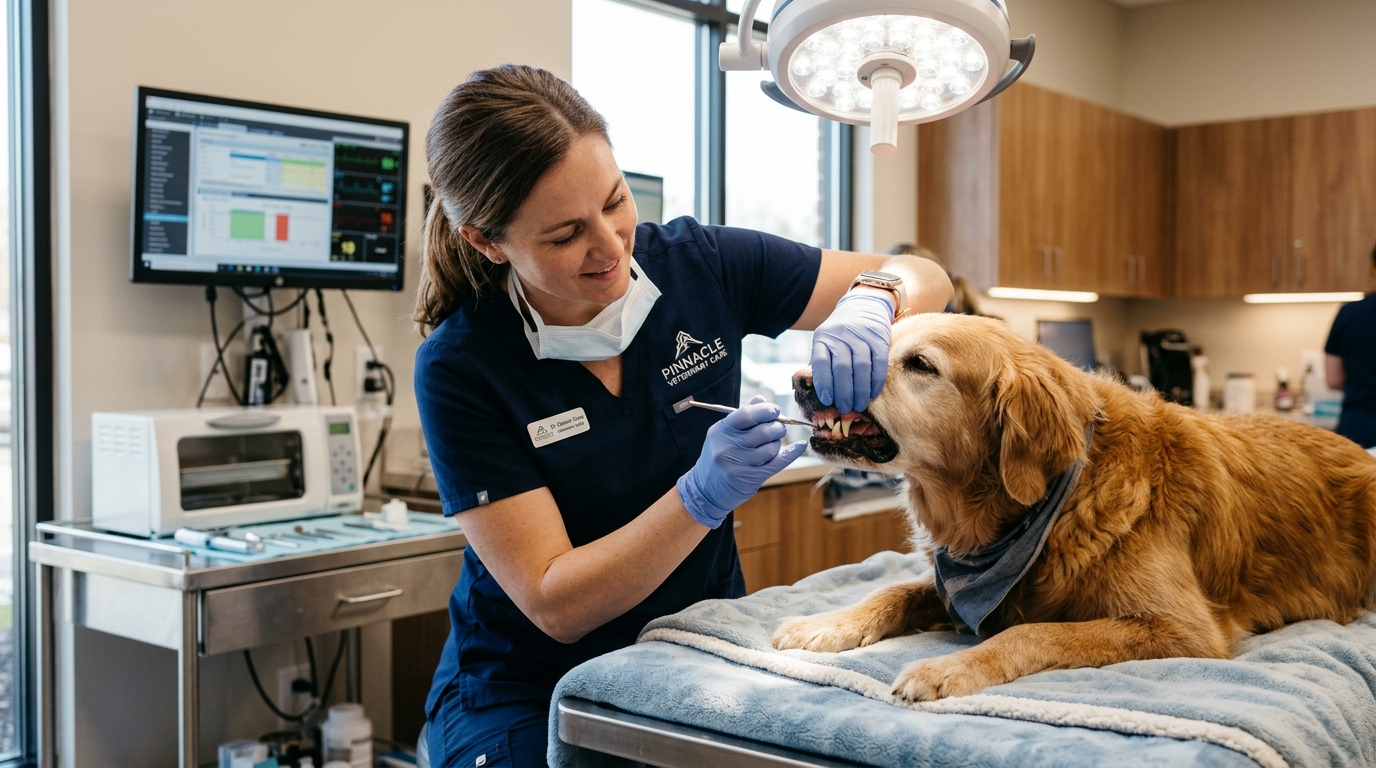
- Modern Anesthetic Mortality: In accredited veterinary hospitals utilizing pre-op screening and dedicated multi-parameter technician monitoring, anesthetic mortality in senior dogs is under 0.15% (1 in 700).
- Mandatory Pre-Op Triad: Complete blood count (CBC), full chemistry with SDMA renal markers, and NT-proBNP cardiac biomarker screening identify 94% of subclinical organ compromises before induction.
- The Non-Anesthetic Dental Trap: Cosmetic “anesthesia-free” cleanings cannot scrape subgingival plaque beneath the gumline, leaving periodontal infection active while causing stress and jaw trauma.
Few veterinary discussions trigger as much anxiety for pet owners as recommending general anesthesia for a 12-year-old dog. As our companions enter their golden years, periodontal disease becomes nearly ubiquitous, with over 85% of senior dogs suffering from advanced tooth decay, gingival recession, and tooth root abscesses.
Yet, fear of the “anesthetic risk” causes thousands of owners to avoid essential dental care, allowing chronic bacterial infection to circulate constantly through their pet’s bloodstream, damaging heart valves, kidneys, and liver tissue. In 2026, advances in veterinary anesthesiology, modern multi-modal drug protocols, and precision pre-operative diagnostics have transformed senior dental care into a remarkably safe, life-extending medical procedure. This connects directly with our research on canine periodontal disease and cardiac endocarditis and early renal biomarkers (SDMA vs. Creatinine).
What Are the Actual Risks of Dental Anesthesia in Senior Dogs?
The overall risk of anesthetic death in healthy senior dogs is extremely low (approximately 0.05% to 0.15%). The primary clinical hazards—hypotension, hypothermia, and delayed drug clearance—are actively mitigated through intravenous fluid support, active warming blankets, and balanced multi-modal anesthesia.
Age itself is not a disease. Rather, age increases the probability of concurrent underlying pathology (such as mitral valve disease, subclinical renal compromise, or hepatobiliary sluggishness). When these conditions are identified beforehand, the veterinary team customizes drug selections—avoiding drugs that stress the heart or kidneys and using ultra-short-acting agents that the body metabolizes in minutes.
| Pre-Op Safety Screening | Clinical Diagnostic Target | Actionable Protocol Adjustment | Safety Impact |
|---|---|---|---|
| Full Chemistry + SDMA | Evaluates kidney filtration (GFR) & liver enzyme function | Increase IV fluid rates; avoid pure renal-eliminated drugs | Prevents acute kidney injury (AKI) from intra-op hypotension |
| NT-proBNP Biomarker / ECG | Detects myocardial stretch & occult heart failure | Avoid alpha-2 agonists (Dexmedetomidine); maintain cardiac preload | Eliminates catastrophic cardiac arrest risks |
| Three-View Chest X-Rays | Screens for pulmonary metastasis, cardiomegaly & tracheal collapse | Select appropriate endotracheal tube sizing & positive pressure ventilation | Ensures airway patency and optimal arterial oxygenation |
The 2026 Gold Standard: Multi-Modal Anesthesia & Local Nerve Blocks
The safest anesthesia is the kind that uses the least amount of gas. In classical veterinary medicine, pets were placed under deep levels of gas anesthesia (Isoflurane), which significantly depresses blood pressure. In 2026, modern clinics utilize a multi-modal protocol:
- Mild Pre-Medication: Gentle, reversible sedatives combined with pure mu-opioid analgesics to calm the pet without cardiac depression.
- Intravenous Induction: Propofol or Alfaxalone given slowly to effect, allowing a smooth, stress-free transition to endotracheal intubation.
- Local Dental Nerve Blocks: Infusing lidocaine or bupivacaine directly into the infraorbital or mandibular alveolar nerve desensitizes the entire mouth. Because the pet feels zero pain, the gas anesthesia (Sevoflurane) can be kept at a whisper-thin minimum (MAC 1.2%), maintaining robust blood pressure throughout the procedure.
People Also Ask: Senior Dog Dental Anesthesia
Is non-anesthetic dental cleaning (NADC) a safe alternative?
No. The American Animal Hospital Association (AAHA) and American Veterinary Dental College (AVDC) strictly advise against non-anesthetic cleanings. Scraping visible tartar off an awake dog’s teeth is purely cosmetic. Over 70% of dental pathology lies beneath the gumline, requiring subgingival scaling and dental x-rays that are impossible to perform on an awake animal.
What questions should I ask my vet before my senior dog’s dental?
Ask three crucial questions: (1) Will a dedicated licensed veterinary technician monitor anesthesia exclusively from start to finish? (2) Will you take full-mouth dental radiographs? and (3) Do you perform local dental nerve blocks before extractions?
How long does recovery take for a senior dog?
With modern short-acting anesthetics, most senior dogs stand and walk within 30 to 45 minutes after waking up. They are sent home the same afternoon and are generally back to eating soft food within 2 to 4 hours of discharge.