
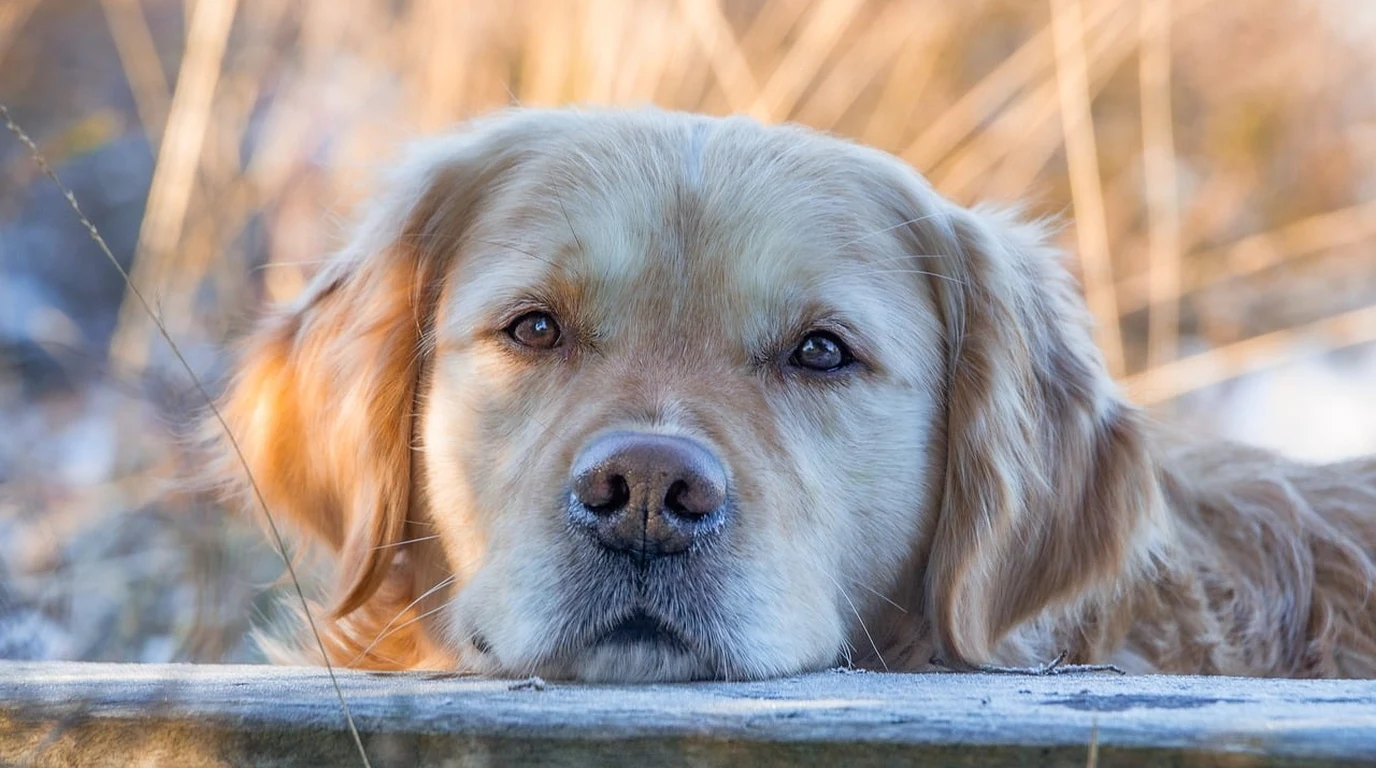
It is a moment that stops every devoted senior dog guardian in their tracks: you look closely into your seven- or ten-year-old companion’s eyes in the sunlight, and you notice a distinct bluish-grey, cloudy haze deep inside their pupils. Your heart drops as panic sets in—is my dog going blind? Are these cataracts? Will they require multi-thousand-dollar ocular surgery, or are they losing their independence?
In the vast majority of aging dogs, that symmetrical bluish haze is not a cataract at all. It is Nuclear Sclerosis (also called lenticular sclerosis)—a normal, benign, physiological aging change that occurs in virtually all dogs over the age of six to eight years. However, distinguishing between benign nuclear sclerosis and sight-threatening cataracts is vital, because true cataracts cause progressive blindness, lens-induced uveitis, and painful secondary glaucoma if left unmonitored. This evidence-based guide demystifies ocular anatomy, ophthalmoscopic differences, and proactive environmental adjustments for aging canines.
What Is the Difference Between Nuclear Sclerosis and Cataracts in Dogs?
Direct Answer: Nuclear sclerosis is a normal aging condition where old lens fibers compress centrally, creating a translucent bluish-grey haze that light passes through without causing blindness. Cataracts represent true pathological opacification of lens proteins, creating an opaque white or crystalline barrier that blocks light from reaching the retina, leading to progressive vision loss and inflammatory uveitis.
The biological reason nuclear sclerosis develops is fascinating: unlike skin cells that shed continuously, the lens of the canine eye produces new fiber layers throughout the dog’s life without shedding old cells. Because the lens capsule cannot expand, new fibers laid down at the perimeter compress older fibers inward toward the central nucleus. By age seven or eight, this high-density nuclear core scatters light, producing a pearlescent bluish hue similar to looking through a lightly frosted windowpane.
- The Tapetal Reflection (Fundic Glow): In a darkened room, shine a penlight toward your dog’s eyes. If you can see the vibrant green/yellow tapetal reflection glowing through the cloudy pupil, it is nuclear sclerosis. Cataracts completely block the tapetal glow.
- Symmetry: Nuclear sclerosis is almost universally bilateral and symmetrical in both eyes. Cataracts frequently begin unilaterally or progress asymmetrically with distinct milky patches.
- Depth Perception vs. True Blindness: Dogs with nuclear sclerosis may experience slight changes in close-up depth perception (presbyopia) but navigate familiar and novel rooms with zero hesitation. Cataracts cause dogs to bump into door frames, hesitate on stairs, or startle when touched.
- The Slit-Lamp Verification: A veterinarian uses an ophthalmoscope or slit-lamp biomicroscope to inspect the retina. In nuclear sclerosis, the tapetum and retinal blood vessels are clearly visible; with mature cataracts, the fundus cannot be visualized.
Clinical Comparison: Nuclear Sclerosis vs. Canine Cataracts
The comparative matrix below outlines the biological mechanism, diagnostic tests, treatment pathways, and vision prognosis for both conditions:
| Diagnostic Vector | Nuclear Sclerosis (Lenticular Sclerosis) | Canine Cataracts |
|---|---|---|
| Ocular Pathophysiology | Compression of central lens fibers; normal lens protein integrity | Denaturation and aggregation of lens proteins; true opacification |
| Visual Appearance in Pupil | Translucent, pearlescent bluish-grey haze; symmetrical | Opaque, crystalline white, or marble-like; often asymmetrical |
| Fundic Reflex / Tapetal Glow | 100% Present (Light passes through to retina) | Obscured or completely absent (Light cannot penetrate lens) |
| Functional Vision Impact | Minimal; mild close-up presbyopia, functional distance vision intact | Progressive visual impairment leading to complete blindness |
| Required Medical Treatment | None; benign condition requiring zero drops or surgery | Phacoemulsification surgery with intraocular lens (IOL) implant; anti-inflammatory drops |
The Costly Trap: Missing Diabetic Cataracts and Lens-Induced Uveitis
While discovering that your dog has nuclear sclerosis brings immense relief, assuming that every cloudy eye is benign without veterinary confirmation is a dangerous trap. Two critical ocular emergencies can be disguised by a casual glance:
1. Rapid-Onset Diabetic Cataracts: Over 75% of dogs diagnosed with diabetes mellitus develop mature cataracts within twelve months of clinical onset. Diabetic cataracts can form with startling speed—sometimes progressing from mild cloudiness to complete milky-white blindness in as little as forty-eight to seventy-two hours due to sorbitol accumulation inside the lens capsule drawing in massive fluid volume.
2. Lens-Induced Uveitis (LIU): As a cataract matures, hyper-mature proteins can leak through the lens capsule into the anterior chamber of the eye. The canine immune system recognizes these leaked proteins as foreign invaders, triggering acute inflammation known as lens-induced uveitis. Unchecked uveitis leads to secondary glaucoma (painful elevated intraocular pressure) and irreversible retinal detachment. Early examination by a veterinary ophthalmologist ensures that anti-inflammatory drops (such as topical flurbiprofen or diclofenac) are initiated before painful complications occur.
“The clouding of an aging dog’s eyes is one of nature’s universal markers of senior longevity. When a vet shines an ophthalmoscope through that bluish haze and sees a healthy, glowing retina, celebrate it—nuclear sclerosis requires no intervention, no eye drops, and causes no pain. But never self-diagnose in the living room. Have your vet examine the eyes at every semi-annual senior wellness exam, keep blood sugar in check, and protect your dog’s environmental safety with high-contrast home adaptations.”
The Actionable 4:00 PM Senior Dog Vision Safety Playbook
Whether your senior dog is experiencing normal nuclear sclerosis depth perception shifts or managing progressive vision decline, implement these four environmental adaptations today:
- Perform the Darkened Room Penlight Check: In a dimly lit room, hold a small flashlight at your own eye level and shine it toward your dog from four feet away. If both pupils reflect a luminous green/yellow tapetal glow, light is successfully penetrating to the retina. If one or both eyes appear dull and milky, schedule an ophthalmic exam immediately.
- Install High-Contrast Night Lights: Senior canine eyes require more ambient photons to perceive depth. Place soft LED plug-in night lights along hallways, water bowls, and doorways to prevent senior night-time disorientation and pacing.
- Use Scent and Texture Mapping: Place distinct essential-oil-free scents (like a drop of lavender on rug corners) and textured runner rugs along primary walking corridors. Senior dogs use tactile paw pads and keen olfactory mapping to navigate flawlessly, even with diminished vision.
- Avoid Rearranging Living Room Furniture: Dogs with changing vision rely heavily on spatial memory. Keeping couches, feeding stations, and dog beds in consistent locations prevents jarring collisions and preserves confidence.
For additional strategies on caring for senior canine wellness, review our guide on senior dog fall prevention, rugs, and ramps, explore our clinical analysis of canine hypothyroidism versus Cushing’s diagnostic testing, and learn how to manage joint health in our breakdown of senior dog mobility and home vitality adaptations.
People Also Ask
Can nuclear sclerosis in dogs turn into cataracts?
No. Nuclear sclerosis does not cause, trigger, or transform into cataracts. They are entirely separate biological processes. However, because both conditions occur in older dogs, it is possible for a dog with pre-existing nuclear sclerosis to independently develop cataracts later in life.
Do eye drops help cure or reverse cataracts in dogs?
No eye drops currently available have been scientifically proven to dissolve or reverse established cataracts in dogs. While antioxidant drops (such as N-acetylcarnosine) are marketed online, surgical removal of the cloudy lens via phacoemulsification by a veterinary ophthalmologist remains the only curative treatment.
Does nuclear sclerosis hurt a dog?
Nuclear sclerosis causes zero pain, inflammation, or physical discomfort. It is a painless, progressive optical density change that causes minor presbyopia (difficulty focusing on objects closer than twelve inches), while functional distance vision and peripheral navigation remain fully preserved.