
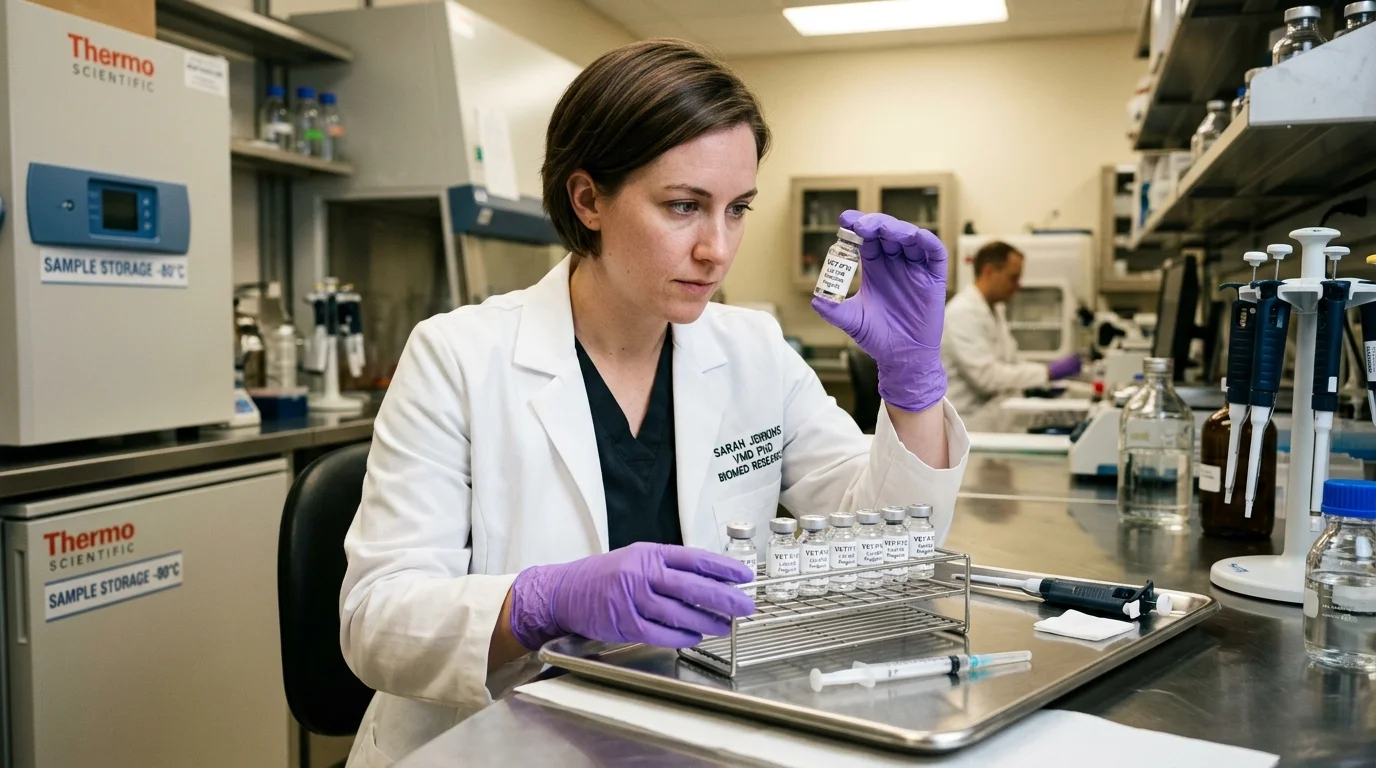
What Are Canine Peptides and How Do Bioregulators Accelerate Tissue Repair?
For decades, veterinary medicine possessed limited pharmaceutical tools for managing severe canine soft-tissue injuries—such as partial cranial cruciate ligament (CCL) tears, chronic hip dysplasia, and refractory inflammatory bowel disease (IBD). Clinicians were constrained to NSAIDs (carprofen, meloxicam), corticosteroids, or surgical reconstruction (TPLO). While surgery remains essential for complete ligament ruptures, thousands of aging dogs live in a purgatory of chronic pain where surgical anesthesia carries prohibitive cardiovascular risks.
Enter targeted peptide therapy. By harnessing endogenous signaling cascades, peptides instruct dormant fibroblasts, vascular endothelial cells, and immune T-cells to execute rapid architectural repair. When combined with non-invasive rehabilitation protocols—such as underwater treadmill conditioning detailed in Canine Hydrotherapy & Underwater Treadmill Protocols and photobiomodulation in Canine Osteoarthritis & Degenerative Joint Disease—peptides represent a quantum leap in non-surgical orthopedic recovery.
The Regenerative Trifecta: BPC-157 vs. TB-500 vs. Thymosin Alpha-1
To safely utilize peptides under veterinary oversight, owners must distinguish between the specific biological mechanisms and affinities of each compound:
| Peptide Molecule | Sequence & Origin | Primary Biological Target | Clinical Canine Indication |
|---|---|---|---|
| BPC-157 (Pentadecapeptide) | 15 amino acids derived from human gastric juice | VEGF angiogenesis, Early Growth Response 1 (egr-1) gene, F-actin formation | CCL tears, tendonitis, NSAID-induced ulcers, leaky gut syndrome |
| TB-500 (Thymosin Beta-4) | 43 amino acids (active fraction: LKKTET) | Actin polymerization, systemic cellular migration, stem cell differentiation | Large muscle tears, cardiac remodeling, systemic stiffness, corneal ulcers |
| Thymosin Alpha-1 (Tα1) | 28 amino acids synthesized by thymus gland | T-cell maturation, NK-cell activation, TLR9 modulation | Immunosenescence, chronic viral/fungal infections, oncological support |
BPC-157 in Canine Orthopedics and Gut Integrity
The pentadecapeptide BPC-157 is particularly celebrated in veterinary sports medicine for its unique dual action:
- Accelerating Ligament and Tendon Healing: Tendons and ligaments have minimal intrinsic vascularity, making healing notoriously sluggish. BPC-157 upregulates growth hormone receptor expression on tendon fibroblasts and promotes collateral vessel formation, bridging damaged collagen fibrils in weeks rather than months.
- Reversing Leaky Gut and NSAID-Induced Gastrointestinal Ulcers: Chronic administration of carprofen or meloxicam severely depletes protective gastrointestinal prostaglandins, inducing micro-hemorrhages and systemic endotoxemia. BPC-157 exerts profound cytoprotective effects on the canine mucosal lining, re-establishing zonula occludens-1 (ZO-1) tight junction proteins. For deeper gut microbiome repair, see our analysis on Canine Gut Microbiome & Dysbiosis.
Administration Routes, Bioavailability, and Dosing Guidelines
Unlike large-protein biologics that must be administered intravenously, peptides exhibit unique stability profiles depending on formulation:
- Subcutaneous (SubQ) Injections: The gold-standard clinical delivery for orthopedic injuries. Utilizing a 31-gauge insulin syringe, reconstituted lyophilized BPC-157 is administered subcutaneously in the scruff or near the affected joint. Clinical veterinary dosing typically ranges from 5 to 10 mcg per kg of body weight once daily for a 4 to 6-week cycle.
- Oral Formulations (Stable BPC-157 Arginate Salt): While standard BPC-157 acetate is degraded by gastric stomach acid, the patented arginate salt formulation is gastric-stable, withstanding low pH environments. Oral arginate BPC-157 is exceptionally effective for gastrointestinal inflammatory conditions, IBD, and systemic maintenance at 10 to 15 mcg/kg daily.
- TB-500 Pulsed Protocol: Due to its systemic actin-sequestering action, TB-500 is typically administered subcutaneously at 2 to 5 mg total weekly (split into two doses) for 4 to 6 weeks as a loading phase, followed by monthly maintenance.
Safety Profiles, Contraindications & The Oncological Question
Because peptides stimulate angiogenesis (new blood vessel formation), a critical clinical question arises: can BPC-157 accelerate occult cancer growth? In dogs with active circulating tumors or malignant carcinomas (which rely on pathological neoangiogenesis), BPC-157 and TB-500 should be avoided. Before initiating peptide protocols in dogs over 7 years old, veterinary practitioners should perform comprehensive cancer screenings, such as liquid biopsy ctDNA screening outlined in Canine Cancer Early Detection in 2026.