
If you have spent late nights standing in the backyard watching your dog strain with loose stool, or if you are tired of paying hundreds of dollars at the veterinary clinic for metronidazole prescriptions that temporarily fix diarrhea only for it to return two weeks later, you are not alone. Dealing with chronic canine gastrointestinal distress—whether it manifests as persistent gas, noisy stomach borborygmi, inflamed skin, or the classic “corn-chip” odor of yeast on their paws—is exhausting for you and uncomfortable for your dog. When the gut microbiome collapses after a course of antibiotics or months of ultra-processed kibble, standard synthetic supplements often feel like a expensive gamble.
You may have heard fellow dog owners talk about kefir as a natural probiotic remedy. But pouring a splash of whatever fermented milk product is on sale at your local supermarket into your dog’s bowl can easily backfire, leading to severe explosive diarrhea if done incorrectly. Understanding how fermented kefir interacts with the canine mucosal lining—and how to select the precise strain profiles—is the key to turning this traditional cultured food into a targeted therapeutic tool.
Plain goat milk kefir or unsweetened water kefir provides dogs with over 30 active probiotic strains and beneficial yeasts that actively colonize the canine intestinal mucosa. Feed 1 teaspoon per 10 pounds of body weight daily, starting at a quarter dose, to safely rebuild gut microflora and suppress yeast overgrowth without digestive upset.
How Does Kefir Transform Your Dog’s Gut Microbiome Compared to Yogurt?
To understand why plain kefir outperforms standard commercial yogurt by orders of magnitude, we have to examine how bacterial strains colonize the canine gut lining. Most pet parents assume yogurt is the ultimate natural probiotic. However, typical commercial yogurt relies on just two to five transient bacterial strains—usually Lactobacillus bulgaricus and Streptococcus thermophilus. These strains act like friendly visitors: they pass through the stomach acid, offer a brief metabolic boost, and exit the digestive tract within 24 to 48 hours without establishing permanent residency on the mucosal wall.
Traditional fermented kefir is a completely different biological engine. Produced through the symbiotic fermentation of kefir grains containing complex exopolysaccharides (known as kefiran), real kefir contains over 30 distinct, highly resilient micro-organisms. These include robust bacterial species such as Lactobacillus kefiranofaciens, Lactobacillus plantarum, Lactobacillus rhamnosus, and Bifidobacterium animalis, alongside beneficial fermenting yeasts like Saccharomyces kefir and Kluyveromyces marxianus.
When these wild-fermented cultures reach your dog’s intestinal tract, they do not simply float through. The combination of structural exopolysaccharides and mucosa-adherent bacterial surface proteins allows these organisms to bind directly to the epithelial layer of the gut. Once established, they perform three critical physiological tasks:
- Competitive Exclusion of Pathogens: Active probiotic colonies occupy physical attachment sites along the brush border membrane, depriving opportunistic pathogens like Clostridium perfringens, Escherichia coli, and Salmonella of room and nutrients.
- Short-Chain Fatty Acid (SCFA) Production: As these beneficial microbes digest fermentable fiber and residual sugars, they release high concentrations of acetate, propionate, and butyrate. Butyrate serves as the primary fuel source for colonocytes (the cells lining the large intestine), repairing leaky tight junctions and reducing localized systemic inflammation.
- Modulation of Intestinal pH: The continuous production of lactic acid lowers the luminal pH of the canine colon to a slightly acidic range (roughly 5.5 to 6.5). Pathogenic bacteria and systemic yeasts thrive in alkaline environments; by restoring natural acidity, kefir creates a host-friendly biome where harmful invaders cannot survive.
Why Is Grocery Store Kefir Often a Costly Trap for Dog Owners?
Walk down the dairy aisle of any modern grocery store, and you will find dozens of kefir bottles marketed as high-protein health foods. Pouring these standard commercial bottles into your dog’s food bowl is one of the fastest ways to trigger severe digestive distress or toxicity. Over 80% of dog owners who report that kefir “ruined” their dog’s stomach made one of three fundamental mistakes when buying commercial dairy products.
First, commercial flavored kefirs (strawberry, vanilla, mango) are loaded with refined sugars, fruit concentrates, or worst of all, artificial sweeteners. High concentrations of sugar feed the exact pathogenic yeasts like Malassezia pachydermatitis that you are trying to eliminate. More critically, some commercial low-sugar kefirs use xylitol (often listed as birch sugar) to maintain sweetness—an ingredient that causes catastrophic hypoglycemia and acute liver failure in canines at tiny doses.
Second, standard commercial kefir is made from pasteurized, homogenized cow’s milk sourced from Holstein cows. Holstein dairy contains predominantly A1 beta-casein protein. When a dog’s digestive enzymes break down A1 beta-casein, it releases a bioactive opioid peptide called beta-casomorphin-7 (BCM-7). In dogs with existing gut inflammation or low lactase output, BCM-7 triggers mast cell degranulation, histamine release, delayed GI transit time, and painful gas production.
This is precisely why plain goat milk kefir or water kefir is the gold standard for canine clinical nutrition. Goat milk features a chemical structure naturally dominated by A2 beta-casein, which does not break down into inflammatory BCM-7. Furthermore, the fat globules in goat milk are approximately 20% smaller than those found in cow milk, making them vastly easier for a dog’s pancreatic lipase enzymes to break down without stressing the pancreas.
If your dog suffers from a diagnosed animal protein anaphylaxis or an IgE-mediated dairy allergy, organic water kefir—fermented using sugar-water and Tibicos (water kefir grains)—provides the exact same diverse strain density without a single molecule of dairy fat or casein protein.
| Probiotic Source | Strain Diversity | Primary Casein Profile | Digestive Tolerance | Best Therapeutic Use |
|---|---|---|---|---|
| Goat Milk Kefir | 30–50+ Active Strains & Yeasts | A2 Beta-Casein (Non-Inflammatory) | Exceptional (Small fat globules) | Microbiome rebuild, post-antibiotics, yeast overgrowth |
| Water Kefir (Tibicos) | 15–30 Active Strains & Yeasts | 100% Dairy/Casein Free | Optimal for Dairy-Allergic Dogs | Severe dairy allergies, acute systemic inflammation |
| Cow Milk Kefir (Whole) | 20–30 Active Strains | A1 Beta-Casein (Triggers BCM-7) | Moderate to Poor | Budget option for healthy, robust working breeds |
| Plain Greek Yogurt | 2–5 Transient Strains | Variable (Usually A1) | Moderate | Minor food topper, minimal therapeutic value |
| Flavored Commercial Kefir | Variable (Often degraded by sugar) | A1 Beta-Casein | Unsafe (High Sugar / Additives) | DO NOT USE (Risk of Xylitol, bloat, yeast bloom) |
What Is the Exact Weight-Based Daily Dosage of Kefir for Dogs?
When introducing active fermented living foods, dosage control is everything. Even the highest-quality goat milk kefir will trigger osmotic diarrhea if administered in excessive amounts on day one. During the fermentation process, live microbes convert lactose into lactic acid, reducing total lactose by roughly 70% to 90%. However, trace amounts remain. Giving a small dog half a cup of kefir right away overloads their pancreatic enzymes and mucosal transport mechanisms.
Dosing should be based strictly on ideal body weight, using a conservative tier system. Below is the master clinical dosing table for daily therapeutic maintenance once fully introduced:
| Dog Weight Class | Weight Range (lbs / kg) | Daily Target Maintenance Dose | Estimated CFU Count per Dose | Caloric Load (Goat Milk Kefir) |
|---|---|---|---|---|
| Toy Breeds | 2 – 12 lbs (1 – 5 kg) | 1/2 Teaspoon (2.5 ml) | ~1.5 to 3 Billion CFU | ~3 – 5 kcal |
| Small Breeds | 13 – 25 lbs (6 – 11 kg) | 1 Teaspoon (5 ml) | ~3 to 6 Billion CFU | ~8 – 10 kcal |
| Medium Breeds | 26 – 50 lbs (12 – 22 kg) | 1 Tablespoon (15 ml) | ~10 to 15 Billion CFU | ~22 – 25 kcal |
| Large Breeds | 51 – 80 lbs (23 – 36 kg) | 2 Tablespoons (30 ml) | ~20 to 30 Billion CFU | ~45 – 50 kcal |
| Giant Breeds | 81+ lbs (37+ kg) | 3 Tablespoons (45 ml) | ~35 to 50 Billion CFU | ~65 – 75 kcal |
Nutritionally, one tablespoon (15 ml) of plain, unflavored goat milk kefir delivers approximately 22 calories, 1.2 grams of easily digestible fat, 1.1 grams of bioavailable protein, 12 mg of ionic calcium, alongside substantial natural reserves of Vitamin B12, riboflavin (B2), and bio-available zinc. Because of this added caloric and fat content, if your dog has acute pan-pancreatic inflammation (pancreatitis), you should skip dairy kefir entirely and opt for zero-fat water kefir instead.
How Do You Use Kefir for Post-Antibiotic Care and Yeast Infections?
When a dog undergoes a course of broad-spectrum antibiotics—such as metronidazole, amoxicillin-clavulanate, or cephalexin—the drug functions like a scorched-earth strike inside the gastrointestinal tract. Antibiotics do not discriminate between destructive bacterial infections and beneficial protective colonies. Within 48 hours of starting antibiotic therapy, native populations of Lactobacilli and Bifidobacteria collapse. This leaves behind open binding sites on the mucosal wall and an abundance of unabsorbed sugars.
Opportunistic pathogens and fungal organisms—specifically Malassezia pachydermatitis—rapidly move in to fill this vacant space. This biological takeover explains why dogs frequently develop severe itching, inflamed red paw pads, chronic ear infections, and watery diarrhea immediately following an antibiotic regimen.
To successfully rehabilitate your dog’s gut during and after antibiotic therapy, implement the following targeted strategy:
- The 3-Hour Separation Rule: Never feed kefir at the exact same time as an oral antibiotic medication. If you give them together, the antibiotic active ingredients will instantly neutralize the live cultures in the kefir, rendering the probiotic useless while potentially reducing antibiotic absorption. Administer kefir precisely 3 to 4 hours after the antibiotic dose.
- The Extended Rehabilitation Window: Do not stop giving kefir when the antibiotic prescription runs out. It takes a minimum of 4 to 6 weeks of consistent daily probiotic feeding to restore mucosal biodiversity, rebuild the protective mucin layer, and fully suppress opportunistic pathobionts.
- The Anti-Yeast Paradox: Novice dog owners often panic when they see that kefir contains beneficial yeasts like Saccharomyces kefir, assuming all yeasts contribute
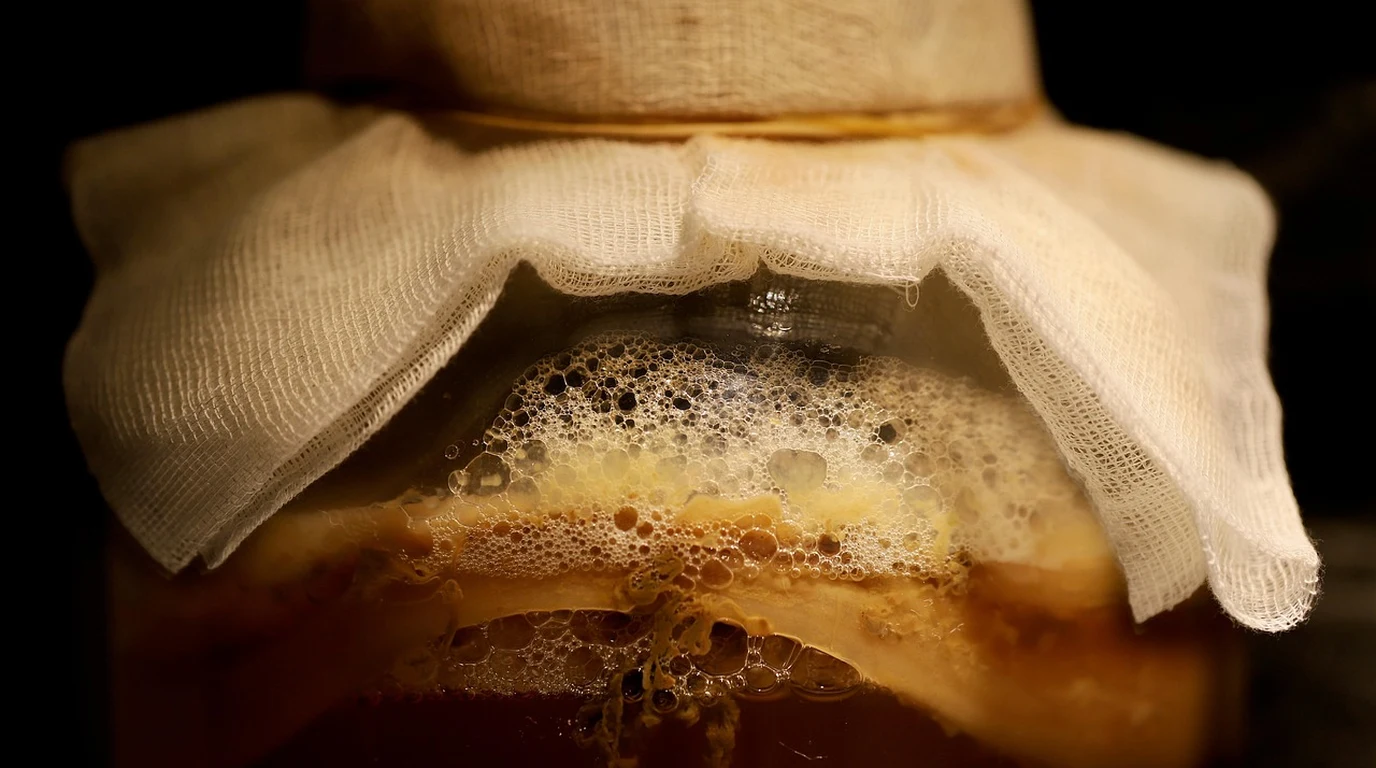
Probiotic Fermentation & Canine Gut Microbiome
Nutrient-dense marine fats work harmoniously with fermented probiotics to optimize canine gut and immune health. For feeding kefir and probiotic dosage, read our guide on Sardines for Dogs: Omega-3 EPA, DHA & Sourcing Guide.