
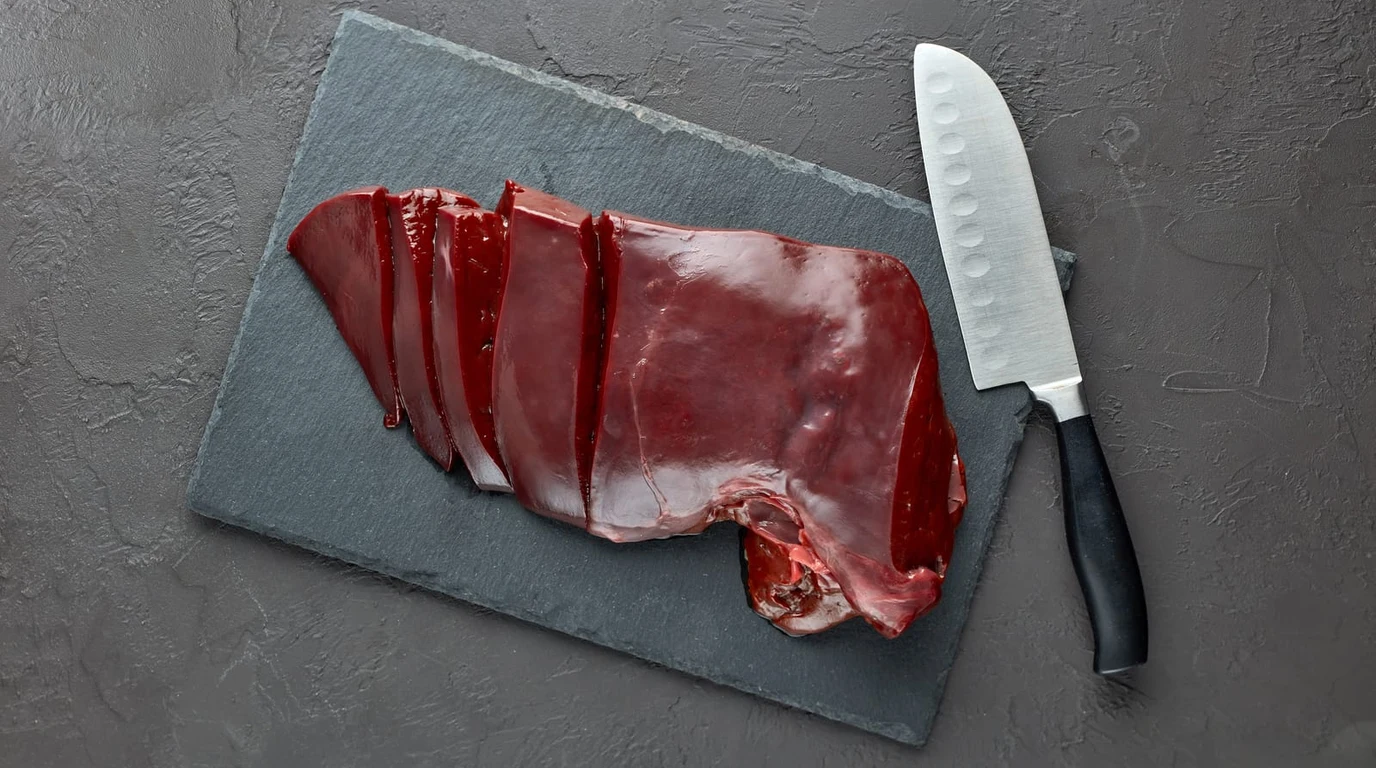
If you have ever watched a wild canid consume prey in nature, you know they never start with the lean muscle meat of the flank or leg. They instinctively target the nutrient-dense internal viscera: the liver, heart, kidneys, and spleen. For modern domestic dogs consuming ultra-processed dry kibble—subjected to extreme extrusion temperatures exceeding 200°C that degrade natural vitamins—incorporating fresh, gently prepared organ meats represents the single most bioavailable whole-food multivitamin in canine nutrition.
Yet for well-meaning dog guardians, feeding offal is often fraught with anxiety, conflicting guidelines, and dangerous dosing errors. From internet forums advocating indiscriminate “liver loading” that triggers acute Vitamin A toxicity, to genetic copper storage disorders in susceptible breeds, organ feeding requires rigorous biological precision. Treating organs as a casual treat rather than a potent nutritional therapeutic can lead to severe gastrointestinal distress or chronic hepatic injury.
What Are the Best Organ Meats for Dogs and How Much Should You Feed?
Direct Answer: The gold standard canine feeding ratio allocates organ meat to 10% of total daily dietary intake: 5% liver (for preformed Vitamin A, copper, and iron) and 5% secreting organs (kidney, spleen, pancreas) or muscular organs like heart (for CoQ10 and taurine). Never exceed 10% to prevent hypervitaminosis A.
To safely feed organs, canine nutritionists classify offal into two distinct biological categories: secreting organs and muscular organs. Secreting organs (such as liver, kidney, spleen, pancreas, and brain) produce biological excretions or hormonal secretions and contain extraordinary concentrations of fat-soluble vitamins, trace minerals, and enzymes. Muscular organs (such as heart, gizzard, tongue, and lung) functionally behave like dense muscle meat but pack unique amino acid profiles that support cardiac healthspan.
The distinction dictates feeding math: while heart can safely comprise up to 10% to 15% of a dog’s diet as a rich source of taurine and Coenzyme Q10, true secreting organs must be strictly capped at 10% of total caloric intake, with liver restricted to exactly half of that allocation (5%).
| Organ Cut | Biological Classification | Primary Nutrient Powerhouse | Recommended Dietary Allocation |
|---|---|---|---|
| Beef / Lamb Liver | Secreting Organ | Preformed Retinol (Vit A), Copper, B12, Iron | Strictly 5% of total food intake |
| Beef / Poultry Heart | Muscular Organ | Taurine, L-Carnitine, CoQ10, Collagen | 5% to 10% (Fed as rich muscle meat) |
| Beef / Pork Kidney | Secreting Organ | Selenium, DAO Enzyme, Riboflavin (B2) | 2.5% to 5% (Paired with liver) |
| Beef Spleen | Secreting Organ | Heme Iron, Peptides, Zinc, Vitamin C | 2.5% to 5% (Rotated with kidney) |
| Beef Pancreas (Sweetbreads) | Secreting Organ | Digestive Proteases, Lipases, Amylases | Therapeutic small pinch (For EPI / maldigestion) |
The Copper Storage Trap: Why Breed Genetics Matter
While liver is nature’s most concentrated source of copper—vital for red blood cell synthesis, collagen formation, and melanin pigmentation—copper metabolism is not uniform across dog breeds. Over the past twenty years, veterinary geneticists have identified inherited defects in biliary copper excretion that cause Copper Storage Hepatopathy.
In predisposed breeds, copper from dietary liver accumulates inside hepatic lysosomes rather than being safely excreted into bile. Over several years, toxic intracellular copper levels trigger severe chronic hepatitis, hepatic necrosis, and end-stage cirrhosis. Breeds carrying verified genetic predispositions include:
- Bedlington Terriers: Autosomal recessive mutation in the COMMD1 gene causing catastrophic copper accumulation.
- Doberman Pinschers: High prevalence of chronic hepatitis linked to abnormal copper retention, especially in females.
- Labrador Retrievers: Mutations in the ATP7A and ATP7B genes altering hepatic copper transport.
- West Highland White Terriers & Dalmatians: Known genetic susceptibility to copper-associated liver toxicity.
If you share your home with one of these breeds, feeding beef or lamb liver (which contain up to 10 mg of copper per 100 grams) should be avoided or severely restricted. Instead, rotate toward lower-copper organ sources such as pork liver or poultry organs (chicken and turkey liver contain roughly one-tenth the copper of ruminant liver), and always monitor annual serum liver enzymes (ALT and ALP) alongside fasting bile acids.
The most insidious vector for organ overdosing among companion dogs is commercial single-ingredient freeze-dried liver treats. Because fresh raw liver is roughly 70% water, dehydrating it concentrates its micronutrient density by over three hundred percent. A guardian who feeds five or six dehydrated beef liver cubes during a thirty-minute training session can easily deliver three to five times the maximum safe weekly threshold of preformed Vitamin A to a 20-pound dog. This leads to chronic hypervitaminosis A, characterized by bone spurs, cervical spondylosis, and dry peeling skin. Treat dehydrated organs with the clinical respect of a pharmaceutical: weigh them by the gram, or feed fresh gently steamed organs as measured meal toppers.
Nutritional Synergy: Heart and Cellular Bioenergetics
Unlike secreting organs that must be strictly rationed, heart is the undisputed king of cellular bioenergetics. Because the canine cardiac muscle beats relentlessly millions of times across a dog’s lifetime, cardiac myocytes maintain the highest concentration of mitochondria of any tissue in the body.
Feeding fresh beef, pork, or poultry heart supplies three critical longevity compounds:
- Coenzyme Q10 (Ubiquinone): The essential electron carrier in mitochondrial ATP energy production, supporting senior dogs experiencing cognitive decline, sarcopenia, and cardiac fatigue.
- Taurine: An essential sulfur amino acid critical for cardiac myocyte contractility and prevention of Dilated Cardiomyopathy (DCM). While dogs can synthesize some taurine from cysteine and methionine, dietary whole-food taurine from heart meat provides vital cardiac defense.
- L-Carnitine: Transports long-chain fatty acids into mitochondria to be burned as cellular fuel, preventing fatty infiltration of liver and muscle tissue.
The 4:00 PM Actionable Playbook: Safe Organ Incorporation
- Calculate the 10% Rule: Weigh your dog’s total daily food intake. If your 50-pound dog eats 500 grams of food daily, maximum total daily organ meat is exactly 50 grams (25 grams liver, 25 grams other secreting organs/heart).
- Start with the “Pencil Eraser” Micro-Dose: Organ meat is exceptionally rich and can trigger loose stools or osmotic diarrhea if introduced suddenly. Begin with a piece the size of a pencil eraser, gradually titrating upward over fourteen days.
- Gently Steam or Flash-Sear: While raw organs retain delicate enzymes, lightly steaming or gently searing offal for 90 seconds eliminates common surface pathogens like Salmonella without damaging heat-sensitive B-vitamins.
- Source Pasture-Raised When Possible: The liver and kidneys process metabolic waste and environmental toxins. Whenever budget permits, source organs from grass-fed, pasture-raised livestock to avoid pesticide, herbicide, and pharmaceutical residues.
🐾 Companion Guide: Whole Food Superfoods & Canine Longevity
Integrating nutrient-dense organ meats works synergistically with phytonutrient-rich botanical superfoods. Read our clinical evaluation of canine dietary bioactives:
👉 Read the Full Masterclass: Top Canine Superfoods: Longevity Bioactives & Diet »
People Also Ask
Can dogs eat cooked liver every day?
Yes, provided it stays strictly within the 5% daily dietary limit. Feeding small, measured daily portions is nutritionally superior to feeding a massive liver meal once a week, which can trigger severe diarrhea and sharp Vitamin A spikes.
What are the symptoms of Vitamin A toxicity in dogs?
Chronic hypervitaminosis A causes lethargy, weight loss, anorexia, stiffness, limping, and abnormal bony outgrowths (exostoses) along the cervical spine and joints. Acute toxicity causes nausea, vomiting, and tremors.
Is chicken liver better than beef liver for dogs?
Both are excellent, but they have different nutrient profiles. Beef liver is significantly richer in copper, iron, and Vitamin A, whereas chicken liver is lower in copper and gentler on sensitive digestive systems, making it the safer choice for breeds predisposed to copper storage disease.
🐾 Science-Backed Companion Masterclass: Whole-Food Bioactives, Fatty Acids & Cellular Healthspan
While fresh organ meats provide fat-soluble micronutrient density, small oily forage fish deliver the essential marine fatty acids required to modulate systemic inflammation. Read our companion canine nutrition masterclass:
👉 Read the Full Masterclass: Sardines for Dogs: Omega-3 EPA, DHA & Dosage Guide »