
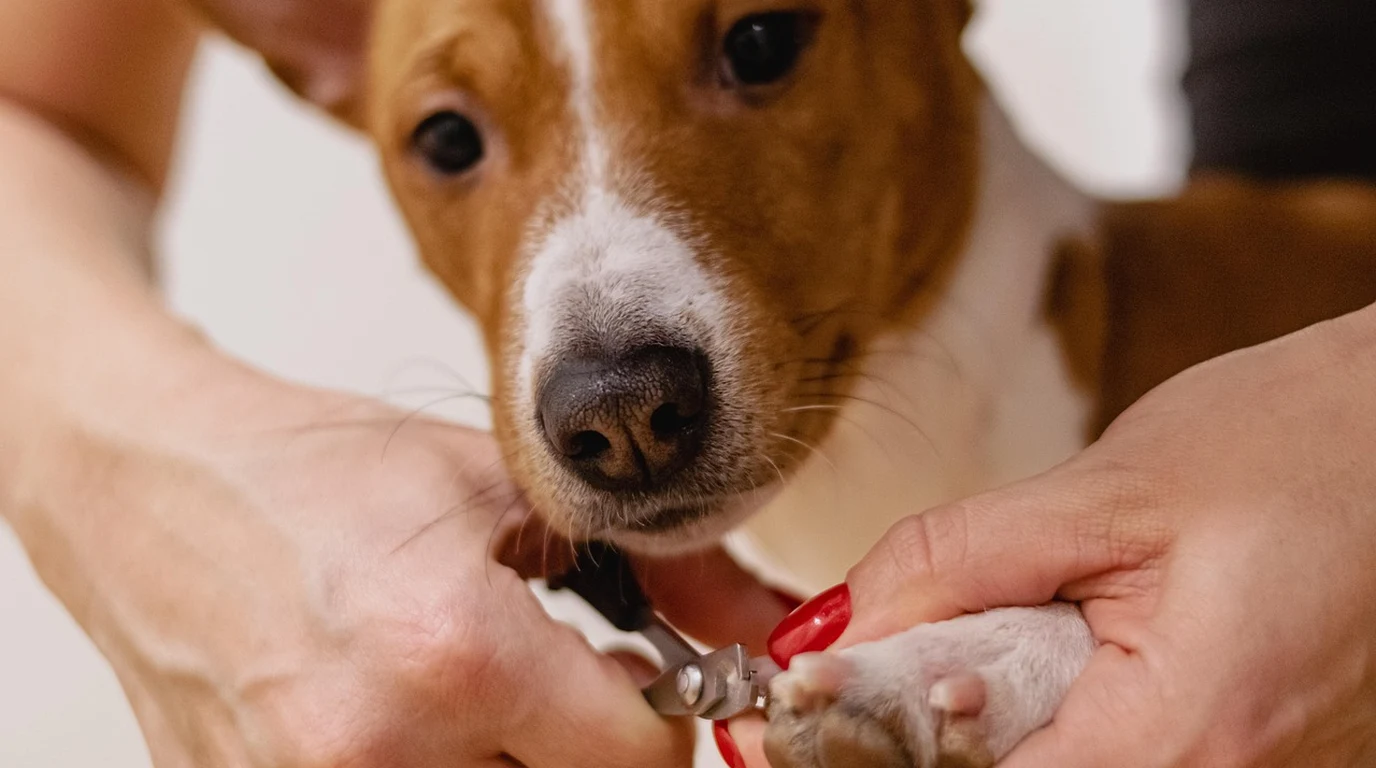
When guardians observe a senior dog struggling to rise from hardwood floors, walking with a stiff, roached spinal posture, or displaying reluctance on neighborhood walks, the immediate assumption is almost always progressive hip dysplasia or severe osteoarthritis. Yet in veterinary physical rehabilitation clinics worldwide, canine physical therapists frequently discover a profound, silent mechanical culprit that exacerbates or even directly mimics joint disease: overgrown toenails.
Toenail length is rarely viewed through the lens of biomechanics; it is dismissed as a cosmetic grooming chore. However, a dog’s foot is an intricate architectural bridge of digits, digital flexor tendons, sesamoid bones, and proprioceptive sensory receptors. When a dog stands on nails that touch the floor, the hard floor exerts a continuous upward ground reaction force against the nail tip. This simple mechanical lever fundamentally warps the dog’s entire musculoskeletal alignment, cascading compensatory stress into the hocks, stifles, hips, and cervical spine.
How Do Overgrown Nails Destroy Canine Posture and Joint Health?
Direct Answer: When nails touch the ground while standing, they push the digital phalanx bones backward, forcing paws into flat hyperextension. This tricks the canine nervous system into believing the dog is walking up a steep hill, shifting center of gravity backward, overloading the hindquarters, and triggering chronic compensatory spinal pain.
The neuro-biomechanical impact of nail length is rooted in canine evolutionary biology. Wild wolves and canids traverse miles of abrasive terrain daily, naturally wearing nails down to the level of the digital pads. In nature, a wolf’s toenails only engage the ground when digging into dirt or ascending a steep embankment.
When a domestic dog walks on nails that click against flat domestic floors, the continuous pressure against the nail matrix triggers the brain’s proprioceptive sensory feedback loop. The brain interprets the upward pressure on the nails as an indicator that the animal is permanently walking up an incline. To prevent tipping backward, the dog automatically shifts its center of mass forward, hyperextends the carpal joints (wrists), flattens the metatarsals (hocks), and roaches the thoracic spine. For a senior dog already battling degenerative joint disease, this chronic postural distortion dramatically accelerates cartilage erosion.
| Anatomical Region | Normal Neutral Mechanics | Long Nail Compensatory Distortion | Clinical Degenerative Consequence |
|---|---|---|---|
| Digits & Paw Pads | Nails clear floor by 2–3 mm when standing | Digits forced into dorsal hyperextension (splay) | Loss of paw pad traction, chronic digital arthritis |
| Carpus & Tarsus (Hocks) | Upright, resilient shock absorption angle | Dropped, plantigrade hocks shifting weight backward | Stifle ligament strain, increased CCL tear risk |
| Lumbar & Thoracic Spine | Neutral, straight topline posture | Kyphosis (roached back) to lower center of gravity | Spondylosis deformans, IVDD disk compression |
| Cervical Spine (Neck) | Elevated, free head carriage | Extended low head carriage to counterbalance rear | Severe myofascial trigger points in shoulders |
The Anatomy of the Quick: Why Nails Get So Long
The primary reason dogs develop chronically overgrown nails is fear of “quicking” the dog—cutting into the vascular digital pulp containing blood vessels and high-density sensory nerves. When nails are neglected, a biological phenomenon occurs: the quick grows outward in tandem with the hard outer keratin sheath.
When guardians finally attempt to trim long nails, they find that cutting off even two millimeters draws blood. Concluding that the dog’s nails simply cannot be shortened further, they surrender. However, the quick is a living, adaptive tissue. If the outer keratin shell is trimmed back to expose the tip of the quick to air and gentle friction, the quick will naturally dehydrate and recede over 48 to 72 hours, allowing further trimming the following week.
Traditional guillotine or scissor-style nail clippers are the primary reason millions of dogs become fearful or aggressive during paw handling. Clippers operate by crushing the dense cylindrical keratin sheath before shearing through, transmitting an intense shockwave of mechanical pressure directly into the highly innervated quick and periosteum of the digit. For an arthritic senior dog with sensitive toe joints, this pinching sensation is genuinely painful. Transitioning to a high-speed rotary pet grinder (Dremel) equipped with a diamond sanding drum eliminates crushing pressure completely. A grinder allows you to sculpt the nail gradually, sand around the quick at a 45-degree angle, and achieve a smooth, rounded edge that cannot click or lever against the floor.
The Alternative Cut Line (ACL) Protocol: Receding the Quick
To successfully shrink an elongated quick and restore a dog’s natural posture without causing bleeding or trauma, veterinary rehabilitation specialists utilize the Alternative Cut Line (ACL) method developed by Dr. Leslie Woodcock.
Instead of cutting straight across the bottom of the nail—which risks slicing the tip of the quick—the cut is made at a 45-degree angle from the top of the nail downward, removing the dorsal ridge of keratin while leaving the bottom sole intact. This removes the mechanical “roof” of keratin protecting the quick. When the exposed quick experiences air exposure and gentle daily ground contact, it recedes backward toward the paw pad within three to four days.
By repeating this 45-degree beveling protocol once every five to seven days, guardians can safely recede an overgrown quick by several millimeters over a two-month period, permanently restoring the paw to a neutral anatomical position.
The 4:00 PM Actionable Playbook: Restoring Biomechanical Alignment
- The Floor Tap Test: Stand your dog squarely on a flat, uncarpeted floor. If you can hear a distinct “click-click-click” when they walk, or if you cannot slide a business card smoothly beneath the nails without touching them, the nails are biomechanically too long.
- Desensitize to the Grinder: Never force a frightened dog into restraint. Pair the sound and vibration of the rotary tool with high-value rewards (like lickable squeeze cheese or peanut butter) over multiple sessions before touching a single nail.
- Sand the 45-Degree Bevel: Grind the top and sides of the nail back until you see the distinct soft, gray, fleshy oval in the center—the protective tissue just ahead of the live quick. Stop immediately when this circle appears.
- Implement Traction Solutions: While receding the quick over several weeks, install non-slip runner rugs along primary indoor traffic lanes to prevent senior dogs from slipping on hard floors while their posture recalibrates.
🐾 Companion Guide: Senior Dog Home Traction & Fall Defense
Restoring toe nail posture is most effective when paired with environmental floor grip adaptations. Explore our comprehensive guide to home traction setups:
👉 Read the Full Masterclass: Senior Dog Carpet Runners: Traction & Fall Prevention »
People Also Ask
How often should you cut a senior dog’s nails?
Senior dogs walk less and wear their nails down more slowly than younger dogs. To maintain proper posture and prevent quick elongation, senior dogs typically require nail maintenance once every 7 to 10 days using a rotary grinder.
Can long nails cause arthritis in dogs?
Yes. Chronic ground pressure from overgrown nails forces the digital joints into continuous abnormal angles, leading to premature osteoarthritis in the toes, carpal wrists, and hocks, while worsening existing spinal spondylosis.
How do you stop a dog’s nail from bleeding if you cut the quick?
Apply styptic powder (such as Kwik Stop) directly to the bleeding tip with firm pressure for 30 to 60 seconds. If styptic powder is unavailable, cornstarch or baking flour pressed firmly against the nail will successfully initiate clotting.
🐾 Science-Backed Companion Masterclass: Canine Biomechanics, Posture & Senior Joint Relief
While excessive claw length alters paw loading angles and strains spinal joints, feeding posture directly dictates cervical vertebral shear forces. Read our companion biomechanics investigation:
👉 Read the Full Masterclass: Elevated Dog Bowls: Bloat Risk vs Senior Joint Relief »
🐾 Science-Backed Companion Masterclass: Orthopedic Biomechanics, Joint Stability & Surgical Recovery
While postural biomechanics and paw grip influence joint alignment, a torn cranial cruciate ligament fundamentally destabilizes the canine stifle. Read our companion orthopedic masterclass:
👉 Read the Full Masterclass: Dog Torn ACL & TPLO Surgery: Recovery, Costs & Options »