
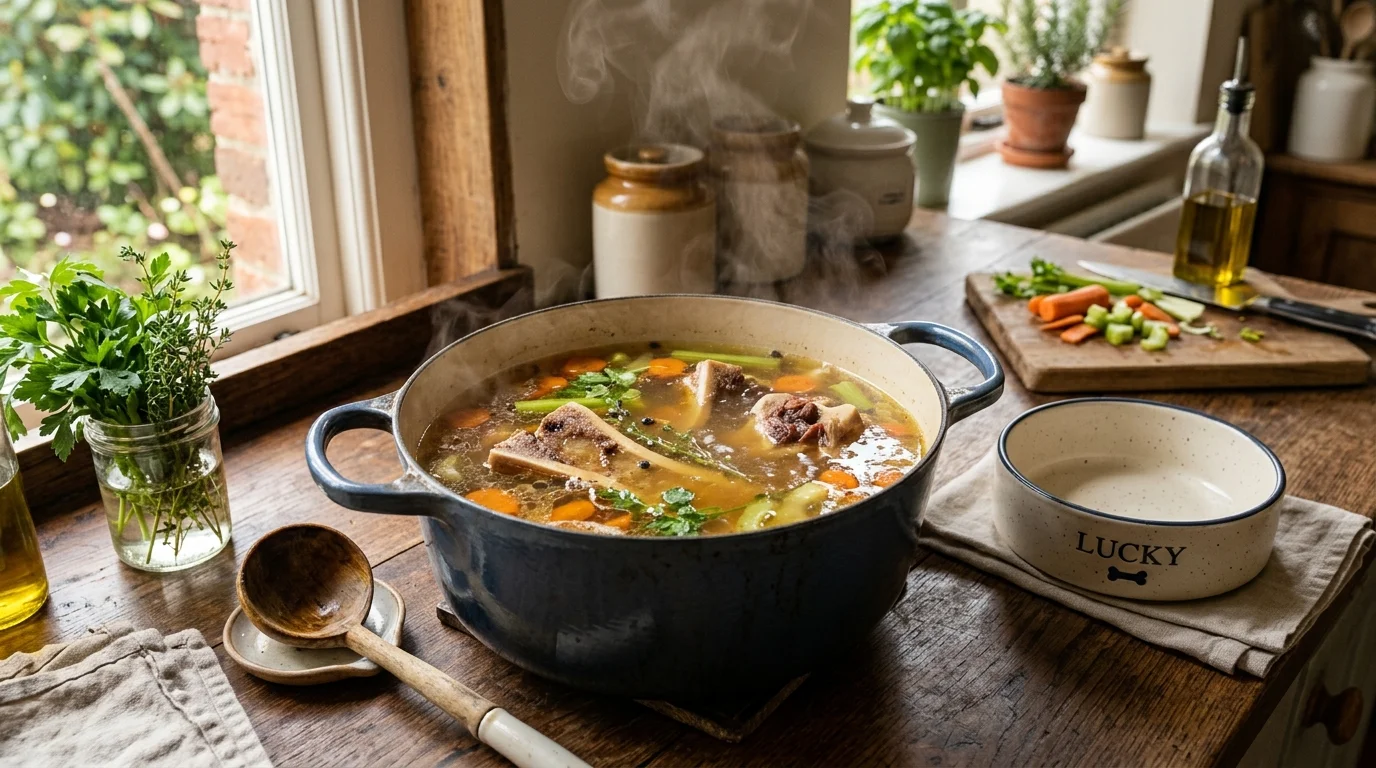
- The Collagen Matrix: Slow-simmered bone broth leaches dense concentrations of Type II collagen, chondroitin sulfate, glucosamine, and hyaluronic acid from marrow and connective tissues, nourishing canine joint cartilage and synovial fluid.
- Intestinal Permeability Defense: The high concentration of amino acids glycine and proline directly repairs the canine gut mucosal barrier (tight junctions), attenuating “leaky gut” syndrome and chronic systemic food intolerance.
- The Zero-Alliums Mandate: Commercial grocery store broths formulated for human consumption contain onions, leeks, or garlic powder—compounds containing thiosulfates that cause fatal Heinz body hemolytic anemia in dogs. Canine bone broth must be strictly free of alliums and excess sodium.
Among whole-food functional additions to the canine diet, few interventions offer as comprehensive a biological footprint as slow-simmered bone broth. Long regarded in evolutionary nutrition as an indispensable staple, bone broth bridges the chasm between joint preservation, gastrointestinal integrity, and hydration support for aging or convalescing dogs.
Modern ultra-processed kibbles subject animal proteins to high-heat extrusion, denaturing delicate peptides and oxidizing amino acids. In contrast, bone broth gently extracts hydrolyzed collagen, gelatin, and critical bioavailable minerals into an easily digestible liquid matrix. Whether managing senior osteoarthritis, recovering from gastrointestinal dysbiosis, or enticing a picky dog with low appetite, bone broth provides profound therapeutic value when formulated correctly.
What Are the Clinically Proven Health Benefits of Bone Broth for Dogs?
The secret to bone broth’s therapeutic power lies in the amino acid glycine. While traditionally considered a non-essential amino acid in canines, glycine becomes conditionally essential during periods of physiological stress, chronic inflammation, and old age. Glycine is the foundational precursor for glutathione—the mammalian body’s master endogenous antioxidant—which assists the canine liver in detoxifying environmental pollutants and metabolic waste.
Simultaneously, gelatin (the cooked form of collagen) acts like biological plaster along the microvilli of the canine digestive tract. By sealing microscopic gaps between epithelial enterocytes, gelatin prevents partially digested proteins and endotoxins from entering the bloodstream, directly reducing the autoimmune triggers behind chronic canine allergies and ear infections.
Forensic Nutritional Comparison: Bone Broth vs. Commercial Broth vs. Water
The analytical matrix below contrasts the physiological components, safety profiles, and clinical utility of canine-specific bone broth against alternatives:
| Nutritional Compound | Canine Bone Broth (24h Simmer) | Store-Bought Human Broth | Plain Filtered Water |
|---|---|---|---|
| Hydrolyzed Collagen / Gelatin | High (Gels solid when chilled) | Low / Trace (Rapidly boiled) | None |
| Glycine & Proline Amino Acids | Abundant (Rebuilds gut tight junctions) | Minimal | None |
| Glucosamine & Chondroitin | Natural bioavailable glycosaminoglycans | Synthetic additives or none | None |
| Allium Toxicity Risk (Onion/Garlic) | 0% (100% Allium-Free) | High (Severe Heinz body anemia risk) | 0% |
| Sodium Concentration | Natural baseline (Safe for cardiac/renal) | High (500mg–900mg/cup, dangerous) | Zero |
How to Make True Canine Bone Broth: The 24-Hour Slow-Cooker Protocol
To produce medicinal-grade bone broth that sets like firm gelatin in the refrigerator, follow this disciplined preparation framework:
- Source High-Collagen Bones: Prioritize grass-fed beef knuckle bones, marrow bones, chicken feet, or oxtail. Chicken feet are exceptionally rich in cartilage and guarantee a dense gelatin jelly.
- The Acid Catalyst (Apple Cider Vinegar): Place bones into a slow cooker and cover completely with cold filtered water. Add 2 tablespoons of raw organic apple cider vinegar (ACV). The mild acetic acid lowers pH slightly, drawing out phosphorus, magnesium, and calcium carbonate from bone matrices.
- The Simmer Phase: Simmer on low heat for 20 to 24 hours for poultry bones, or 24 to 36 hours for beef bones.
- The Mandatory Safety Straining: Pour the broth through a fine-mesh stainless steel sieve. NEVER FEED COOKED BONES TO DOGS. Cooked bones become brittle and splinter easily, posing fatal risks of intestinal perforation or gastric obstruction. Discard all cooked bones immediately.
- Fat Layer Removal: Refrigerate the strained liquid overnight. A white, hardened layer of animal fat will congeal on the surface. Scrape this fat cap off and discard it before feeding, as excess rendered fat can trigger acute pancreatitis in sensitive canines.
For more on integrating antioxidant superfoods into your dog’s rotational diet, review our comprehensive analysis on Superfoods for Dogs in 2026.
People Also Ask
Can I give bone broth to a dog with pancreatitis?
Yes, but only if the broth has been thoroughly chilled and the entire hardened top layer of saturated fat has been completely removed. Fat-free bone broth provides hydration and amino acids without stimulating pancreatic enzymes.
How much bone broth should I give my dog daily?
As a general rule, feed 1 ounce (2 tablespoons) per 10 pounds of body weight per day. For a 50-pound dog, approximately 5 ounces (just over half a cup) split across morning and evening meals is optimal.
Why didn’t my homemade bone broth turn into gelatin?
If your chilled broth remains liquid, you likely added too much water relative to bones, or used meat-heavy cuts lacking connective tissue. Ensure you use joint-rich cuts like chicken feet, beef knuckles, or marrow joints, and simmer for at least 24 hours with apple cider vinegar.
To discover how glycine-rich bone broth supports gut mucosal integrity and systemic detox pathways in aging dogs, read our guide on Dog Liver Enzymes Elevated: ALT, ALP & Milk Thistle.